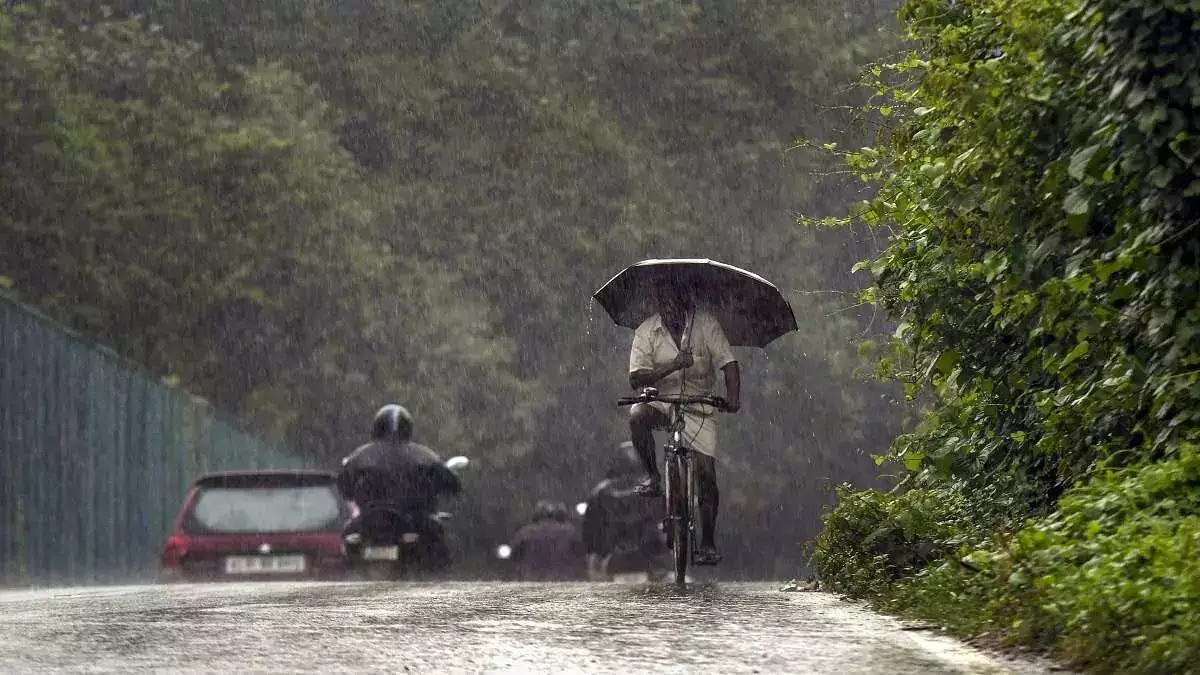
WATERS RISE, THEN RECEDE: EARLY MONSOON GREETS INDIA WITH AMBIGUOUS PROMISE
The southwest monsoon, typically commencing its vigorous sweep across India from June to September, has exhibited an unusually strong initial surge in Kerala. However, meteorological forecasts now suggest a potential for subdued activity in the coming weeks, a development that casts a pall of uncertainty over the agricultural heartlands and water reserves of the subcontinent. This abrupt shift from a forceful onset to a more tentative phase has raised immediate questions about the season's overall trajectory.
The initial robust arrival in Kerala, often seen as a bellwether for the entire monsoon season, has now been tempered by predictions of lessened intensity. This juxtaposition between early vigor and anticipated weakness is the central tension shaping current assessments of the monsoon's performance.
Regional Flux: A Complex Atmospheric Dance
The complexities of monsoon patterns are, as always, on full display. While Kerala has experienced a vigorous beginning, other regions will likely see a different story unfold. The subcontinent's reliance on these annual rains for agriculture and water security means any deviation from established norms warrants close observation. The Indian subcontinent, a key theatre for the Indo-Australian/Indian-Indochina/East Asian monsoon system, depends heavily on this seasonal weather phenomenon.
Read More: Mumbai Red Alert July 2026 Causes School Closures and Train Delays
The broader context of monsoon systems globally reveals a fascinating, if sometimes inconsistent, atmospheric ballet. From the North American monsoon impacting regions like Arizona to the South American variations, these large-scale wind shifts dictate rainfall patterns across continents. The Southwest monsoon, specifically, is crucial for the Indian landmass, providing the bulk of its annual precipitation. Its counterpart, the Northeast Monsoon, also known as the Retreating Monsoon, marks a different phase of the cycle.
The arrival and withdrawal dates for various monsoons worldwide, as documented in extensive meteorological records, highlight the variable nature of these climatic events. For instance, while some monsoons initiate in April and recede by October, others operate on different schedules, underscoring the need for localized, data-driven assessments rather than broad generalizations. This inherent variability is a constant challenge for those dependent on its predictability.
Read More: India IVF Costs And Social Barriers Limit Access In April 2026