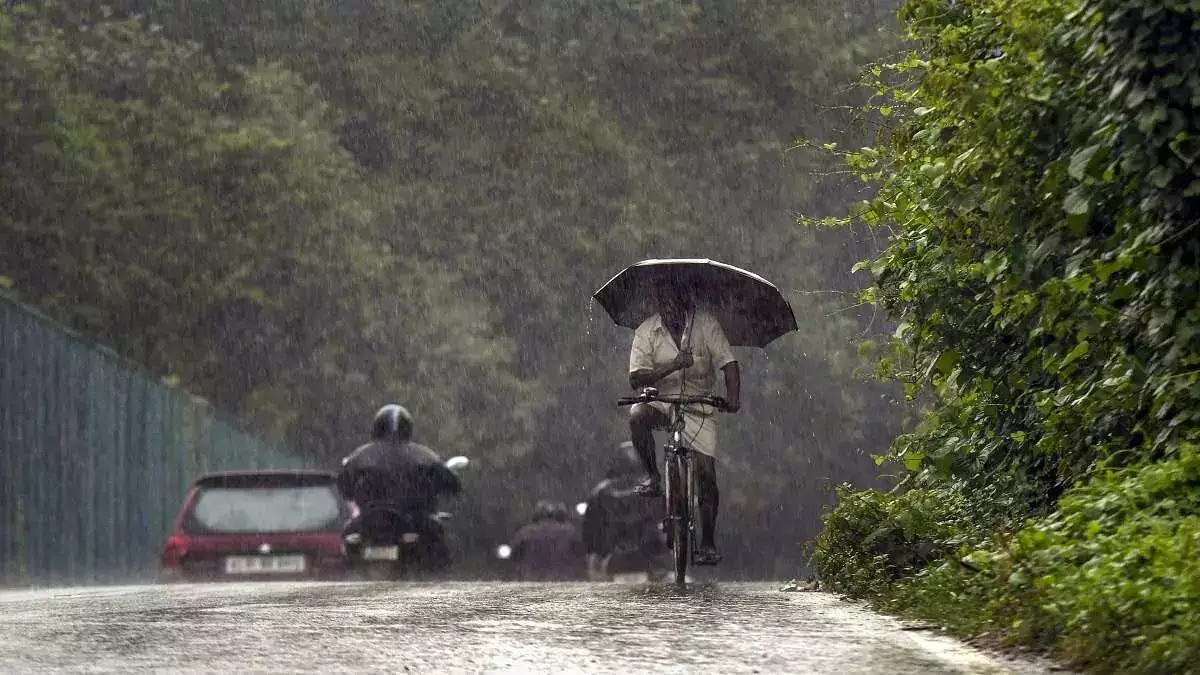
The India Meteorological Department (IMD) has confirmed a substantial surge in the southwest monsoon, triggering high-level warnings across more than 20 states as of 04/07/2026. A low-pressure system currently anchored over the northwest Bay of Bengal is the primary driver, shifting weather patterns toward heavy and, in some locations, extreme rainfall events.

The central signal remains the bifurcation of climate extremes: while large swaths of the nation face flood-induced threats to infrastructure and agriculture, isolated pockets—notably in Chhattisgarh, Telangana, and Vidarbha—continue to grapple with persistent heatwave conditions despite the broader seasonal advance.

Regional Distribution of Alerts
The distribution of the monsoon’s impact follows a volatile trajectory, creating distinct hazards across different topographies:

| Region | Primary Alert Type | Risk Factors |
|---|---|---|
| Gujarat/Konkan/Goa | Red Alert | Extreme rain, waterlogging |
| West Bengal/Odisha | Heavy/Very Heavy | River overflow, drainage failure |
| Himalayan Belt | Yellow/Orange | Landslides, visibility loss |
| Central India | Yellow/General | Flooding, catchment saturation |
In West Bengal, specific districts including South 24 Parganas, Howrah, and Bankura are currently under focus for sustained downpours that threaten low-lying infrastructure.
The Odisha state administration has ramped up its meteorological infrastructure, deploying additional Doppler radars to mitigate the forecasting latency that has historically plagued rapid-onset monsoon flooding.
Mumbai continues to face recurrent waterlogging, highlighting a recurring systemic friction between rapid urban density and seasonal precipitation volume.
Atmospheric Mechanics and Infrastructure
The intensity of the current monsoon is compounded by an active Western Disturbance, which has expanded the scope of disruption to include gusty winds and lightning strikes in the north. This convergence is not merely a meteorologic observation but a stress test for existing transit and power grids.
Read More: Mumbai Red Alert July 2026 Causes School Closures and Train Delays

"The rainfall activity is also expected to intensify over Bihar, West Bengal, Sikkim and Jharkhand," as current modelling suggests high saturation levels in major river basins like the upper Mahanadi.
Analytical Context
The discourse surrounding the 2026 monsoon season reflects a shift from simple rainfall measurement to a preoccupation with infrastructure resilience. As the monsoon reaches its seasonal momentum, the interplay between agricultural necessity—which benefits from the rain—and the logistical chaos caused by flash flooding illustrates a permanent, if asymmetrical, tension. While tourism sectors often frame the season as a "beautiful travel period," the reality on the ground in regions like Himachal Pradesh and Uttarakhand frequently involves closed transit corridors and heightened landslide vulnerability. The IMD alerts serve as the primary institutional buffer, yet the frequency of "extreme" events suggests that regional adaptations are lagging behind current meteorological shifts.