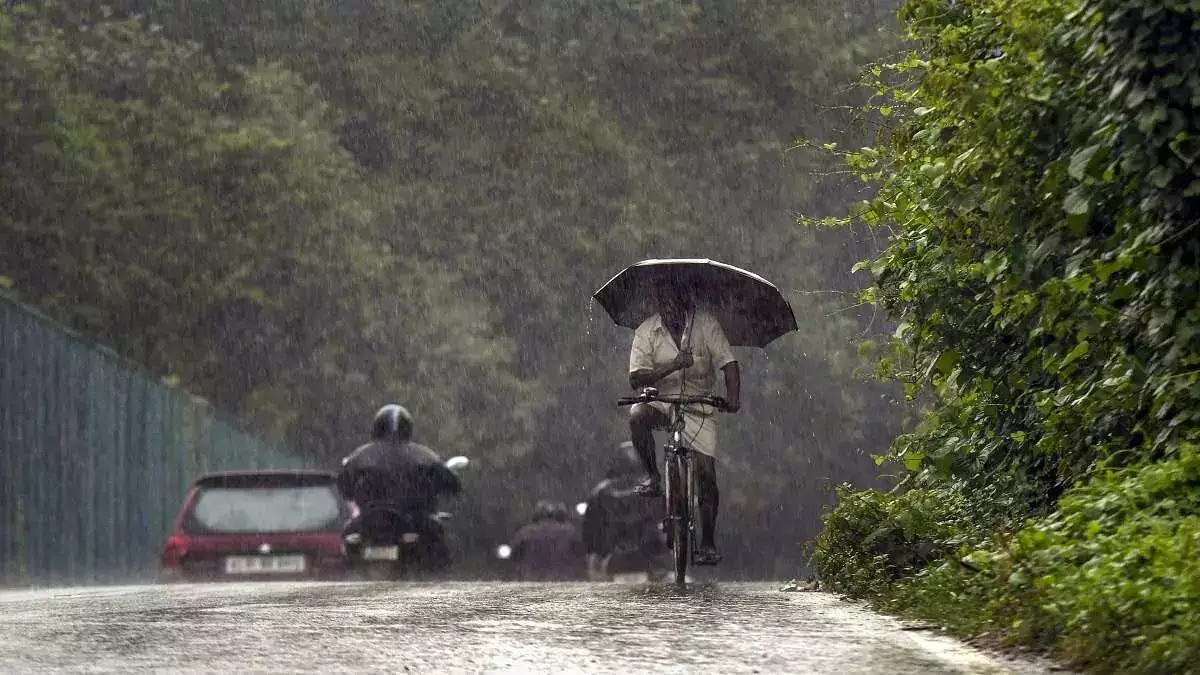
As of 04/07/2026, the India Meteorological Department (IMD) has confirmed the continued advancement of the southwest monsoon across Gujarat, Rajasthan, Haryana, and Madhya Pradesh. While the arrival of seasonal precipitation is a hydrological necessity, it has triggered widespread infrastructure failure and reactive administrative posturing across several Indian states.
Meteorological Status and Regional Alerts
The monsoon front is actively expanding, with the IMD placing specific regions under high-risk advisories.
| Region | Alert Level | Primary Hazard |
|---|---|---|
| Nainital & Bageshwar (Uttarakhand) | Orange | Heavy/Very Heavy Rainfall |
| Mumbai, Thane & Palghar | Orange | Flash flooding/Inundation |
| Dehradun, Tehri, Pauri | Yellow | Moderate to heavy precipitation |
Uttarakhand: Persistent rainfall has compromised connectivity. Both the Badrinath National Highway and the Kedarnath pilgrimage route have suffered temporary closures due to landslides and rolling debris. The State Emergency Operation Centre has mandated heightened readiness for district administrations.
Maharashtra: Urban centers, specifically Mumbai, recorded over 150 mm of rainfall in select pockets. A bridge on the Hiranyakeshi River in Sindhudurg has collapsed under the hydraulic stress of the weather.
Administrative Response and Mitigation
Authorities are shifting toward digitized surveillance to manage the resulting disorder. In Ludhiana, officials have operationalized a "Monsoon War Room" utilizing 1,700 CCTV cameras to monitor flood-prone intersections and vulnerable drainage systems in real-time. This reflects a broader trend of local governments attempting to quantify and observe climate volatility through centralized technological infrastructure.
Investigative Context: The "War Room" Paradigm
The shift toward "war rooms" and Monsoon Tracker technology signifies an administrative admission of vulnerability. By replacing proactive drainage maintenance with high-definition HD footage and rapid-response teams, urban bodies are attempting to manage systemic failures—such as the drowning incidents recently reported in Pune—after the fact. The structural instability seen in Sindhudurg and the repeated debris blockages in the Himalayas underscore that even with high-level meteorological forecasting, the physical interface between Heavy Rain and civil engineering remains fragile.
Read More: Mumbai Red Alert July 2026 Causes School Closures and Train Delays
The monsoon is effectively a state of permanent contingency, where alerts serve as both a safety measure and a confession of the limited efficacy of existing public works against intensified weather cycles.