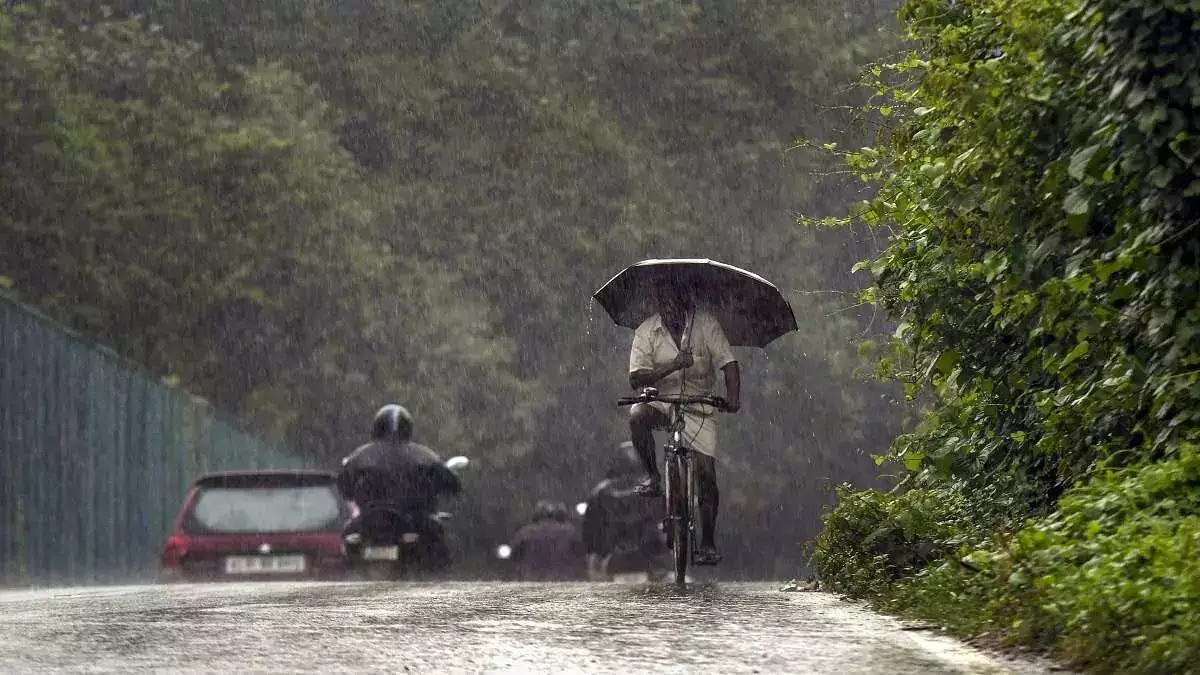
The India Meteorological Department (IMD) has signaled the imminent arrival of the southwest monsoon over Kerala on May 26, a date six days ahead of the usual June 1 onset. This forecast, while indicating an early start to the crucial rainy season, is accompanied by predictions of below-normal rainfall for the country, raising concerns for agriculture and water resources.
The IMD's declaration of monsoon onset is a complex process, contingent on a minimum number of meteorological stations across Kerala and parts of Karnataka registering a prescribed quantity of rain, alongside specific wind speeds and cloud density thresholds. This year's forecast carries a model error margin of approximately four days.
Indicators and Underlying Factors
The IMD's projection of an early monsoon is based on an assessment of six key atmospheric and climatic indicators. These include:
Minimum temperatures over northwest India.
Pre-monsoon rainfall activity over the southern peninsula.
Outgoing longwave radiation over the South China Sea and the southwest Pacific region.
Lower tropospheric zonal wind patterns over the southeast Indian Ocean and northeast Indian Ocean.
Conditions are currently deemed favorable for the monsoon's advance over the south Bay of Bengal, Andaman Sea, and the Andaman and Nicobar Islands, with indications of progress within the next 24 hours. Reduced snow cover in the Northern Hemisphere over the past three months has also contributed to expectations of a potentially weaker monsoon.
Read More: Northern India Storms Kill 96 People in Uttar Pradesh
Economic and Agricultural Ramifications
The southwest monsoon is the primary rain-bearing system for India, delivering almost 70 percent of the country's annual rainfall over its four-month duration. Its timely and adequate arrival is critical for the agricultural sector, with productivity and food grain prices closely linked to monsoon performance. Water availability for various needs also depends heavily on this seasonal phenomenon.
Historical Context and Potential Headwinds
This early arrival forecast follows a trend of recent years, with the monsoon reaching Kerala on May 30 in 2024 and even earlier on May 24 last year, which was noted as one of the earliest onsets in recent history.
Read More: India Film Fund Gives ₹40 Lakh to New Director
However, the outlook is shadowed by the potential impact of an emerging El Niño. While the forecast focuses on the timing of the onset, El Niño is historically associated with a weaker and more erratic monsoon in India. This presents a duality: an early start to the rains, juxtaposed with the possibility of reduced overall rainfall quantity and altered patterns. The development hinges on factors such as the formation of low-pressure systems and the strength of the monsoon surges.