Planetary Pairings and Lunar Lenses Highlight Night Sky
This month, celestial enthusiasts can anticipate a significant astronomical event as Venus and Jupiter converge in a striking conjunction. The two brightest planets in our night sky will appear remarkably close to one another, offering a rare spectacle. Adding to the cosmic drama, the Moon will briefly obscure Venus in an event known as an occultation.
The close alignment of Venus and Jupiter promises a visually arresting display, with their brilliance potentially outshining other celestial bodies. The precise timing and visibility of this conjunction will depend on geographical location and local atmospheric conditions. The subsequent lunar occultation of Venus will further punctuate the month's astronomical offerings, where the Moon passes in front of the planet from Earth's perspective.
Further details regarding the exact dates, times, and optimal viewing locations for these events are expected to be released by astronomical societies and observatories. Such alignments are often studied for their historical and cultural significance, as well as for providing opportunities for scientific observation.
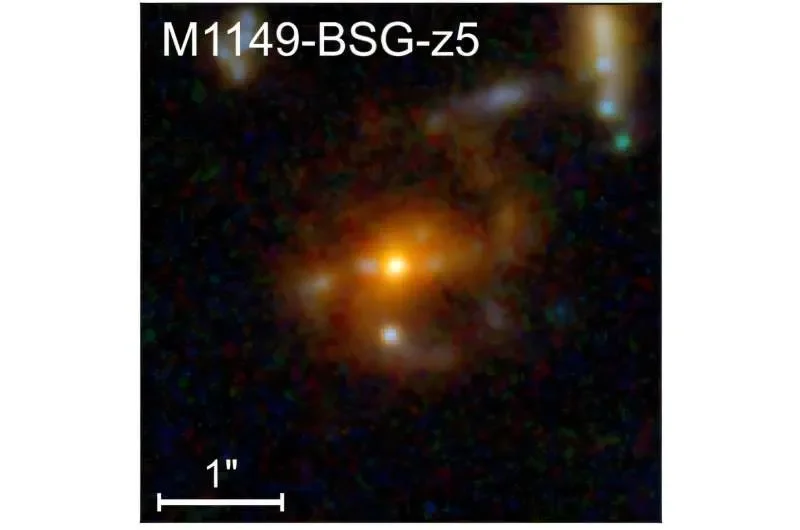
Read More: JWST Finds Oldest Barred Spiral Galaxy M1149-BSG-z5
Celestial Alignments and Naming Conventions
The month of June itself carries historical weight, with its name tracing back to the Roman goddess Juno. While this etymological link offers a touch of antiquity to the calendar, it remains distinct from the astronomical phenomena occurring within it. The scientific community focuses on the observable mechanics of the cosmos, unburdened by mythological origins when charting planetary movements.
The upcoming conjunction and occultation are predictable outcomes of orbital mechanics, recurring over vast timescales. These events serve as regular reminders of the dynamic nature of our solar system, a continuous ballet of mass and gravity playing out across immense distances.