
A recent surge in fatal human-elephant encounters across Jharkhand has prompted a firm directive from Chief Minister Hemant Soren, who has ordered officials to ensure no further loss of human life. The escalating conflict, marked by increased aggression from elephant herds and a growing death toll, has underscored the urgency for effective intervention and a more robust response mechanism. The Chief Minister's command is coupled with a strict timeline for compensation payments, aiming to provide swift relief to affected families and to galvanize administrative action.
Context of Growing Conflict
Over the past few months, Jharkhand has witnessed a disturbing increase in incidents where elephants have attacked humans. This trend has led to a significant number of casualties, with some reports indicating as many as 27 deaths in recent months. The Chief Minister himself has voiced concern, questioning the lack of a concrete system to manage these encounters, especially given that elephants are known to traverse the region.
Read More: Andhra University's Centenary Adds Skill Centre and Global Fiesta
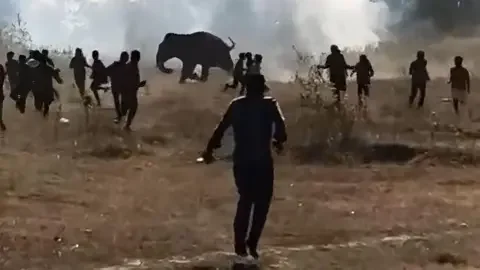
Timeline of recent events:
Recent months: Reports indicate a sharp rise in man-elephant conflicts, with incidents occurring in districts like Ramgarh, Bokaro, Hazaribag, Chaibasa, Jamshedpur, Lohardaga, Gumla, and Dumka.
Early January 2026: Multiple reports emerged detailing rampages by elephants, with one specific male elephant implicated in the deaths of at least 20 people in West Singhbhum. Another herd in Bokaro was responsible for multiple deaths over several days.
Specific incidents:
A family of three was killed in Bokaro, followed by further attacks by the same herd resulting in two more deaths.
A lone bull elephant in West Singhbhum caused a string of fatalities, prompting a large-scale search operation.
In Hazaribag, a herd of five elephants was described as highly aggressive.
Current directives: Chief Minister Hemant Soren issued orders on a Saturday, demanding zero human fatalities and a 12-day deadline for compensation.
Evidence of Escalation and Official Response
The gravity of the situation is reflected in the increasing frequency and severity of attacks. Officials have presented data and outlined strategies to mitigate the conflict.
Reported Casualties:
27 deaths reported in recent months across various districts (Article 3).
A single male elephant reportedly killed at least 20 people in West Singhbhum around January 2026 (Articles 4, 6, 9, 12).
A herd in Bokaro killed five people over three days in January 2026 (Article 11).
Six deaths were reported in Churchu (Article 14).
17 deaths reported in West Singhbhum (Article 18).
22 people dead in 21 days in a broader surge (Article 16).
Official Actions and Plans:
Zero Fatality Mandate: Chief Minister Hemant Soren has strictly ordered officials to prevent any human deaths from elephant attacks (Articles 1, 2, 3).
Compensation Timeline: A strict 12-day deadline has been set for the full payment of compensation to victims' families (Articles 2, 3).
Data Collection: Comprehensive data on casualties and compensation related to animal attacks over the past five years has been requested (Article 2, 3).
Rescue and Control Measures:
Kumki Elephants: Six trained 'Kumki' elephants are being brought in from other states to help manage wild tuskers, including driving, capturing, or rescuing them (Articles 1, 3).
Trained Teams: The Forest Department plans to develop trained, village-level elephant rescue teams and engage specialized elephant rescue experts (Article 2).
Monitoring Aggressive Herds: A special team of 70 people is monitoring an aggressive herd of five elephants in Hazaribag (Article 1).
Community Involvement: Emphasis is placed on community participation, with plans for technical training for villagers in affected areas (Article 2, 3).
Emergency Supplies: Affected villages are to be supplied with materials for deterrence, such as diesel for torches, old tires, and solar sirens (Article 3).
Elephant Corridor Mapping: Efforts are underway to map elephant corridors and implement measures to prevent elephants from straying (Article 3).
Compensation Rule Review: Instructions have been given to amend compensation rules to expedite payments and ensure fair assessment of crop and livestock damage, as well as permanent disability (Article 3).
Underlying Causes of Conflict
Experts and officials attribute the rise in human-elephant conflict to several interconnected factors, primarily driven by environmental changes and human encroachment.

Habitat Fragmentation and Shrinking Forests: A significant reduction in Jharkhand's forest cover over the years is forcing elephants to move out of their natural habitats in search of food and water (Articles 4, 8).
Human Activity in Elephant Corridors: Increased human presence and development projects in areas traditionally used by elephants are leading to more frequent encounters (Articles 4, 8).
Food and Water Scarcity: Lack of adequate food and water resources within shrinking forest areas pushes elephants towards human settlements (Article 6).
Development Projects: Forest officials have been accused of sanctioning development projects without adequate consideration for elephant movement routes, further exacerbating the issue (Article 8).
Strategic Approaches and Challenges
Jharkhand is adopting a multi-pronged strategy to address the escalating human-elephant conflict, while acknowledging the inherent difficulties in managing these wild animals.
Community-Based Response Mechanisms
The administration is looking to empower local communities by forming trained village-level elephant rescue teams. This initiative aims to provide a first line of response in affected areas, improving the speed and effectiveness of interventions.

Training Programs: Villagers will receive technical training to assist in elephant rescue operations.
Deterrent Equipment: Villages in conflict zones will be equipped with necessary materials for deterring elephants, such as torches and sirens.
Expert Involvement: Specialized elephant rescue experts are to be engaged to bolster operational capabilities.
Use of Trained Elephants and Specialized Teams
A significant part of the strategy involves the deployment of trained elephants, known as 'Kumki' elephants, to manage wild tuskers.
Kumki Elephant Deployment: Six Kumki elephants are being brought to Jharkhand to assist in driving, capturing, or rescuing wild elephants.
Monitoring Aggressive Herds: Specific herds, such as the aggressive group of five elephants in Hazaribag, are being closely monitored by dedicated teams.
Expert Tracking: The deployment of trained personnel and potentially specialized tracking equipment is implied in the efforts to locate rogue elephants.
Policy and Administrative Reforms
Beyond immediate operational measures, the government is also focusing on policy changes to ensure better support for victims and more systematic management of elephant movement.
Read More: Hertfordshire-Essex Ponds Restored, Bringing Back Newts and Wildlife

Compensation Overhaul: The directive to revise compensation rules signifies a move towards more timely and equitable financial aid for those affected by animal attacks.
Data Management: The demand for five years of data aims to provide a clearer picture of the conflict's history and patterns, informing future policy.
Corridor Management: Mapping and protecting elephant corridors is a long-term strategy to reduce human-animal encounters by maintaining natural pathways for wildlife.
Expert Analysis and Perspectives
The recurring issue of human-elephant conflict in Jharkhand is a complex problem with deep roots in ecological and developmental pressures.
"Human-elephant conflict has been reported in the region for years, with officials and researchers linking it to shrinking forest cover, habitat fragmentation and increased human activity near elephant corridors." (Article 4)
This sentiment is echoed across multiple reports, suggesting a consensus on the primary drivers of the conflict. The challenge lies in balancing developmental needs with the preservation of wildlife habitats.
Ecological Factors: Shrinking forest cover and habitat fragmentation are consistently cited as major contributors to the problem, forcing elephants into closer proximity with human populations.
Systemic Lags: The Chief Minister's frustration with the perceived slowness of the system in establishing effective mechanisms points to a need for improved administrative coordination and proactivity.
Effectiveness of Measures: While measures like deploying Kumki elephants and training local teams are seen as positive steps, their long-term effectiveness in significantly reducing conflict remains to be seen. The recent incidents involving a single rogue elephant that caused mass casualties highlight the difficulties in predicting and controlling individual animal behavior.
Conclusion and Future Outlook
The directives from Jharkhand's Chief Minister mark a decisive governmental response to a critical situation. The emphasis on preventing human fatalities, coupled with a commitment to swift compensation and proactive management strategies, signals a shift towards a more assertive approach. The introduction of Kumki elephants, the formation of local rescue teams, and the review of compensation policies are key initiatives aimed at de-escalating the conflict.
However, the underlying causes—habitat loss and encroachment—require sustained, long-term solutions that involve land-use planning, conservation efforts, and potentially community-led initiatives for coexistence. The success of these measures will depend on their consistent implementation and the ability of authorities to adapt to the dynamic nature of elephant behavior and their interactions with human settlements. The current strategy appears to be a blend of immediate containment measures and attempts at systemic reform, the impact of which will be closely observed.
Read More: Chennai Crowd Noise Stops IPL Toss, Broadcaster Apologizes on Air
Sources:
The Hindu: https://www.thehindu.com/news/national/jharkhand/ensure-zero-human-death-in-elephant-attacks-jharkhand-cm-asks-officials/article70634523.ece
The Avenue Mail: https://avenuemail.in/hemant-soren-zero-fatalities-elephant-attacks-12-day-compensation-jharkhand/
Local Khabar: https://localkhabar.com/jharkhand-cm-hemant-soren-strict-directives-elephant-attacks-compensation-plan/6736/
The New Indian Express: https://www.newindianexpress.com/states/karnataka/2024/Aug/12/karnataka-govt-focussing-on-zero-elephant-human-conflict-death-cm-siddaramaiah (Contextual information regarding similar government focus in other states)
The Guardian: https://www.theguardian.com/world/2026/jan/13/search-elephant-people-killed-india-jharkand
NDTV: https://www.ndtv.com/india-news/after-elephant-attack-kills-22-jharkhand-declares-emergency-10796775
IndiaSpend: https://www.indiaspend.com/development/why-elephant-conflicts-are-on-the-rise-in-jharkhand-934062
All That's Interesting: https://allthatsinteresting.com/jharkhand-india-elephant
Times of India (Bokaro): https://timesofindia.indiatimes.com/city/ranchi/bokaro-elephant-attacks-five-dead-in-three-days-forest-dept-intensifies-efforts/articleshow/128045075.cms
Indian Express: https://indianexpress.com/article/india/inside-the-hunt-for-an-elephant-that-has-claimed-20-lives-in-jharkhand-10472117/
Times of India (Churchu): https://timesofindia.indiatimes.com/city/ranchi/prohibitory-orders-imposed-in-churchu-after-elephants-trample-six-to-death/articleshow/128319328.cms
Times of India (Hazaribag): https://timesofindia.indiatimes.com/city/ranchi/hazaribag-elephant-attacks-death-toll-rises-to-8/articleshow/128358111.cms
Times of India (West Singhbhum): https://timesofindia.indiatimes.com/city/ranchi/elephant-attack-escalates-death-toll-from-west-singhbhum-elephant-attacks-rises-to-17-forest-teams-struggle-to-track-rogue-tusker/articleshow/126420500.cms
Times of India (Spike): https://timesofindia.indiatimes.com/city/ranchi/human-elephant-conflict-spikes-in-jharkhand-22-people-dead-in-21-days/articleshow/126400358.cms