Frigid temperatures and icy waters have led to the stranding of over 600 young green sea turtles along Florida's coast, prompting a large-scale rescue and rehabilitation effort. This event highlights the vulnerability of these ancient marine creatures to sudden, extreme weather changes.
More than 600 young green sea turtles have washed ashore in Florida in recent weeks. This widespread stranding is a direct result of an unusual cold snap that brought frigid air and water temperatures to the region. Many of these cold-stunned turtles, unable to move or breathe properly, require immediate intervention and care.
Timeline of Events
Recent Arctic Blast: An unseasonable cold front moved through Florida, causing water temperatures to plummet into the 50s Fahrenheit.
Widespread Strandings: The cold weather led to hundreds of green sea turtles becoming "cold-stunned," meaning they become lethargic and unable to swim, washing ashore along the Panhandle and even as far south as St. Augustine and Palm Beach County.
Rescue Operations: The Florida Fish and Wildlife Conservation Commission (FWC), in collaboration with organizations like the U.S. Geological Survey (USGS) and the U.S. Fish and Wildlife Service, has coordinated rescue efforts. Over 600 turtles have been rescued so far.
Rehabilitation: Stranded turtles are being transported to marine life centers, including The Florida Aquarium's Sea Turtle Rehabilitation Center in Apollo Beach and the Marine Science Center in Volusia County.
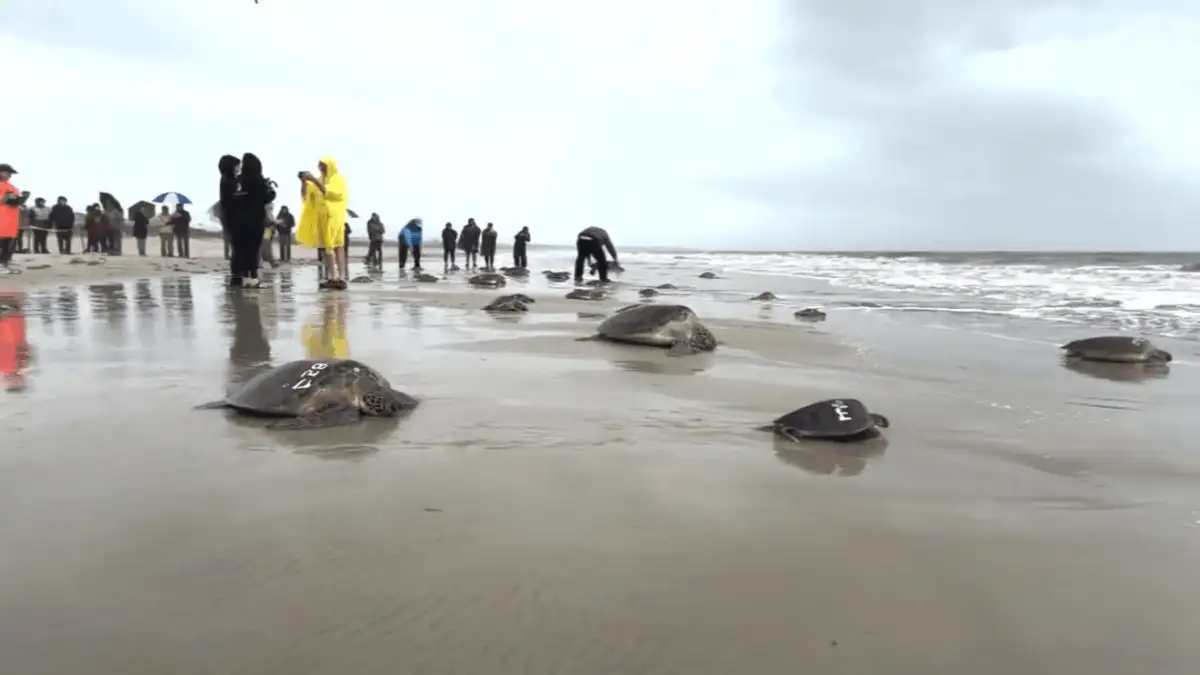
Release: Some turtles that recover are being returned to the Gulf of Mexico, with one release event involving nearly 200 turtles.
Understanding Cold Stunning
Cold stunning is a condition that affects cold-blooded marine animals when water temperatures drop significantly.
Physiological Impact: When water temperatures fall below 50 degrees Fahrenheit, sea turtles become unable to swim effectively or even lift their heads to breathe.
Species Affected: While this event has primarily involved green sea turtles, other species like Kemp's ridleys and loggerheads have also been rescued.
Vulnerability of Young Turtles: Reports indicate that young green sea turtles are particularly affected by these cold water events.
Long-Term Consequences: If left untreated, prolonged cold stunning can lead to injuries or organ failure, and in severe cases, death.
Rescue and Rehabilitation Efforts
Numerous organizations have mobilized to address the crisis.
Scale of the Event: The rescue of over 600 cold-stunned turtles in the Florida Panhandle is reported as the largest number of stranded turtles handled at once by local organizations.
Specialized Care: Some turtles require advanced medical treatment beyond simple warming, necessitating transfer to dedicated rehabilitation facilities.
Coordinated Response: Agencies like the FWC and USGS have been crucial in coordinating rescue logistics and ensuring affected turtles receive prompt attention.
Public Awareness: Wildlife officials are reminding the public to report any sightings of stranded or distressed turtles to authorities.
Previous Incidents and Preparedness
While the recent event is significant, cold-stunning is a recurring issue for sea turtles in Florida.
Read More: Orangutan Mothers Plan Playdates for Babies in Borneo
Past Rescues: In previous years, turtles have been rescued from cold-stun events, including instances where turtles from colder climates like Massachusetts were transported to Florida for rehabilitation.
Facility Capacity: The Florida Aquarium's rehabilitation center has previously treated turtles needing advanced care, indicating a preparedness for such emergencies.
Long-Term Conservation: Federally protected sea turtle populations remain at risk without such human interventions during extreme weather.
Expert Insights
Margaret Lamont, a USGS research biologist with nearly 30 years of experience studying sea turtles, explained the immediate danger: "When cold-blooded sea turtles become too cold, they are unable to swim, or even lift their heads out of the water to breathe."
Conclusion and Implications
The mass stranding of over 600 green sea turtles in Florida underscores the critical impact of extreme weather events on vulnerable marine wildlife. The coordinated rescue and rehabilitation efforts have been substantial, with many turtles now recovering and some returning to the wild. However, the event raises questions about the increasing frequency or intensity of such cold snaps and their long-term implications for sea turtle populations. Continued monitoring and rapid response remain essential for mitigating the effects of cold stunning on these ancient species.
Sources Used:
phys.org: Reports on the scale of the stranding and the general impact of cold air and frigid waters on young green sea turtles.🔗 https://phys.org/news/2026-02-florida-green-sea-turtles-stranded.html
The Florida Aquarium: Details the arrival of cold-stunned turtles at their rehabilitation center and the FWC's rescue numbers.🔗 https://www.flaquarium.org/news-events/latest-news/first-turtles-of-the-cold-stun-season-arrive-at-the-florida-aquarium/
AP News (via AOL): Notes that cold-stunned turtles were found as far south as St. Augustine and Palm Beach County, referencing past incidents involving turtles from Massachusetts.🔗 https://apnews.com/article/coldstunned-turtle-florida-4d47d028b94a750b2ca58784b13c1d39
USGS: Explains the physiological effects of cold temperatures on sea turtles and details the collaborative rescue effort involving USGS scientists.🔗 https://www.usgs.gov/news/science-snippet/usgs-scientists-coordinate-rescue-over-60-sea-turtles-cold-weather-snap
CBS12: Highlights the record number of rescues in the Panhandle and a large release event of nearly 200 rehabilitated turtles.🔗 https://cbs12.com/news/local/200-rehabbed-sea-turtles-florida-cold-snap-return-gulf-wildlife-marine-life-good-news-cape-san-blas-gulf-county-watch-video
Florida Insider: Mentions the unusual snowfall in northern Florida and the transport of turtles from Volusia County to Juno Beach for rehabilitation, also noting past interstate rehabilitation efforts.🔗 https://www.floridainsider.com/nature/green-sea-turtles-that-were-shocked-by-the-cold-are-recuperating-at-a-marine-life-center-in-florida/