The world is reacting to two major pieces of news. In the United States, Jesse Jackson, a famous leader for equal rights, has died at the age of 84. He was a close friend of Martin Luther King Jr. and worked for decades to help people who were treated unfairly. At the same time, a plan to bring 34 Australian women and children back from a camp in Syria has failed. The group was in a convoy leaving the Al Roj detention camp, but they were stopped and sent back. This has restarted a difficult debate in Australia about whether it is safe or right to bring home people who left to join the Islamic State (ISIS). These events show both the end of a long fight for justice in America and a new, complicated security problem for the Australian government.
Read More: Iran De-escalation Does Not Lower Oil Prices to $77-$80

"Our father was a servant leader - not only to our family, but to the oppressed, the voiceless, and the overlooked around the world." — The Jackson Family
The Passing of Jesse Jackson
Jesse Jackson died after living with Parkinson’s disease since 2017. He was a very important person in American history.
He worked closely with Martin Luther King Jr. during the 1960s.
He ran to be the Democratic candidate for President twice, in 1984 and 1988.
In 1988, he came in second place and received seven million votes.
Leaders like Barack Obama, Bill Clinton, and Joe Biden have shared messages of respect for his work.
The Situation in Syrian Camps
The Australian government is trying to figure out how to handle citizens still held in Syria. These people are often called "ISIS brides" because they married fighters from the group.

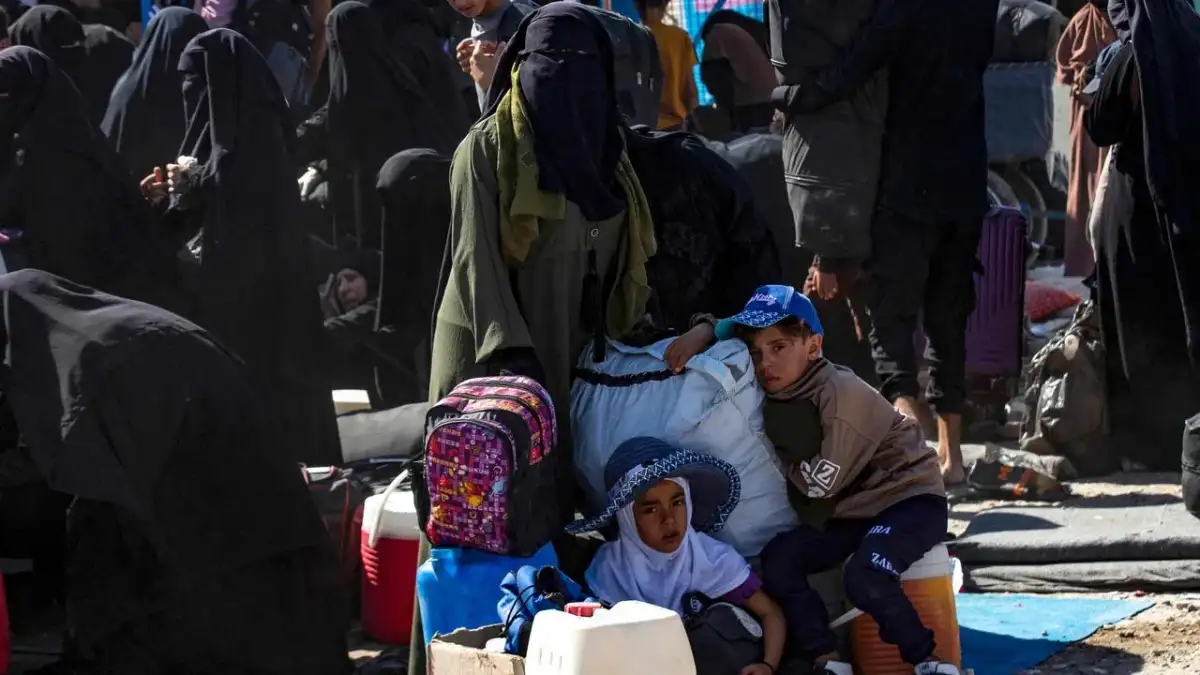
On Monday, a group of 34 Australians (mostly women and children) tried to leave a camp.
Their convoy was stopped before it could reach safety and was forced to go back.
There are currently 20 children as young as five years old in the Al Roj camp.
The camps are run by Kurdish groups, but moving toward the capital, Damascus, requires permission from the Syrian government.
| Group | Status | Location |
|---|---|---|
| Current Group | 12 women, 22 children | Al Roj Camp, Syria |
| Recent Returns | 2 women, 4 children | Returned to Australia (Sept 2025) |
| Total in Limbo | 34 people | Northeast Syria |
The core problem is a mix of legal duty to citizens and the fear that some returning adults might still hold dangerous beliefs.

A Legacy of Civil Rights
Jesse Jackson was known for being a powerful speaker. He focused his life on helping the "overlooked" people in society. His family described him as a man who served the world. His death marks the loss of one of the last big figures from the original American civil rights movement. He proved that a Black man could compete at the highest levels of American politics long before others followed in his footsteps.
Read More: Matt Davidson's June 2023 Art Shows Australian Economy Problems
The Challenge of Returning Home
The move to bring Australians back from Syria is very controversial.
Some people say these women were young and made mistakes or were forced into their situations.
Others, like the political Opposition, say it is "dangerous" to bring them back. They worry the government cannot properly watch or check everyone who returns.
Save the Children Australia has asked the government to act faster, but a court recently said the government does not have a legal requirement to force a return.
If some of these women have valid passports and travel papers, as the camp director says, does the government have a choice in letting them come home?
Security and Secret Returns
There is proof that some people are not waiting for the government to help.
In late 2025, two women and four children smuggled themselves out of Syria and reached Australia through Lebanon.
Home Affairs secretary Stephanie Foster confirmed the government knew these people were coming back for months but did not help them.
This raises a hard question: Is it safer for the government to control the return, or is it better to let people find their own way back?
Expert Analysis
Security experts and government officials are divided on the best path forward.
David Craig, a former police officer, stated that agencies might not have all the tools they need to monitor everyone who returns. He argued that the public needs to know more about how these people are watched.
The Home Affairs Department has said they are "concerned" about the women and children but noted that providing help in Syria is very hard because the area is still dangerous and ISIS is still active nearby.
Conclusion
The death of Jesse Jackson reminds the world of the long struggle for fairness and the power of peaceful leadership. However, the situation in Australia shows that modern problems are rarely simple. The failed return of the 34 Australians from Syria leaves many families in a state of waiting. The government must now decide if they will try again to bring them home or let them stay in the camps. Because some have already returned on their own, the government will likely have to answer more questions about how they will keep the country safe while also following the law for their citizens.
Read More: Billionaire Adrian Portelli's petrol stations and UK expansion cause gambling worries
Sources
Sydney Morning Herald: Australia news LIVE: Jesse Jackson dies
7News: ISIS brides: Who they are and why their return is unravelling
SBS News: Home Affairs knew for months 'ISIS brides' were returning
ABC News: Women and children return after smuggling themselves from Syria
News.com.au: Fresh ISIS brides warning
Daily Mail: Australian ISIS brides beg for mercy return
Noticer News: Group of ISIS brides and children returning to Australia