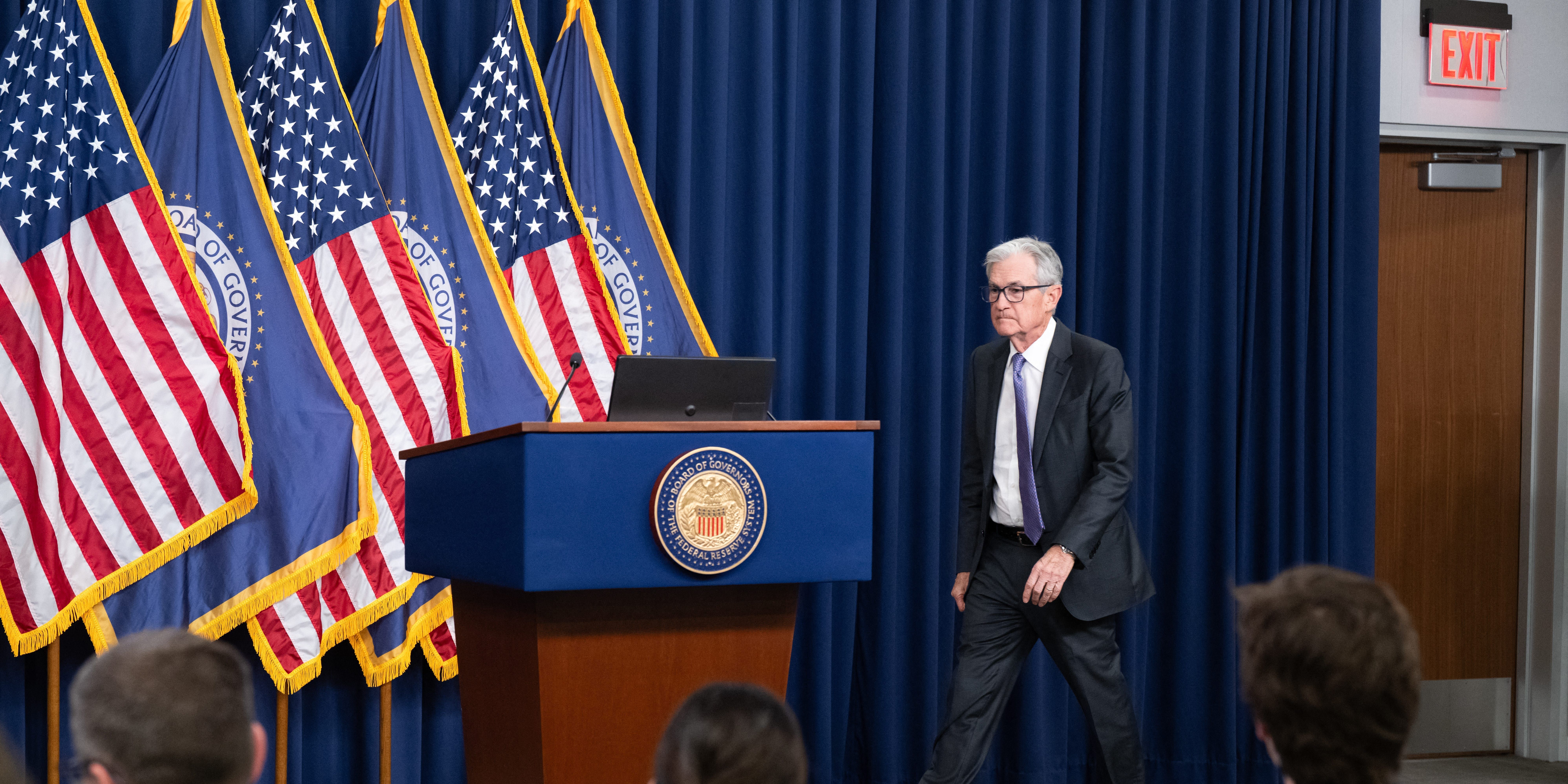
Jerome Powell has concluded his tenure as Federal Reserve chair, stepping down following a meeting where interest rates were held steady for the third consecutive time. The decision to maintain the current rate, hovering between 3.5%-3.75%, comes amidst a backdrop of considerable uncertainty, particularly due to the ongoing conflict with Iran.
The Federal Reserve's rate-setting committee showed notable internal division, with Powell himself acknowledging the difficulties the Iran war presents in forecasting the path forward for interest rates. This persistent uncertainty appears to be a significant factor influencing the Fed's cautious approach.
Powell's immediate future involves remaining on the central bank's board as a governor, though the duration of this continued presence is not yet fixed. His departure as chair is effective May 15.
A Contentious Climate for Monetary Policy
The Fed's recent decision to hold rates steady was marked by a significant number of dissenting votes, the most pronounced in decades. This internal disagreement reflects a broader tension, apparently exacerbated by friction with political figures, including President Donald Trump. Reports suggest Trump has previously voiced a preference for lower interest rates, a stance met with differing views from within the Fed.
Read More: Goldman Sachs predicts 15 million US jobs lost to AI by 2036
Governor Kevin Warsh, a figure whose views on interest rates have been noted, has indicated he was not pressured to commit to rate cuts and does not believe the Fed's independence is compromised by political commentary.
Powell himself has emphasized that the Fed is in "no hurry to cut rates," a sentiment underscoring the complex interplay of economic factors and potential political pressures shaping monetary policy.
Economic Headwinds and Future Challenges
The conflict with Iran has directly impacted energy prices, contributing to the persistent inflation concerns that weigh on the Fed's decisions. While the Fed's mandate includes both full employment and price stability, the current environment appears to necessitate a delicate balancing act.
Economists and observers are scrutinizing Powell's pronouncements for clues on the Fed's future direction, especially regarding its approach to inflation and employment in the coming months and years. The emphasis on strengthening the broader economy, even amidst dissent on the committee, hints at a continued focus on labor market health.
Read More: House Votes to Limit President's War Power on Iran
Background: Powell's Evolving Stance
Previous remarks from Powell, notably at the Jackson Hole summit in August 2025, had suggested that current conditions "may warrant" an interest rate cut. This earlier openness to rate reductions contrasts with the current, more restrained posture, which is being interpreted in light of the escalating geopolitical and economic uncertainties. The Fed's approach to interest rates also has an indirect influence on longer-term rates, such as those for mortgages, although the central bank does not directly set these.