


DIVIDED DEMOCRATS GRAPPLE WITH WAR POWERS VOTE
The US offensive against Iran is complicating the Democratic Party's midterm election strategy, forcing a difficult choice between party unity and opposition to President Donald Trump's military actions. While most elected Democrats appear to oppose the war, internal divisions are surfacing over how to formally rebuke the president, particularly concerning votes on war powers resolutions. Some Democrats, prioritizing a bipartisan approach, are hesitant to support measures that might fail to gain Republican backing.
The economic landscape, a traditional battleground for voter attention, has become the stated priority for Democrats aiming to regain control of Congress. This focus on domestic financial issues, however, is increasingly overshadowed by the unfolding conflict in Iran, creating a tension between campaign messaging and the demands of an ongoing foreign engagement.
A TEST OF UNITY
Reports indicate that the conflict has indeed exposed cracks within the Democratic caucus. While many were quick to condemn President Trump for initiating military action without congressional approval, framing it as potentially "illegal and unconstitutional," not all are aligned on demanding an immediate vote on war powers.
Read More: GOP Representative Andy Ogles Says Muslims Unwelcome in America
Some members, like Josh Gottheimer, have signaled a vote against such resolutions.
Others, such as Greg Landsman, are reportedly not backing an Iran resolution.
Conversely, figures like Richard Blumenthal express less concern about party unity and more about achieving a bipartisan vote, suggesting a strategic calculus beyond simple opposition.
This internal discord suggests that while the broader Democratic stance is against the war, the practical application of that opposition through legislative action presents a significant challenge. The timing of these votes, as noted, gives Democrats the opportunity to set the terms of debate, yet the outcome remains uncertain.

TRUMP'S CHALLENGES AND REPUBLICAN POSITIONING
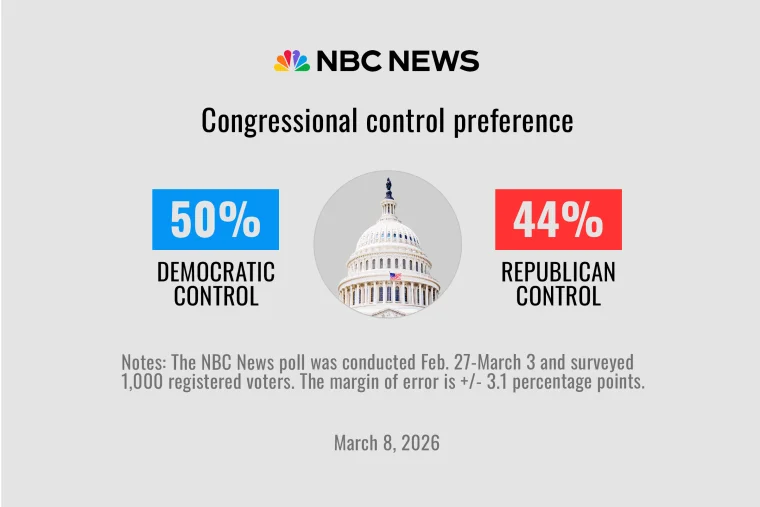
A recent poll highlights that President Trump faces significant headwinds on key issues including immigration and prices, alongside the Iran conflict. While Republicans historically hold an advantage on issues like border security and crime, this edge has reportedly diminished.
The poll indicates that Republicans are attempting to narrow the gap on handling voters' most important issues. However, the overarching focus on the economy by Democrats, juxtaposed with the ongoing military action in Iran, creates a complex electoral environment where established issue advantages may be tested.
Read More: Australia Sends Spy Plane and Missiles to UAE to Help Defend Against Attacks

BACKGROUND: MIDTERM CLIMATE AND FOREIGN POLICY
The upcoming midterm elections are occurring against a backdrop of intense partisan division. Democrats, seeking to reclaim power, have centered their message on economic recovery and relief for American households. However, the eruption of conflict in Iran has shifted national attention, demanding a response that both reflects voter sentiment and navigates the precarious international situation.
The dynamics of presidential war powers and congressional oversight have historically been a contentious point, particularly when a president acts unilaterally. The current situation intensifies this debate, forcing lawmakers to weigh their opposition to a president's foreign policy against the potential political ramifications of appearing divided or ineffective.