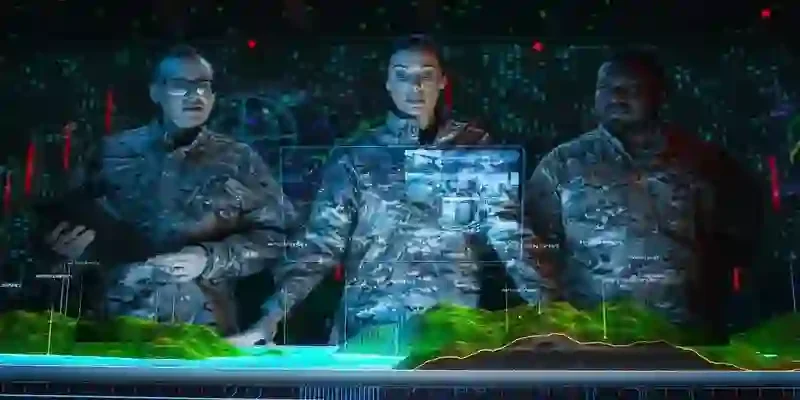
The war in Iran, now deeply entangled with 'artificial intelligence' (AI) systems, brings a chilling practicality to long-standing discussions about its role in armed conflict. US and Israeli forces are employing AI-supported targeting, a development that amplifies profound unease over the technology's integration into military operations.
Reports indicate that civilian casualties in Iran have risen, prompting urgent questions about whether AI's purported accuracy is failing or even contributing to missteps. Lawmakers have pressed Pentagon officials regarding specific AI systems, like the Maven Smart System, and how human oversight is applied.

AI is not merely an auxiliary tool; it's becoming a central pillar in operations such as the U.S.'s "Operation Epic Fury." The longer the war persists, the more likely AI's influence is to expand, raising the specter of escalating AI-driven engagements.
Read More: Artemis II Livestream Shows Astronaut Entering PIN, Launch Continues
An Asymmetric Embrace of the Algorithmic
While the U.S. and its allies leverage AI for what they term "targeting superiority," Iran has adopted it as an 'asymmetric weapon.' Their strategy involves employing AI for cyber-physical attacks and shaping information warfare. Israel's own AI capabilities, underpinned by infrastructure like "Project Nimbus," further solidify the tech-driven nature of this confrontation.

The Algorithmic Gambit: Risks and Rewards
The notion that violence can achieve political ends that negotiation cannot remains a driving force. Yet, the methods of achieving those ends are undergoing a radical, unsettling transformation. The pursuit of "decisive war" without the commensurate "price of decisive war" appears to be a key strategic calculus, with AI now a significant variable.
"Leaders want the fruits of decisive war without paying the price of decisive war. More destruction is not necessarily more strategy."
The deployment of AI in targeting decisions represents a high-risk scenario. Basing operational choices on AI-generated data inherently carries a degree of 'risk and inaccuracy,' a fact starkly illuminated by the unfolding events. The military's increasing reliance on AI, including commercial off-the-shelf technologies, also opens new avenues for vulnerability.
Read More: Salesforce Agentforce AI handles half of customer chats, cuts 4,000 jobs by January 2026

Corporate Influence and Unanswered Questions
The landscape of military AI is increasingly shaped by major technology firms. As certain AI systems face scrutiny and are moved out of sensitive Pentagon operations, a fierce competition brews among companies vying to embed their technology within the military's defense apparatus.
"The AI Industry’s Warnings Dario Amodei, cofounder of AI juggernaut Anthropic, is among the most passionately outspoken CEOs in his industry bringing attention to AI security dangers."
Companies are reportedly developing AI agents for non-classified military uses, while internal memos suggest the Pentagon has been utilizing AI in critical national security domains, including nuclear weapons and cyber warfare. This corporate entanglement raises fundamental questions about control, oversight, and the very policies governing AI's use in lethal capacities.
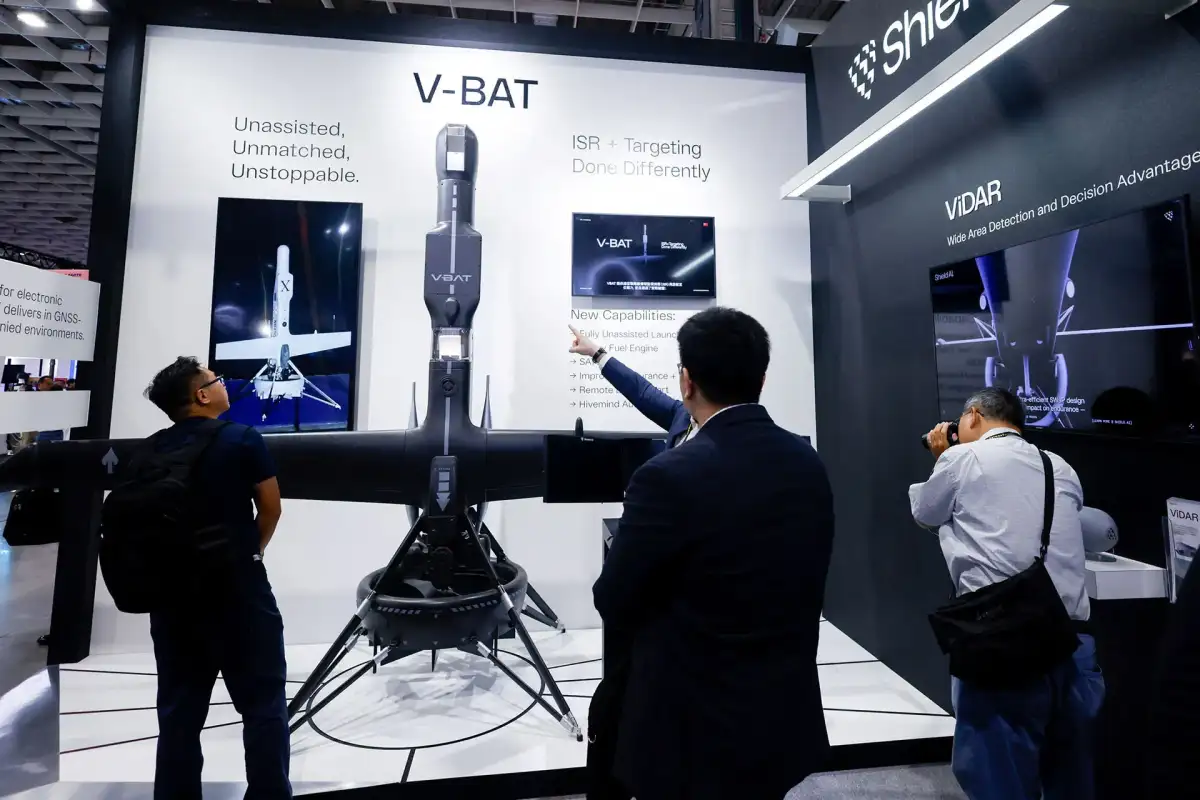
The Expanding Algorithmic Front
The conflict in Iran is not an isolated incident. AI is demonstrably being employed in other theaters, such as the war in Ukraine, where both sides utilize it for data processing and target selection. This widespread adoption signals a fundamental evolution in military strategy.
Read More: Groq LPU Uses SRAM for Faster AI Inference, Nvidia Responds
Background: The Shifting Sands of Military Strategy
The integration of AI into military operations is not new, but its current application in direct conflict zones like Iran marks a significant escalation. AI's potential applications range from enhancing command and control (C4ISR) capabilities to facilitating 'human-machine teaming' in operations and powering unmanned autonomous systems. The development and training of these systems require immense resources and specialized expertise.
However, this embrace of AI is fraught with challenges. Integrating these complex systems into existing military frameworks presents significant technical and organizational hurdles. Furthermore, the reliance on AI opens up new 'vulnerabilities to cyber attacks, adversarial AI, and other forms of electronic warfare.' The lack of a comprehensive national AI policy framework, coupled with a need for federal reporting and disclosure standards concerning AI safety and security, exacerbates these risks. The imperative for AI companies to proactively address these 'systemic security risks' and 'lethal collective vulnerabilities' has never been more apparent.