Iran Cites US Blockade as Justification for Reimposed Strait Restrictions
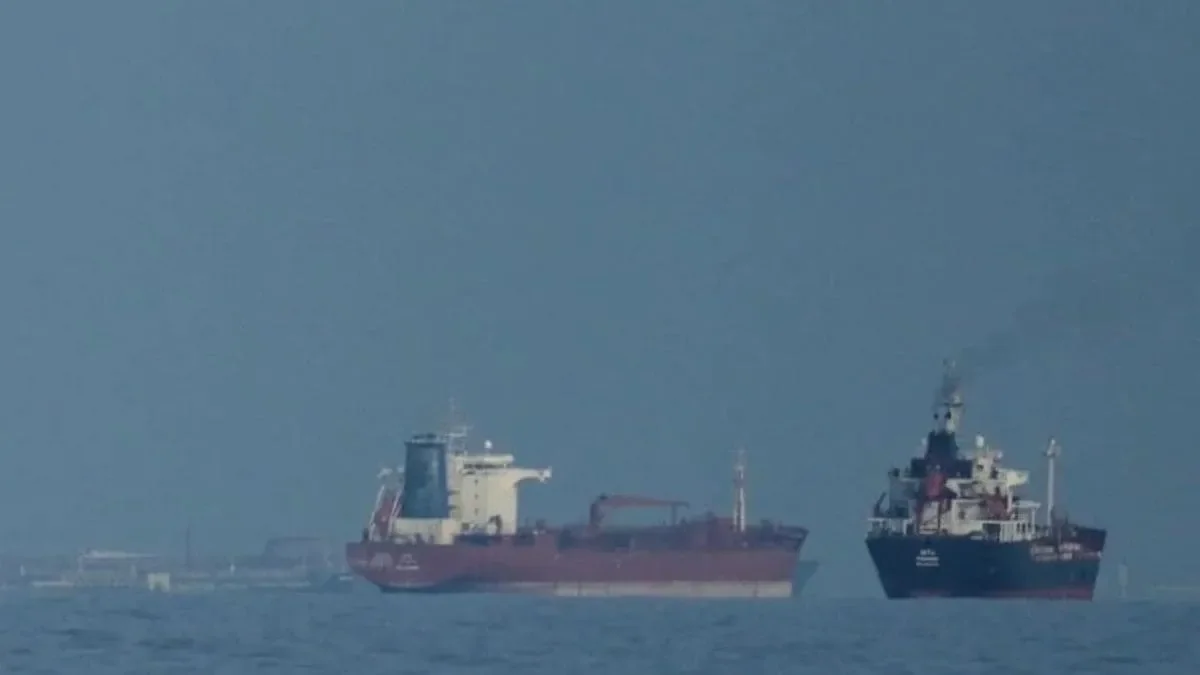
The vital Strait of Hormuz has once again become a focal point of escalating tensions, with Iran announcing the reimposition of restrictions on its transit. This move, Iranian officials state, is a direct response to the United States' ongoing naval blockade of Iranian ports. The situation was underscored by reports of Iranian gunboats firing on a tanker within the strait, a development confirmed by the British military.
Iranian authorities contend that the control of the Strait of Hormuz has "returned to its previous state" due to the continuation of the US blockade. This assertion stands in contrast to statements from US President Donald Trump, who claimed the naval blockade would "remain in full force" until a complete "transaction with Iran is 100% complete." The contradictory narratives highlight a breakdown in communication and a hardening of positions.
Read More: Indian Ships Change Course in Hormuz After Iran Gunfire Reports
Gunboat Fire and Conflicting Accounts
The confrontation intensified as two gunboats, identified as belonging to Iran's Revolutionary Guard (IRGC), reportedly opened fire on a transiting tanker. The United Kingdom Maritime Trade Operations reported the incident occurred approximately 20 nautical miles north-east of Oman, noting the firing was "without warning the crew."
This aggressive action follows earlier statements from Iranian leaders indicating the strait would not reopen if the blockade persisted. Speaker of Parliament and key negotiator Ghalibaf explicitly linked the reversal of any reopening decision to Trump's refusal to lift the blockade.
Peace Talks Cast in Doubt
The reimposition of restrictions on the Strait of Hormuz casts a shadow over ongoing diplomatic efforts. Prospects for a resumption of high-level US-Iran talks, particularly concerning Iran's nuclear ambitions, appear dim. While some reports suggested potential breakthroughs, the current climate of direct confrontation makes substantial progress unlikely. Pakistani mediation efforts, led by army chief Field Marshal Asim Munir, have concluded a three-day stint in Tehran, but the impact of these interactions on the immediate crisis remains uncertain.
Read More: Strait of Hormuz Traffic Slows Despite Cruise Ship Passage
Background: A Protracted Conflict
The current volatile situation stems from the war that began on February 28th, initiated by a US-Israeli attack on Iran. This conflict has resulted in thousands of casualties, spilled over into Israeli strikes on Lebanon, and significantly impacted global oil prices due to the Strait's critical role in shipping. Earlier statements from Iran had suggested the strait was "completely open," and President Trump had also indicated it was "READY FOR BUSINESS," creating a confusing discrepancy that was quickly nullified by Iran's subsequent actions.