


Whispers of Disunity Emerge Following Unprecedented Presidential Admission
Recent remarks by Iran's President admitting to errors in handling a nationwide unrest signal a potential fracturing within the country's highest echelons. The president’s uncharacteristic apology, delivered not to the populace but reportedly within the inner circles, raises pointed questions about the prevailing narratives of singular national will.
This admission, framed as a gesture of responsibility for missteps in quelling protests, comes at a time of considerable internal and external pressures. It diverges sharply from the publicly presented image of a unified and resolute leadership. The implication is that dissenting voices or alternative strategies may have existed and been sidelined, only to prove inadequate in retrospect.
Unpacking the Presidential Admission
The exact context and audience for the president's statement remain deliberately opaque. However, the very act of acknowledging "mistakes" in managing the widespread demonstrations suggests a deeper internal dialogue, perhaps a debate, about the efficacy of the chosen response. This is not the standard script.
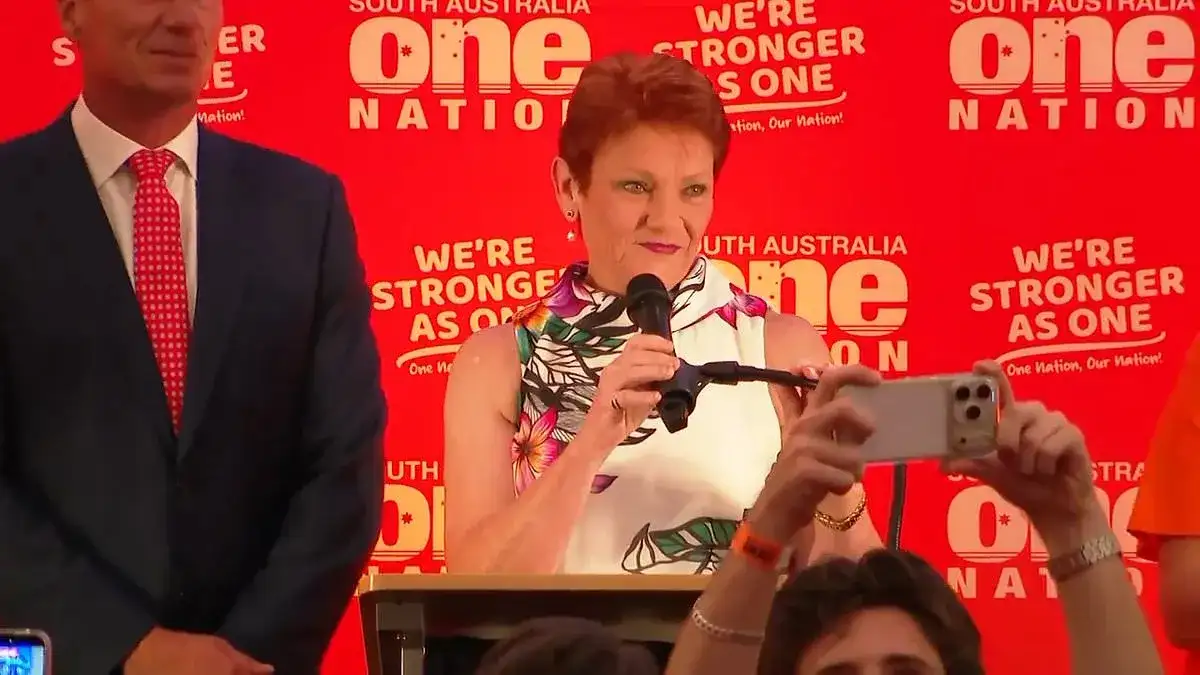
Read More: South Australia Election 2024: Labor Wins, One Nation Surges Past Liberals
The language used – "apology," "errors" – carries a weight that is unusual for pronouncements emanating from such a high level in Iran.
The reported circumvention of public addresses in favor of behind-closed-doors admissions hints at a strategic calculation, a way to manage internal optics rather than appease external critics.
This event, though understated in its public unveiling, may reflect a struggle to maintain a cohesive public face against the backdrop of persistent challenges.
Echoes of Past Turmoil
The current unrest, which has seen significant public dissent over a period, presents a complex scenario for any leadership. Iran, a nation with a rich and often turbulent history, finds itself navigating the perennial tension between its established structures and the yearning for change that periodically surfaces.
The country's geopolitical standing, including its 'nuclear program' and relationships with regional and global powers, remains a constant undercurrent to domestic affairs.
Internal economic conditions, often tied to international sanctions and resource management, also play a crucial role in shaping public sentiment.
The intricate interplay between 'religion', governance, and the populace continues to be a defining feature of the Iranian landscape.
A Nation of Layers
Iran, historically known as 'Persia', is a land of diverse ethnicities and languages, united under a 'flag' that represents a complex national identity. Its position as a significant regional player, with 'allies' and perceived adversaries, shapes its 'conflict' dynamics both internally and externally. The ongoing debate surrounding its 'nuclear deal' status, for instance, is a testament to these multifaceted challenges. The 'map' of the Middle East is incomplete without understanding Iran's central role.
Read More: Ankara seeks wider security pact with Egypt, Saudi Arabia, Pakistan


:max_bytes(150000):strip_icc():focal(749x0:751x2)/ayatollah-ali-khamenei-030926-1-35238c3c9a484125aa95ac665d7cbc9c.jpg)


