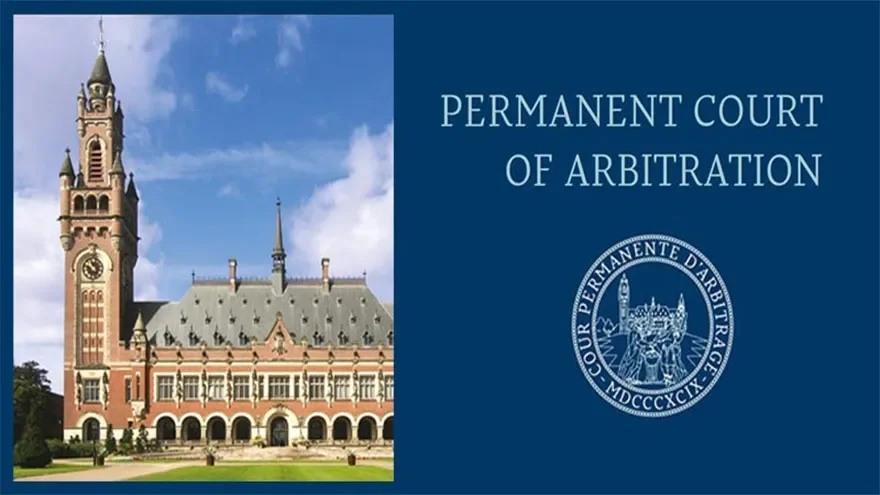
The Permanent Court of Arbitration (PCA) in The Hague issued a Supplemental Award on May 15, 2026, affirming that the Indus Waters Treaty (IWT) remains fully binding on both India and Pakistan. The ruling explicitly rejects the possibility of either nation suspending the agreement unilaterally, characterizing the 1960 accord as an immutable framework regardless of broader geopolitical tensions.

The core legal outcome confirms that hydroelectric projects on the Indus system's western rivers—specifically the Ratle and Kishenganga plants—must adhere to strict "maximum pondage" limits based on objective hydrological data rather than inflated generation assumptions.
The decision mandates that India must provide Pakistan with substantive evidence and technical clarifications to demonstrate compliance with treaty-defined operational restrictions. This reinforces Pakistan’s long-standing demand for transparency, limiting India’s ability to manipulate water flow through hypothetical peaking models or artificial storage capacities.
Read More: ICC Arrest Warrant for Senator Dela Rosa Issued May 11
Strategic Implications of the Award
Binding Legal Authority: The court asserted its sole competence to adjudicate disputes under the IWT, dismissing India’s 2025 declaration that the treaty was being held in "abeyance."
Procedural Shift: Pakistan has gained enhanced review rights, meaning project design specifications for upstream dams are now subject to a higher standard of empirical justification.
Divergent Responses:
Islamabad views the decision as a vindication of its reliance on international dispute resolution mechanisms.
New Delhi continues to contest the legitimacy of the Court of Arbitration, maintaining its refusal to participate in the proceedings.
| Stakeholder | Official Stance on PCA Ruling | Status of Cooperation |
|---|---|---|
| Pakistan | Welcomes as 'major strategic win' | Active Participant |
| India | Rejects 'illegally constituted' court | Non-participant |
Background: The Crisis of the 1960 Accord
The current impasse stems from the 2025 regional instability, specifically following the Pahalgam attack in April 2025. In the aftermath, India signaled an intent to effectively pause its obligations under the IWT. While the treaty itself lacks a provision for unilateral suspension, the resulting legal friction led to parallel, often overlapping, proceedings—one via the PCA’s Court of Arbitration and another through a Neutral Expert appointed to evaluate similar technical grievances.
Legal scholars note that this Supplemental Award serves as a stabilizing agent for transboundary water governance. By ruling that political or security-related actions do not grant a state the right to set aside international water treaties, the court has narrowed the scope for unilateral water-resource management in one of the world's most precarious basins. The ongoing Indus Waters Treaty saga highlights the friction between national security claims and the rigid, treaty-bound constraints of historical river-sharing agreements.
Read More: Farmers Ask Vijay to Push Karnataka on Cauvery Water Sharing