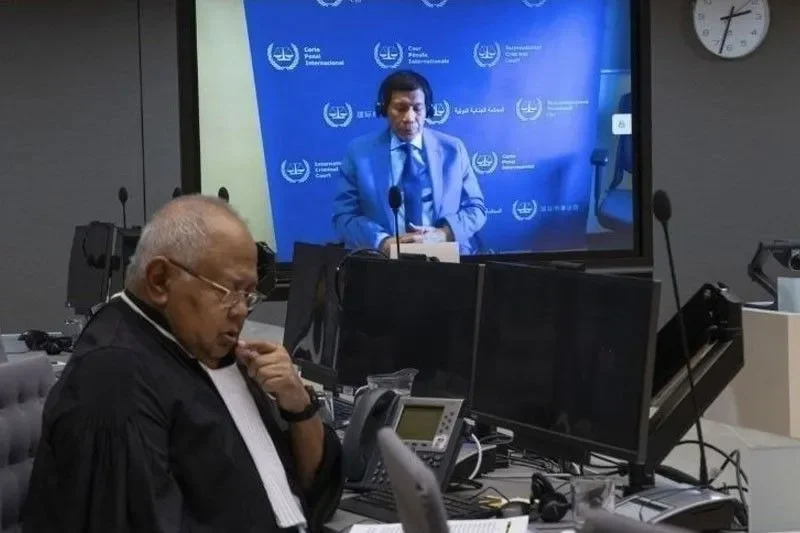
As of May 11, 2026, the International Criminal Court (ICC) has formally confirmed the issuance of an arrest warrant for Philippine Senator Ronald "Bato" Dela Rosa. The tribunal alleges that Dela Rosa, who served as the Philippine National Police chief during the height of the Duterte administration’s "war on drugs," bears individual criminal responsibility for crimes against humanity in the form of murder.
The warrant signals a critical escalation in the Hague-based court’s long-standing investigation into extrajudicial killings in the Philippines, moving from the incarceration of the former President to the inner circle of his security apparatus.
Current Status and Official Responses
Document Exposure: The warrant was brought into public view on Monday after former senator Antonio Trillanes IV presented a copy to the press following Dela Rosa’s return to the Senate.
Government Position: The office of President Ferdinand Marcos Jr., represented by Executive Secretary Lucas Bersamin, has stated that it has yet to independently verify the status of the warrant. The Department of Justice (DOJ), through spokesperson Polo Martinez, remains in a phase of verification.
Legal Conflict: Former President Rodrigo Duterte—currently detained in The Hague—has previously petitioned the Philippine Supreme Court to block government cooperation with the ICC.
| Key Figure | Status | Primary Allegation |
|---|---|---|
| Rodrigo Duterte | Detained (The Hague) | Crimes against humanity |
| Ronald Dela Rosa | Warrant Issued | Crimes against humanity (murder) |
Procedural Context and Historical Backdrop
The issuance follows a period of speculation dating back to late 2025, when conflicting reports from the Philippine Ombudsman and the ICC regarding the existence of such a warrant created confusion. The International Criminal Court has maintained that its investigation into the "Situation in the Republic of the Philippines" remains active, targeting those who orchestrated or executed the state-sanctioned violence between 2016 and 2022.
Read More: Tribunal Rules Indus Waters Treaty Still Binding for India and Pakistan
"The Chamber found reasonable grounds that Dela Rosa had committed the crimes against humanity of murder."
The Drug War killings were the hallmark of the Duterte era. While the former President was apprehended in early 2025, the pursuit of Dela Rosa indicates that the ICC intends to map the full chain of command involved in the operation. The legal tension persists as the Philippine administration balances its historical political alliances against its treaty obligations to international judicial bodies.