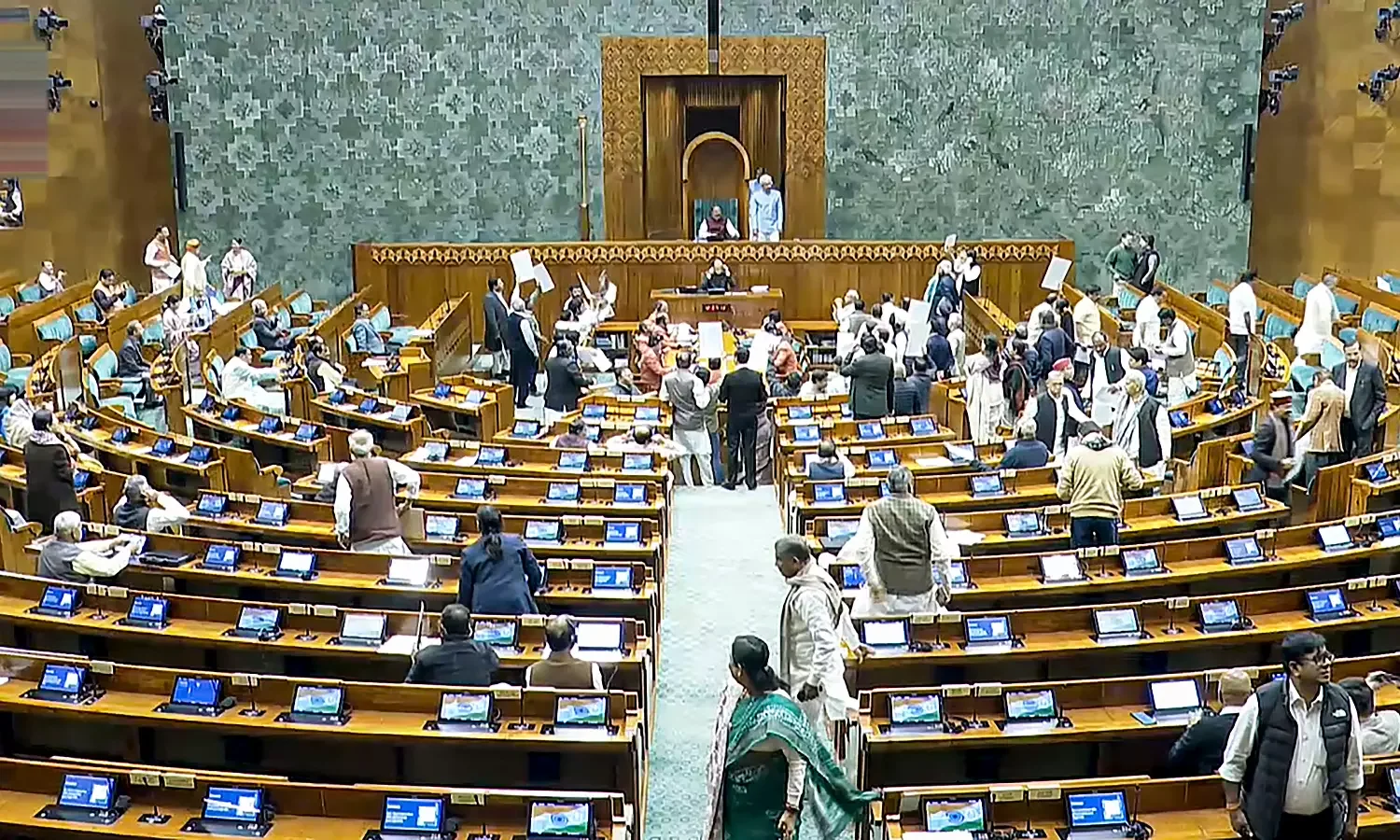
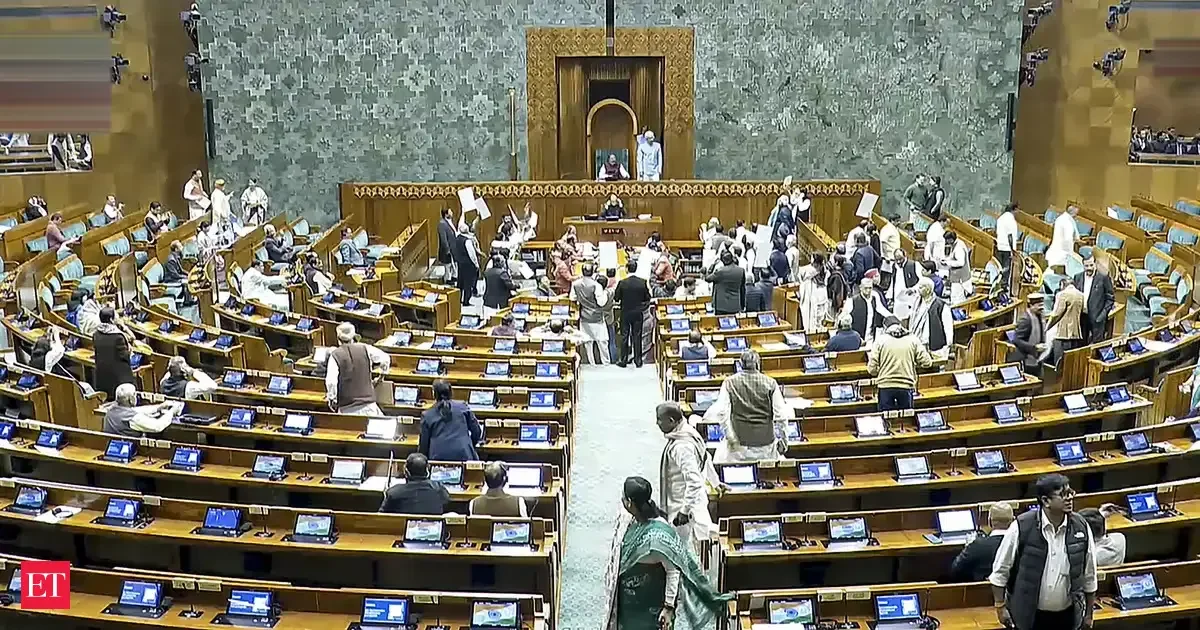
The hallowed halls of India's Parliament have once again been plunged into a familiar scene of disruption, with the Lok Sabha adjourned multiple times and ultimately until February 9th, thanks to vociferous protests by opposition MPs. But as slogans echo and the budget discussions are sidelined, one must ask: what lies beneath the surface of this parliamentary theatre? Is this a genuine expression of dissent, or a calculated strategy to derail proceedings and control the narrative? The repeated adjournments, silencing debate and preventing the passage of important legislation, demand a critical eye.
A Familiar Play, But Who Wrote the Script?
The current scene in the Lok Sabha isn't an isolated incident; it's a recurring act in the ongoing Budget Session. For days, the opposition has been raising slogans and displaying placards, effectively halting any substantive business.
Read More: Trump Disagrees with Federalist Society, Judge Stops His Courtroom Talk
The Trigger: The immediate flashpoint appears to be a controversy surrounding Rahul Gandhi, the Leader of Opposition. He was reportedly prevented from quoting from an unpublished memoir of former Army Chief General M.M. Naravane, related to the 2020 China standoff. This incident, coupled with a verbal exchange between Gandhi and Union Minister of State for Railways Ravneet Singh Bittu, has fueled the opposition's ire.
The Slogans: The opposition's chants against the "central government" and in response to Prime Minister Narendra Modi's speeches (particularly one in the Rajya Sabha) are central to their disruption. There's a pointed reference to a remark by Rahul Gandhi, where he allegedly stated, "He did not call others who left Congress traitors, but he said it to this MP because he is a Sikh. This shows the hatred Congress carries." This statement, whether accurately quoted or taken out of context, has become a rallying cry, or perhaps a point of contention.
The Speaker's Plea: Presiding over the House, the Speaker has repeatedly urged members to allow proceedings, emphasizing that elected representatives are meant to raise issues through debate, not slogans. This plea, however, seems to fall on deaf ears, leading to adjournments like the one until Monday (February 5th, presumably) and then further until February 9th.
Read More: Indian Shooter Aishwary Pratap Singh Tomar Wins Gold
The recurring disruptions suggest a pattern of deliberate obstruction, raising questions about the opposition's ultimate objective beyond immediate protest.
Echoes of Past Disruptions: A Pattern of Parliamentary Paralysis?
This isn't the first time India's Parliament has witnessed such gridlock. Looking back, similar tactics have been employed, often with significant consequences.

The Naravane Memoir Controversy: The attempt to quote from General Naravane's memoir is particularly sensitive. Debates around national security and the government's handling of border issues are prime targets for opposition criticism. Why was this specific memoir deemed off-limits, and what does the opposition believe it would reveal?
The "Sikh Remark" Controversy: The accusation of Rahul Gandhi making a remark specifically targeting a Sikh MP highlights a potential undertone of communal or identity politics. How did this specific exchange escalate into a broader parliamentary protest? Is this a genuine concern about discrimination, or a manufactured grievance to garner support?
Previous Stalling Tactics: We've seen opposition parties previously disrupt Parliament over various issues, from demonetization to farm laws. Each time, the outcome is a delay in legislative work, a significant cost to taxpayers, and a reduction in the perceived efficacy of parliamentary democracy.
Read More: Lawmakers Question Attorney General Bondi on Epstein Files
| Incident Type | Potential Opposition Aim | Government Response (Implied) | Impact on Parliament |
|---|---|---|---|
| Sloganeering & Placard Display | Disrupt proceedings, highlight grievances, grab media attention | Adjourn House, accuse opposition of anti-democratic behavior | Inability to discuss/pass legislation, wasted time |
| Specific Issue Protests | Force government action, discredit policies | Maintain stance, defend policies, criticize opposition | Focus shifts from debate to confrontation, delays |
| Personal Remarks/Exchanges | Undermine political opponents, appeal to identity groups | Accuse opposition of personal attacks, seek apology | Diversion from substantive issues, heightened tension |
The question remains: are these protests about specific grievances, or a broader strategy to undermine the government's legitimacy by demonstrating its inability to govern effectively?
The Unspoken Agendas: Beyond the Slogans
The constant adjournment means that crucial legislative business, including discussions on the Union Budget presented on February 1st, is being deferred. This has serious implications.

Budgetary Paralysis: The Union Budget is the government's financial blueprint. Delays in its discussion and passage can hinder economic planning and execution. How long can Parliament afford to postpone these critical deliberations?
Public Perception: While opposition parties aim to highlight government failures, prolonged disruptions can alienate the public, who expect their elected representatives to work. Are these tactics enhancing the opposition's image, or painting them as obstructionists?
Media Narrative Control: Disruptions often dominate news cycles, shifting focus away from policy debates and onto the spectacle of parliamentary conflict. Is this a deliberate attempt by the opposition to control the narrative, especially in the lead-up to potential elections?
Read More: India Says US Trade Paper Changes Match What Was Agreed
The inability of the Lok Sabha to even begin discussing the Union Budget, a fundamental responsibility, signals a deeper crisis in parliamentary functioning, fueled by strategic disruption rather than constructive dissent.
Expert Insights: Voices from the Political Arena
While official statements often frame the situation in terms of "unruly conduct" or "democratic protest," independent analysis offers a more nuanced perspective.

"Parliamentary disruptions are a double-edged sword. They can draw attention to critical issues that might otherwise be ignored by the government. However, when they become a consistent pattern, they can lead to public apathy and a devaluing of the parliamentary process itself." – A senior political analyst, preferring anonymity to speak freely.
"The opposition has a right to protest, but it must be within the framework of parliamentary rules. When the House cannot function for days, it raises questions about whether the opposition is more interested in making a statement or in participating in governance. The recent incidents, particularly the focus on personal remarks and the quoting of unpublished documents, suggest a shift towards sensationalism over substance." – A Member of Parliament from the ruling party (as reported in public statements).
Read More: Congress Leader Accuses Finance Minister of Lying to Parliament About WTO Deal
The expert consensus points towards a concerning trend where the tools of protest risk undermining the very institution they are meant to serve.
The Road Ahead: Resolution or Relapse?
As the Lok Sabha reopens on February 9th, the same questions will linger. Will the opposition relent, allowing for a return to constructive debate, or will the cycle of disruption continue?
What are the opposition's non-negotiable demands? Beyond the immediate trigger, what specific policy changes or governmental actions are they seeking?
What is the government's strategy to break this deadlock? Are they open to dialogue, or relying on the opposition exhausting itself?
What role can the Speaker play? Beyond adjourning the House, what measures can be taken to foster a more conducive environment for debate?
Is this a calculated gamble by the opposition to gain political mileage, or a sign of deep-seated frustration with the current governance?
Read More: India's January Inflation Rate is 2.75% with New Measuring System
The adjournment of the Lok Sabha until February 9th is more than just a pause in proceedings. It's a stark indicator of the challenges facing parliamentary democracy in India. Without a genuine commitment to debate and a willingness from all sides to engage constructively, the vibrant exchange of ideas essential for a healthy democracy risks being suffocated by the din of endless protest. The stakes are too high for this pattern of paralysis to continue unchecked.
Sources:
Deccan Chronicle: https://www.deccanchronicle.com/nation/current-affairs/lok-sabha-adjourned-until-feb-9-amid-disruptions-by-opposition-mps-1935375
The News Mill: https://thenewsmill.com/2026/02/lok-sabha-adjourned-until-february-9-after-protests-by-opposition-mps/
The Economic Times: https://economictimes.indiatimes.com/news/politics-and-nation/palrimanent-budget-session-lok-sabha-adjourned-for-the-day-amid-unabated-protests/articleshow/127976069.cms
Livemint: https://www.livemint.com/news/india/lok-sabha-adjourned-till-monday-continued-protests-opposition-rahul-gandhi-congress-bjp-india-china-us-trade-deal-11770364200710.html
The New Indian Express: https://www.newindianexpress.com/nation/2026/Feb/04/lok-sabha-adjourned-for-the-day-after-repeated-disruptions-by-opposition-over-naravane-memoir-3
India Today: https://www.indiatoday.in/india/video/lok-sabha-adjourned-amid-opposition-protests-no-pm-modi-speech-today-2863065-2026-02-04
ABP Live: https://news.abplive.com/news/lok-sabha-adjourned-till-2-pm-tomorrow-amid-chaos-pm-modi-s-speech-delyaed-1825468
Deccan Herald: https://www.deccanherald.com/india/parliament-budget-session-lok-sabha-adjourned-till-2-pm-amid-protest-by-opposition-mps-3884550
The Hindu: https://www.thehindu.com/news/national/parliament-budget-session-lok-sabha-rajya-sabha-live-updates-february-6-2026/article70598616.ece
UNI India: http://www.uniindia.com//lok-sabha-adjourned-for-the-day-amid-opposition-protests-to-meet-on-feb-9/India/news/3731802.html
Read More: Keir Starmer Faces Questions After Top Civil Servant Leaves and Controversial Appointments