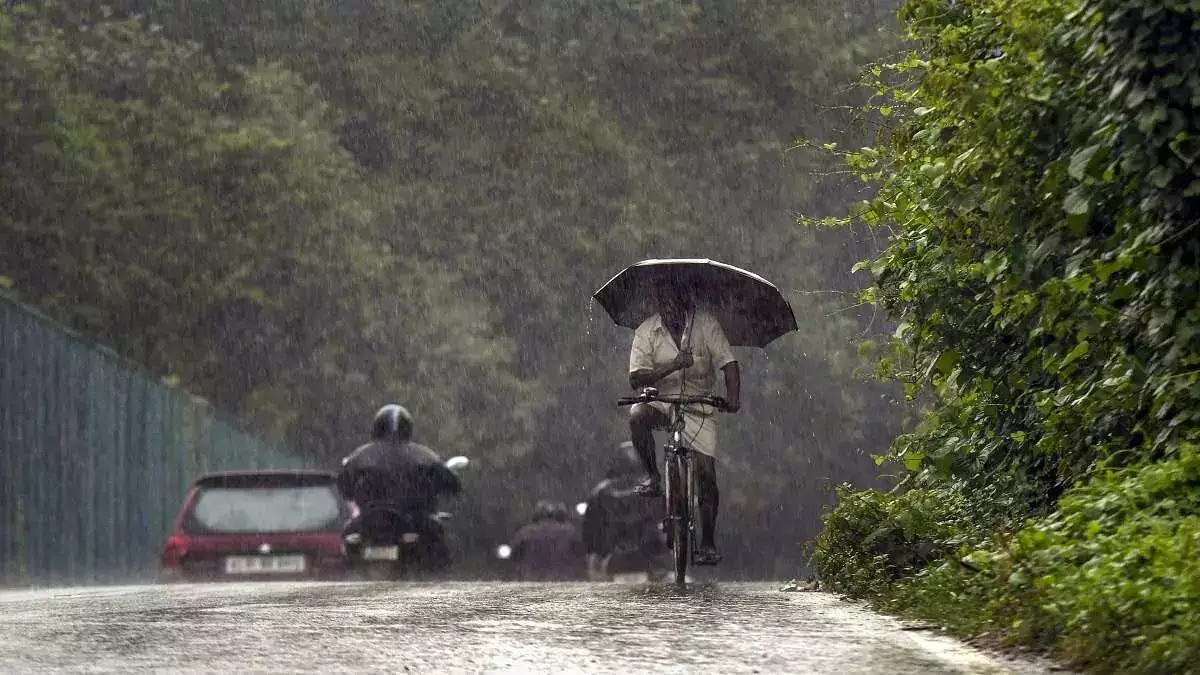
The seasonal movement of atmospheric moisture, essential for India’s agrarian economy, faces continued stagnation as the arrival of the summer monsoon is delayed again. Meteorologists note that the expected shift in wind patterns—the mechanism that brings widespread precipitation to the subcontinent—remains stalled, pushing back the standard onset dates typically observed by early June.
| Region | Expected Arrival Window | Current Status |
|---|---|---|
| South India | Early June | Stagnant / Delayed |
| Central India | Mid-June | Pending |
| North/West India | Late June/Early July | Unclear |
Farmers across the subcontinent are observing soil moisture deficits as the primary agricultural cycle waits for the thermal differential required to trigger the southwestern flow.
Regional weather stations indicate that the low-pressure troughs necessary to pull moisture-laden clouds across the Indian Ocean have failed to intensify at the expected rate.
Economic implications are mounting, as the timing of the South Asian Monsoon dictates both the Kharif sowing period and subsequent water reservoir levels.
The Mechanism of Atmospheric Shift
The monsoon is not a singular storm event but a vast, cyclical global wind system driven by temperature imbalances between the Asian landmass and the Indian Ocean. When the land warms faster than the water during the summer months, the resulting low pressure over the continent draws in moist air.
"The phenomenon relies on the persistence of heat to maintain a stable pressure gradient; interruptions in this gradient manifest as the stalled arrival currently under observation."
Historically, the arrival of these rains is marked by a clear reversal in wind direction. When this reversal is incomplete or slowed by fluctuating atmospheric pressure zones, the rainfall is patchy, leading to regional disparities in agricultural yield. While the delay is often attributed to anomalous oceanic surface temperatures and shifts in global jet streams, these are parts of a chaotic, interconnected climate architecture that resists simplistic prediction models.
Read More: Mumbai Red Alert July 2026 Causes School Closures and Train Delays
Observers maintain that until the heat-low becomes sufficiently deep, the southern reaches of the Indian peninsula will continue to experience dry, pre-monsoon conditions, creating an asymmetrical distribution of risk for producers relying on timely precipitation.