
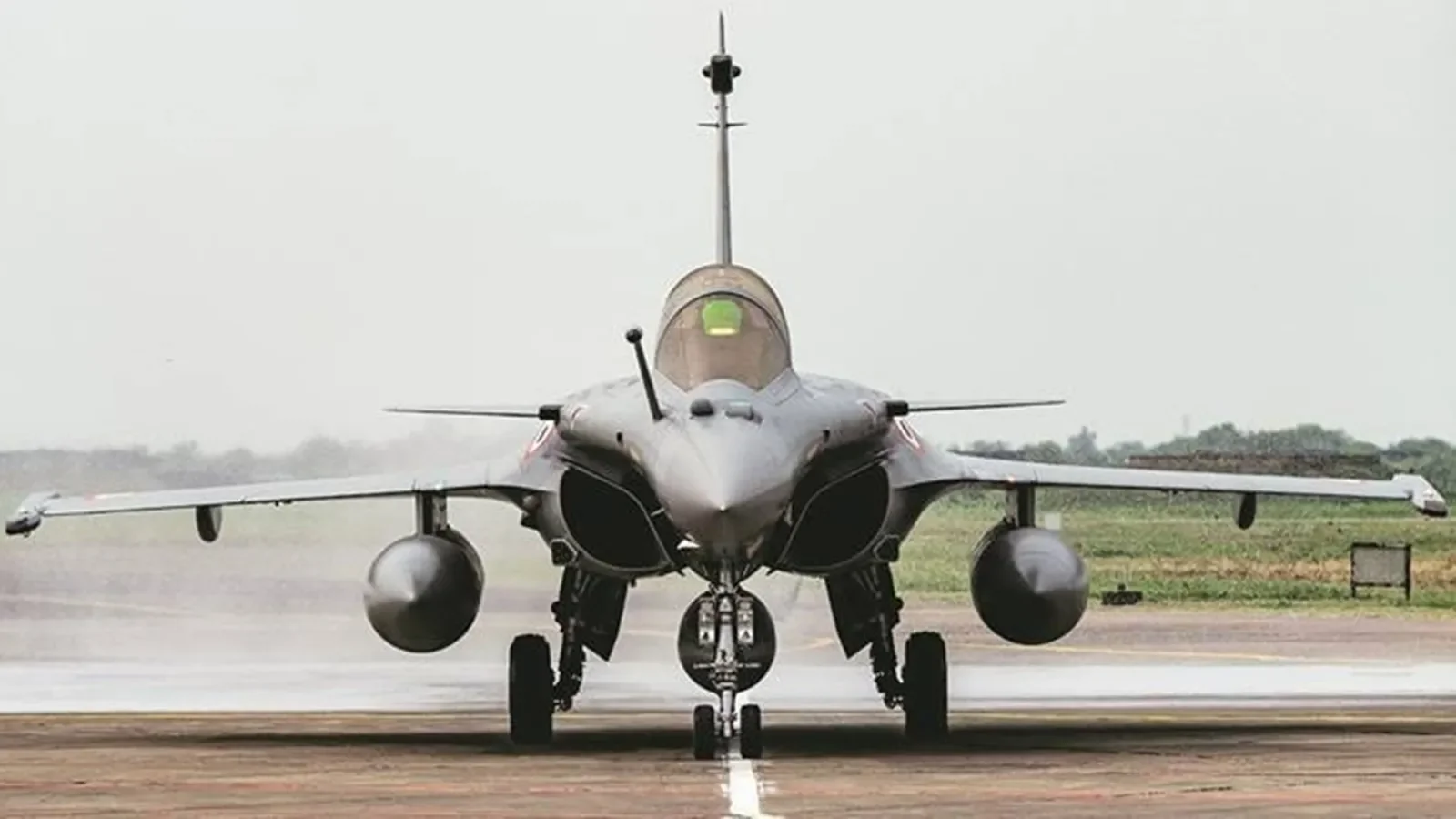
New Delhi: The Defence Acquisition Council (DAC), India's highest decision-making body for defense procurements, is slated to meet soon. On the agenda is a significant proposal to acquire 114 Rafale fighter jets from France. This potential deal, valued at an estimated ₹3.25 lakh crore, represents one of India's largest fighter aircraft procurements. The meeting is expected to occur before the upcoming visit of French President Emmanuel Macron to India.
The procurement of these aircraft is seen as critical for the Indian Air Force (IAF), which currently operates at a reduced squadron strength. Reports suggest that the DAC will also consider other defense acquisitions, including six additional P-8I maritime patrol aircraft and the development of indigenous marine gas turbine engines.
Context of the Proposed Acquisitions
The Defence Acquisition Council (DAC) is headed by the Defence Minister and includes top officials from the defense ministry and armed forces. Its primary role is to provide Acceptance of Necessity (AoN) for major defense procurement proposals, allowing them to move to the next stages of negotiation and finalization.
Read More: India's Defence Ministry approves ₹52,000 crore on Friday for new Army and Navy tech

The timing of this DAC meeting appears deliberate, as it precedes French President Emmanuel Macron's visit to India, scheduled for February 17-19. This visit is expected to include discussions on bilateral defense cooperation.
The IAF currently has 29 fighter squadrons against a sanctioned strength of 42, highlighting a significant operational gap. The acquisition of 114 Rafale jets is intended to address this shortfall, adding an estimated six to seven fighter squadrons.
Of the 114 proposed aircraft, reports indicate that 18 will be acquired in fly-away condition to meet immediate operational needs. The remaining jets are planned for manufacture in India, involving collaboration between French aerospace major Dassault and Indian private sector companies, aligning with the government's ‘Make in India’ initiative.
Read More: India IVF Costs And Social Barriers Limit Access In April 2026

Separately, the Indian Navy is looking to acquire 26 carrier-capable Rafale M aircraft for its aircraft carriers. The Navy is also seeking to procure six additional P-8I maritime patrol aircraft from the United States, adding to its existing fleet of 12.
Evidence Supporting the DAC Meeting and Agenda
Multiple reports from various news outlets indicate the impending DAC meeting and its key agenda items:
114 Rafale Fighter Jets:
The deal is valued at approximately ₹3.25 lakh crore (Articles 1, 2, 5, 6, 8, 11).
The DAC is expected to grant Acceptance of Necessity (AoN) (Articles 5, 7, 8, 15).
The Defence Procurement Board has reportedly cleared the deal (Article 7, 8).
The acquisition aims to boost the IAF's squadron strength, which is currently below the sanctioned level (Articles 1, 2, 8, 14).
Approximately 18 aircraft will be in fly-away condition, with the rest to be manufactured in India (Articles 2, 3, 5, 14).
The deal is expected to be finalized before French President Macron's visit (Articles 2, 3, 5, 7, 8, 14, 15, 16).
Dassault will integrate Indian weapons, missiles, and ammunition, along with secure data links (Article 8).
This acquisition would make India one of the largest Rafale operators globally (Article 11).
The total Rafale fleet in India would increase to around 176 aircraft (Article 11) or nearly 150 (Article 13) after this acquisition and other planned inductions.
Six Additional P-8I Aircraft:
The DAC will consider procuring six more P-8I maritime patrol and anti-submarine warfare aircraft from the United States (Articles 1, 6, 10, 12).
The Indian Navy currently operates 12 P-8I aircraft and needs more for surveillance in the Indian Ocean Region (Article 12).
Indigenous Marine Gas Turbine Engines:
A proposal for the development of indigenous marine gas turbine engines for the Indian Navy under the MAKE-I category is also on the agenda (Articles 10, 12).
Other Considerations:
The acquisition is seen as a measure to bridge capability gaps until indigenous fighter jet programs like LCA Mk1 A, LCA Mk 2, and AMCA mature (Article 4).
There have been concerns over delays in fighter aircraft deliveries, partly due to issues with engine supply (Article 3).
Significance of the Rafale Acquisition
The proposed acquisition of 114 Rafale jets is viewed as a significant step towards modernizing India's air power and addressing a critical squadron deficit. The inclusion of 'Make in India' provisions in the deal signifies a push for domestic manufacturing capabilities within the aerospace sector. The integration of indigenous weapons and systems is also a key aspect, aimed at enhancing interoperability and self-reliance.

The acquisition would substantially increase the IAF's combat readiness and extend its multi-role fighter capabilities for the foreseeable future. It also aligns with the objective of maintaining a strategic edge in the region.
Read More: India Approves ₹52,000 Crore Military Hardware Deals
Additional Maritime and Indigenous Development Projects
The potential procurement of six P-8I aircraft is intended to bolster the Indian Navy's surveillance and anti-submarine warfare capabilities, particularly in the strategically important Indian Ocean Region. The concurrent consideration of indigenous marine gas turbine engines points towards a broader strategy of reducing reliance on foreign suppliers for critical naval components and fostering domestic technological development.
Expert Insights and Stated Necessities
The Indian Air Force Chief, Air Chief Marshal A.P. Singh, has previously highlighted the necessity of acquiring new fighter aircraft due to delays in deliveries and the existing squadron shortfall. He emphasized that replacement of aging fleets and augmentation of current numbers is not merely an option but a requirement. Defence planners consider the Rafale a crucial force multiplier for the IAF, capable of bridging immediate capability gaps.
Conclusion and Next Steps
The upcoming meeting of the Defence Acquisition Council (DAC) is poised to be a pivotal moment for India's defense preparedness. The likely approval of the 114 Rafale fighter jet deal, alongside other procurements, signals a strong commitment to enhancing military capabilities.
Read More: Tamil Cinema Loses K. Bhagyaraj and Bharathiraja, Ending An Era
The decision on the Rafale jets will pave the way for detailed technical and commercial negotiations between India and France. The subsequent phases will involve the implementation of the 'Make in India' component, potentially involving significant industrial collaboration. The progress on the P-8I aircraft and indigenous engine development will also be closely watched.
These decisions underscore India's ongoing efforts to modernize its armed forces, address critical capability gaps, and bolster its domestic defense industrial base.
Sources Used:
Article 1: DAC Set to Greenlight 114 Rafale Fighters Jets And Pseudo-Satellite Projects
Context: Published ~12 hours prior to data compilation. Provides details on the DAC meeting agenda, including Rafale jets, P-8I aircraft, and a pseudo-satellite.
Article 2: India likely to clear deal for 114 Rafale jets ahead of France President's visit
Context: Published 3 days prior. Emphasizes the likely clearance of the Rafale deal before President Macron's visit and its significance as a large procurement.
Article 3: DAC to consider Rafale acquisition ahead of Macron visit
Context: Published 5 days prior. Focuses on the DAC meeting's timing relative to Macron's visit and mentions concerns over delivery delays.
Article 4: Rajnath-led council to discuss procurement of French Rafale jets this week, key nod likely
Context: Published ~14 hours prior. Details the DAC meeting agenda, including Rafale jets, and mentions the integration of indigenous weapons and bridging capability gaps.
Article 5: Boost for IAF: Rs 3.25 Lakh Crore Deal for 114 Rafales Likely to Get DAC Approval Ahead of Macron’s India Visit
Context: Published 2 days prior. Highlights the deal value and mentions production in India with French and Indian companies.
Article 6: Upcoming DAC meet likely to clear buys of 114 Rafale fighters, 6 P-8I Poseidon aircraft
Context: Published 2 days prior. Reports on the DAC meeting, Rafale and P-8I acquisitions, and the IAF's squadron deficit.
Article 7: Mega Rafale deal set to get DAC nod
Context: Published 5 days prior. States that the Defence Procurement Board cleared the deal and the DAC will review it before Macron's visit.
Article 8: Rajnath Singh-Led DAC Set To Consider Rs 3.25 Lakh Crore Deal For 114 Rafale Jets, India’s Largest Fighter Procurement Yet
Context: Published ~6 hours prior. Details the deal value, the Defence Procurement Board's clearance, and the integration of Indian weapons.
Article 9: 114 jets, Rs 3.25 lakh crore: India inches closer to mega Rafale deal ahead of Macron visit
Context: Published 3 days prior. Reports on India moving closer to the Rafale deal before Macron's visit.
Article 10: Mega Defence Procurements Likely to Get DAC Nod Next Week; Rafale, P-8I, Indigenous Engines on Agenda
Context: Published 4 days prior. Outlines the DAC agenda, including Rafale, P-8I, and indigenous engines.
Article 11: India Set to Sign ₹3.25 Lakh Crore Arms Deal With France for 114 Rafale Fighter Jets, Biggest Purchase Ever
Context: Published 1 day prior. Describes the deal as India's biggest arms deal and highlights its impact on military modernization and the 'Make in India' initiative.
Article 12: India Eyes Six More Boeing P-8I Maritime Patrol Jets As DAC Set To Take Up Delayed Deal
Context: Published 5 hours prior. Focuses on the P-8I acquisition and mentions its inclusion on the DAC agenda alongside Rafale and indigenous engines.
Article 13: Decoding India’s biggest arms deal of 114 Rafale fighter jets from France
Context: Published 1 day prior. Provides an in-depth look at the Rafale deal, including variants and the role of Indian industry.
Article 14: India Eyes 114 Rafale Jets Ahead of Macron Visit Site
Context: Published 3 days prior. Frames the Rafale deal as a strategic move and highlights the 'Make in India' aspect.
Article 15: Ahead of Macron’s visit, DAC likely to meet next week to approve deal for 114 Rafales - The Times of India
Context: Published 4 days prior. Reports on the likely DAC meeting to approve the Rafale deal before Macron's visit. (Note: Summary extraction failed or content too short)
Article 16: India likely to clear deal for 114 Rafale fighter jets next week ahead of Macron’s visit, says report
Context: Published 3 days prior. Reports on the likely clearance of the Rafale deal ahead of Macron's visit. (Note: Summary extraction failed or content too short)