New Delhi – The Environment Ministry and Indian Railways have pointed out more than 110 railway sections situated within elephant habitats as sites needing particular attention to prevent collisions. An additional 17 stretches in areas known for tigers have also been designated. This move comes as both entities report on efforts to reduce the number of animal deaths on the tracks.
The identified stretches span across elephant ranges nationally, with a specific focus on mitigating wildlife-train collisions. This initiative involves a multi-pronged approach, including the testing and deployment of technology-based solutions. Pilot projects have already seen successful implementation on sections of the Northeast Frontier Railway, covering significant portions of elephant corridors and railway blocks in Assam. These systems are designed to detect elephant movement near tracks and alert authorities to enable trains to slow down or stop, allowing animals to pass safely.
Read More: Amazon Land Use Changes Cause Disease Clusters in Brazil
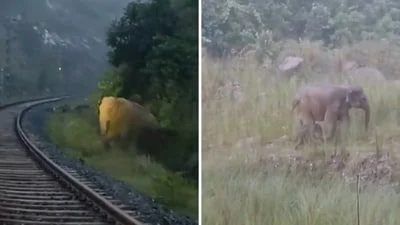
Reports indicate that new railway lines and expansions, such as doubling and tripling tracks, are now incorporating features meant to be more accommodating to wildlife. The Northeast Frontier Railway has commissioned pilot installations in four areas, impacting over 64 kilometers of elephant corridors and 141 kilometers of railway blocks in Assam. These installations are noted for their ability to detect elephant movement within 100 meters of the tracks and automatically notify forest and railway officials.
The issue of railway lines intersecting wildlife habitats is particularly pronounced in regions like Assam. Reports have highlighted specific vulnerable segments, such as the Tingrai–Bogapani–Digboi–Golai Gaon stretch running through the Bogapani corridor, and the line passing through the Dulung Reserve Forest. Another area of concern is the Harmuti–Gumto–Naharlagun line traversing the Durpong-Doimukh at the Khundakuwa elephant corridor. A survey in Assam confirmed seven out of 18 marked railway segments as vulnerable, basing its findings on past mortality incidents, observed elephant movement trails, and geographical data.
Read More: Orangutan Mothers Plan Playdates for Babies in Borneo
In a separate, albeit anecdotal, instance, a train in Jharkhand reportedly halted for two hours to allow an elephant to give birth on the tracks, an event that garnered attention and praise for its perceived 'harmonious existence'.