The arid landscape of Rajasthan has become the unlikely battleground for an international incident, as Indian authorities have issued a stark "Leave India" notice to two British tourists, Lewis Gabriel Dee and Anueshi Emma Christine, for the seemingly simple act of pasting pro-Palestine and anti-Israel stickers in the popular tourist town of Pushkar. While officials cite a clear violation of visa regulations and an infringement on local sensitivities, this swift and decisive action raises probing questions about the boundaries of freedom of expression, the perceived political sensitivities of certain global conflicts within India, and the disproportionate nature of the response. Are we witnessing a genuine enforcement of immigration laws, or a chilling signal to those who dare to voice dissent on contentious international issues?
A Sticker, A Slogan, A Swift Response
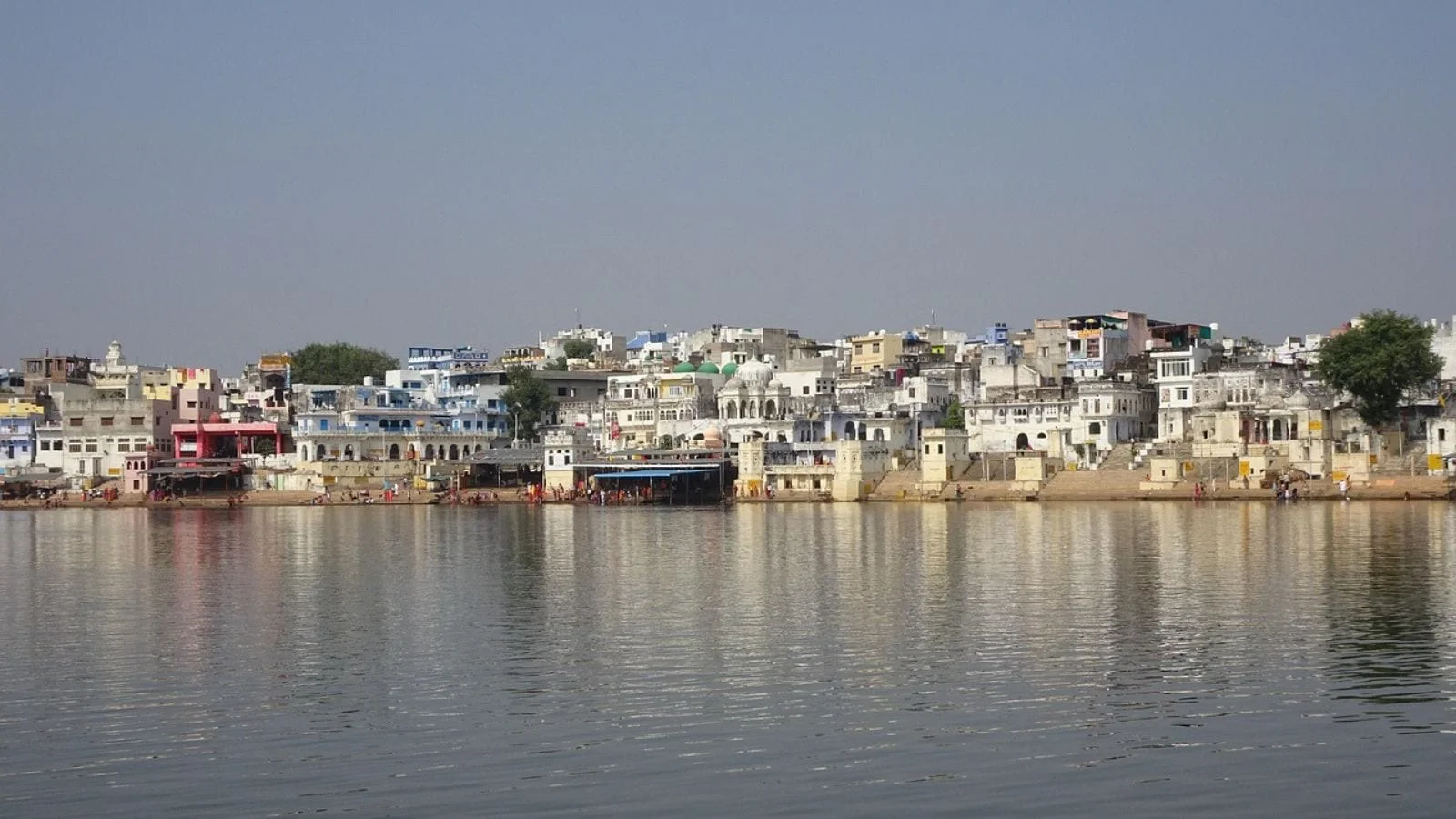
The events unfolded on January 21st, when local authorities in Rajasthan reported the presence of stickers bearing slogans like "Free Palestine, Boycott Israel" in various public spaces across Pushkar. This tourist hotspot, known for its significant influx of Israeli visitors and even a local Chabad House (synagogue), apparently perceived these messages as a direct affront.
Read More: Indian Shooter Aishwary Pratap Singh Tomar Wins Gold
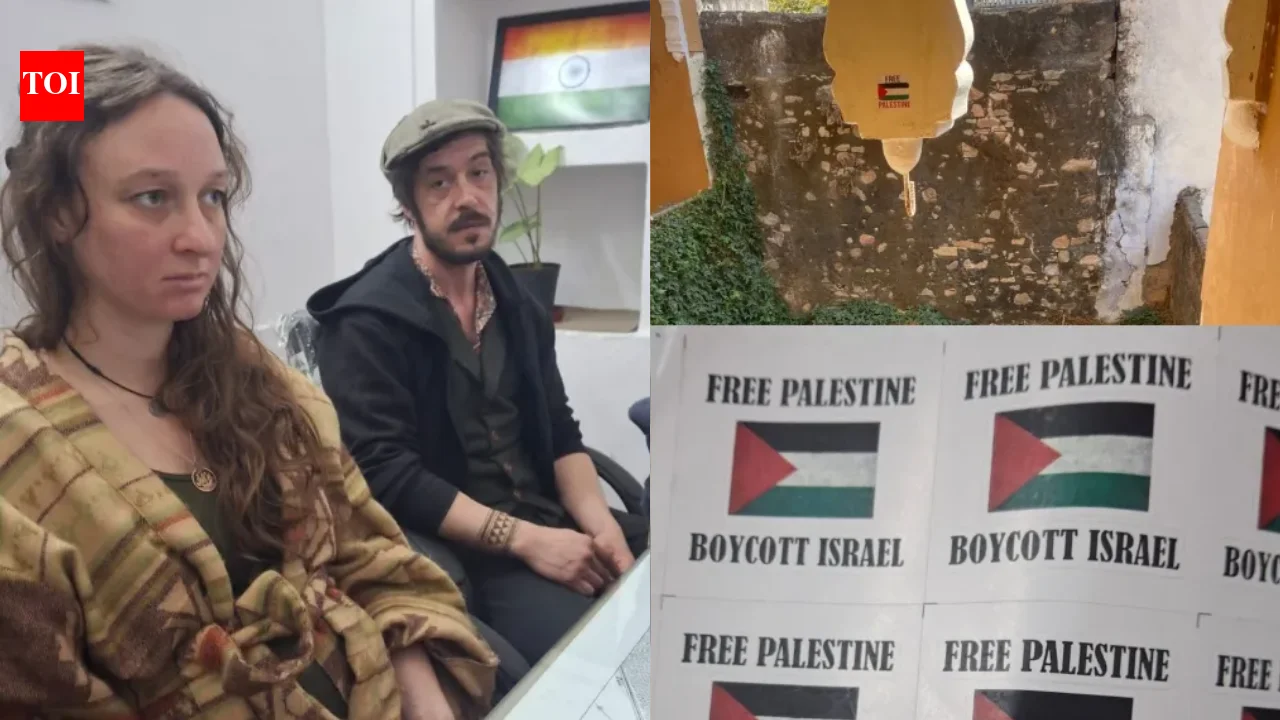
The Act: The two British nationals, Lewis Gabriel Dee (36) and Anueshi Emma Christine (36), had arrived in India on tourist visas and, according to reports, had nine sheets of these stickers printed at a local press before pasting them on walls.
The Investigation: The Rajasthan Police's Criminal Investigation Department (CID) swiftly mobilized. A CID team investigated the matter, leading to the tourists being brought in for questioning.
The Sanction: On Monday, the Foreigners Registration Office (FRO) in Ajmer confirmed that the "Leave India" notices were served. These notices, issued under the Immigration and Foreigners Act, 2025, direct the tourists to depart India "at the earliest."
The Justification: Officials, including Additional Superintendent of Police (CID, Ajmer Zone) Rajesh Meena, stated that engaging in political activities, especially those that could affect foreign relations or hurt local sentiments, is prohibited under a tourist visa. Meena also commented that such actions show "disrespect towards other countries while staying in India."
The Palestine-Israel Conflict and India's Delicate Dance
To understand the full gravity of this situation, one must grasp the broader geopolitical context and India's often nuanced position on the Palestine-Israel conflict. While India has historically supported the Palestinian cause, recent years have seen a strengthening of ties with Israel, particularly in defence and technology. This has led to a more complex and, at times, ambiguous foreign policy stance.
Read More: ICC Wants Cricket Leaders to Talk During India-Pakistan Match

Historical Support vs. Modern Ties: India was one of the first countries to recognize the Palestine Liberation Organization (PLO) and has consistently advocated for a two-state solution. However, official state visits and burgeoning diplomatic and economic ties with Israel have introduced a new dynamic.
Public Opinion vs. Government Policy: While the Indian government navigates these diplomatic complexities, public discourse, especially on social media, often reflects strong opinions on the conflict, with significant support for Palestine visible in various circles.
Pushkar's Unique Demographic: The choice of Pushkar is particularly noteworthy. The town is a significant pilgrimage site for Hindus and Sikhs but also a favoured destination for Israeli tourists, with an estimated 10,000 to 11,000 visiting annually. The presence of a Chabad House further highlights its connection to the Israeli community. This demographic concentration likely amplified the perceived impact of the stickers.
Read More: India Says US Trade Paper Changes Match What Was Agreed
"Our CID investigated and brought them in for questioning. They had come here on a tourist visa and cannot indulge in political activities." - Rajesh Meena, Additional Superintendent of Police (CID, Ajmer Zone)
Visa Norms vs. Freedom of Expression: Where's the Line?
The primary justification for the "Leave India" notice hinges on the alleged violation of tourist visa conditions. The Indian government, like many nations, restricts foreigners on tourist visas from engaging in political activities. However, the question remains: how do we define "political activity," and is the act of pasting stickers within that scope, especially in a context of international solidarity?

| Aspect | Official Stance | Probing Questions |
|---|---|---|
| Visa Violation | Engaging in political activity is prohibited on a tourist visa. | Was this a pre-meditated act intended to disrupt or was it an expression of deeply held beliefs? Does a sticker equate to political campaigning? |
| Local Sensitivities | Stickers could hurt local sentiments and affect foreign relations. | Who determines what "hurts local sentiments"? Is there a hierarchy of acceptable expressions of solidarity? |
| Freedom of Expression | India respects freedom of expression, but with limitations. | What are the "acceptable" boundaries of expression for foreign visitors in India, particularly on sensitive global issues? |
| Proportionality | "Leave India" notice issued. | Is expulsion the only or the most appropriate response for displaying stickers? Could a warning or removal have sufficed? |
Read More: Ships in [Name of Waterway] Have Close Call; Nations Blame Each Other
The tourists themselves reportedly apologised for their actions. This suggests a degree of remorse or at least an understanding of the transgression from their perspective. Yet, the authorities pressed forward with the expulsion.
Past Incidents: While this specific incident is newsworthy, concerns about foreigners engaging in political activities have surfaced before. However, the swiftness and severity of this particular action, involving direct expulsion, warrants scrutiny. Have there been instances of other nationalities engaging in similar activities without facing such drastic measures?
Selective Enforcement? Could the "Leave India" notice be influenced by the specific content of the stickers – i.e., their anti-Israel stance – rather than solely the act of pasting them? This raises the uncomfortable possibility of selective enforcement based on geopolitical alignments.
The Unspoken Implications: A Message to Activists?
Beyond the immediate legalities, the expulsion of Dee and Christine sends a potent message, both domestically and internationally. It signals that expressing solidarity with Palestine, particularly in a way that critiques Israel, might be viewed as a hostile act by Indian authorities, especially in areas frequented by Israeli tourists.
Read More: India's January Inflation Rate is 2.75% with New Measuring System
"This shows disrespect towards other countries while staying in India." - Rajesh Meena
This statement, while seemingly about visa rules, carries a deeper implication: that foreign visitors are expected to remain neutral observers, detached from the global conflicts that deeply affect populations worldwide.
Chilling Effect: Such actions can create a chilling effect on legitimate activism and free speech, making individuals hesitant to express their views for fear of reprisal, even when on vacation.
India's Global Image: For a nation that often champions its democratic values and freedom of expression, this incident could cast a shadow on its international image, particularly among those who advocate for human rights and international justice.
The "Pushkar-Israel Bond": Reports highlight a "Pushkar-Israel bond," with many Israeli tourists considering the town a "home-away-from-home." While this bond is acknowledged, does it necessitate silencing any expression that criticizes Israeli policies, even from foreign visitors? One article even mentions that right-wing groups targeted the employer of a person who supported Palestine, leading to threats. This indicates a potentially charged atmosphere where any perceived criticism of Israel can ignite a strong backlash.
Conclusion: Navigating the Tightrope of Diplomacy and Rights
The case of the two British tourists in Pushkar is a microcosm of the complex interplay between national sovereignty, visa regulations, freedom of expression, and the delicate dance of international diplomacy. While the authorities are within their rights to enforce visa conditions, the severity of the "Leave India" notice, when applied to the act of pasting stickers, raises significant questions about proportionality and intent.
Read More: India and US Agree on Trade Deal After Tariff Fights
Key Findings:
Two British tourists were expelled from India for pasting pro-Palestine/anti-Israel stickers.
Authorities cited violation of tourist visa rules and potential disruption of local sentiments.
The incident occurred in Pushkar, a town popular with Israeli tourists.
The tourists reportedly apologized for their actions.
Implications:
The expulsion highlights India's cautious approach to dissent on the Palestine-Israel conflict, especially in sensitive areas.
It may deter foreign visitors from expressing solidarity with Palestine in India.
It prompts a debate on the balance between enforcing visa norms and respecting freedom of expression for foreign nationals.
Moving forward, it is crucial to ask whether India's actions align with its broader commitments to democratic values. Will this incident lead to a stricter interpretation of permissible speech for all foreign visitors, or is it a specific response to a highly charged geopolitical issue? The world is watching to see how India navigates this tightrope, balancing its international relations with the fundamental right to voice one's conscience.
Sources:
Times of India: https://timesofindia.indiatimes.com/india/2-uk-tourists-get-leave-india-order-over-palestine-stickers-in-rajasthan/articleshow/127873818.cms
Deccan Chronicle: https://www.deccanchronicle.com/news/rajasthan-police-issue-leave-india-notice-to-two-uk-tourists-over-pro-palestine-posters-1934824
The Indian Express: https://indianexpress.com/article/india/two-british-tourists-served-leave-india-notice-for-pro-palestine-posters-in-pushkar-10510848/
Times of India (Jaipur): https://timesofindia.indiatimes.com/city/jaipur/two-british-tourists-served-leave-india-notice-over-controversial-stickers-in-pushkar/articleshow/127870230.cms
The Quint: https://www.thequint.com/news/breaking-news/british-tourists-leave-india-notice-pushkar-palestine-posters
News9 Live: https://www.news9live.com/india/leave-india-rajasthan-police-ask-british-tourists-to-exit-over-free-palestine-boycott-israel-campaign-in-pushkar-2926109
News18: https://www.news18.com/india/free-palestine-boycott-israel-posters-pushkar-rajasthan-british-tourists-leave-india-notice-ws-l-9877080.html
Swarajya: https://www.swarajyamag.com/news-brief/two-british-tourists-issued-leave-india-notice-for-pasting-pro-palestine-posters-in-rajasthan
Financial Express: https://www.financialexpress.com/india-news/2-british-tourists-served-leave-india-notice-in-rajasthans-pushkar-over-anti-israel-stickers-what-we-know/4129845/
Connected to India: https://www.connectedtoindia.com/rajasthan-police-serves-leave-india-notice-to-two-british-tourists-over-pro-palestine-posters-in-pushkar/
News Bytes: https://www.newsbytesapp.com/news/india/rajasthan-brits-asked-to-leave-india-for-posting-anti-israel-stickers/story
Siasat: https://www.siasat.com/rajasthan-cid-tells-uk-tourists-to-leave-india-for-free-palestine-posters-3336042/
ETV Bharat: https://www.etvbharat.com/en/state/two-british-citizens-ordered-to-leave-india-after-pasting-stickers-supporting-palestine-in-pushkar-enn26020206482
NDTV: https://www.ndtv.com/world-news/2-british-tourists-get-leave-india-notice-over-free-palestine-stickers-10941388
Indiablooms: https://www.indiablooms.com/news/rajasthan-two-british-tourists-served-leave-india-notice-for-pasting-pro-palestine-posters-in-pushkar/details
Rediff: https://www.rediff.com/news/report/2-british-nationals-told-to-leave-india-for-pro-palestine-posters/20260203.htm
Devdiscourse: https://www.devdiscourse.com/article/law-order/3791387-rajasthan-cid-issues-leave-india-notices-to-british-tourists-over-political-stickers
New Indian Express: https://www.newindianexpress.com/nation/2026/Feb/03/two-british-nationals-told-to-leave-india-for-pasting-free-palestine-posters-in-rajasthans-pushkar
Read More: Nationwide Strike Had Small Effect in Most Places

)