DIRECT IMAGING CHALLENGES SURMOUNTED BY HYBRID OBSERVATORIES
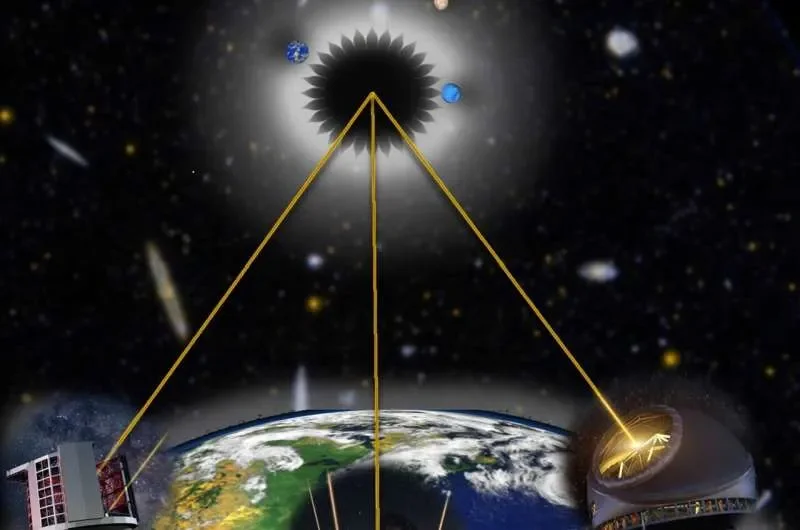
A new strategy, blending terrestrial telescopes with orbiting light blockers, promises to directly observe Earth-like planets around other stars. This "hybrid observatory" concept aims to overcome the stark contrast limitations that have long obscured these distant worlds. The core idea relies on a space-based 'starshade' to create a deep shadow, shielding Earth's atmosphere's glare and enabling ground-based telescopes to capture faint planetary light.
The proposed system leverages the 'European Extremely Large Telescope' (E-ELT), a massive ground-based instrument, to achieve the necessary resolution and sensitivity. This ground-space synergy, detailed in 'Nature Astronomy', could observe targets significantly faster than previous concepts. Early analysis suggests this approach provides a "foundational analysis" for directly imaging exoplanets with an efficiency boost, opening a new avenue for their detection and study from our own planet.
THE STARSHADE AND GROUND TELESCOPE DANCE
The starshade's role is crucial: it acts as an external coronagraph, positioned precisely to block the overwhelming glare of a host star. This creates an artificial eclipse, allowing sensitive instruments on Earth to detect the faint reflected light from orbiting planets.
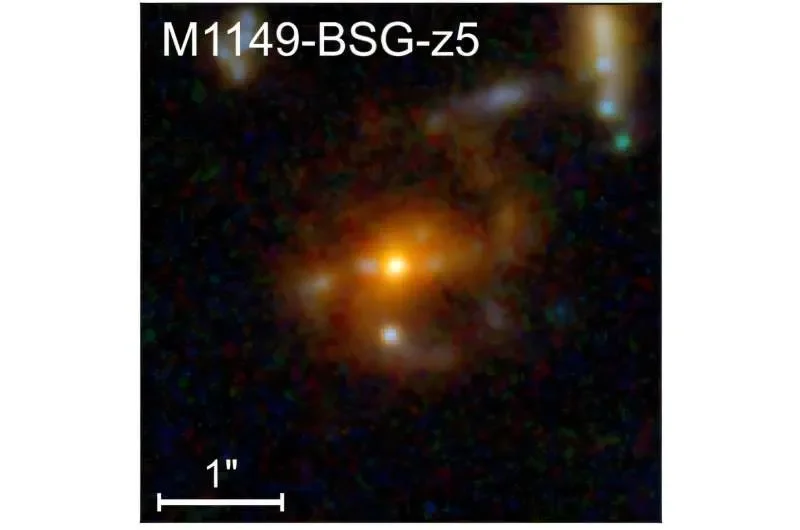
Read More: JWST Finds Oldest Barred Spiral Galaxy M1149-BSG-z5
Mechanism: The starshade flies in formation with a telescope, though not physically connected.
Advantage: By operating above Earth's atmosphere, it avoids atmospheric distortion and scattered light, a persistent problem for ground-based observations alone.
Complementary Roles: Large ground telescopes, such as the E-ELT, provide the "angular resolution and sensitivity needed to directly detect and characterize" these exoplanets, according to research published just hours ago.
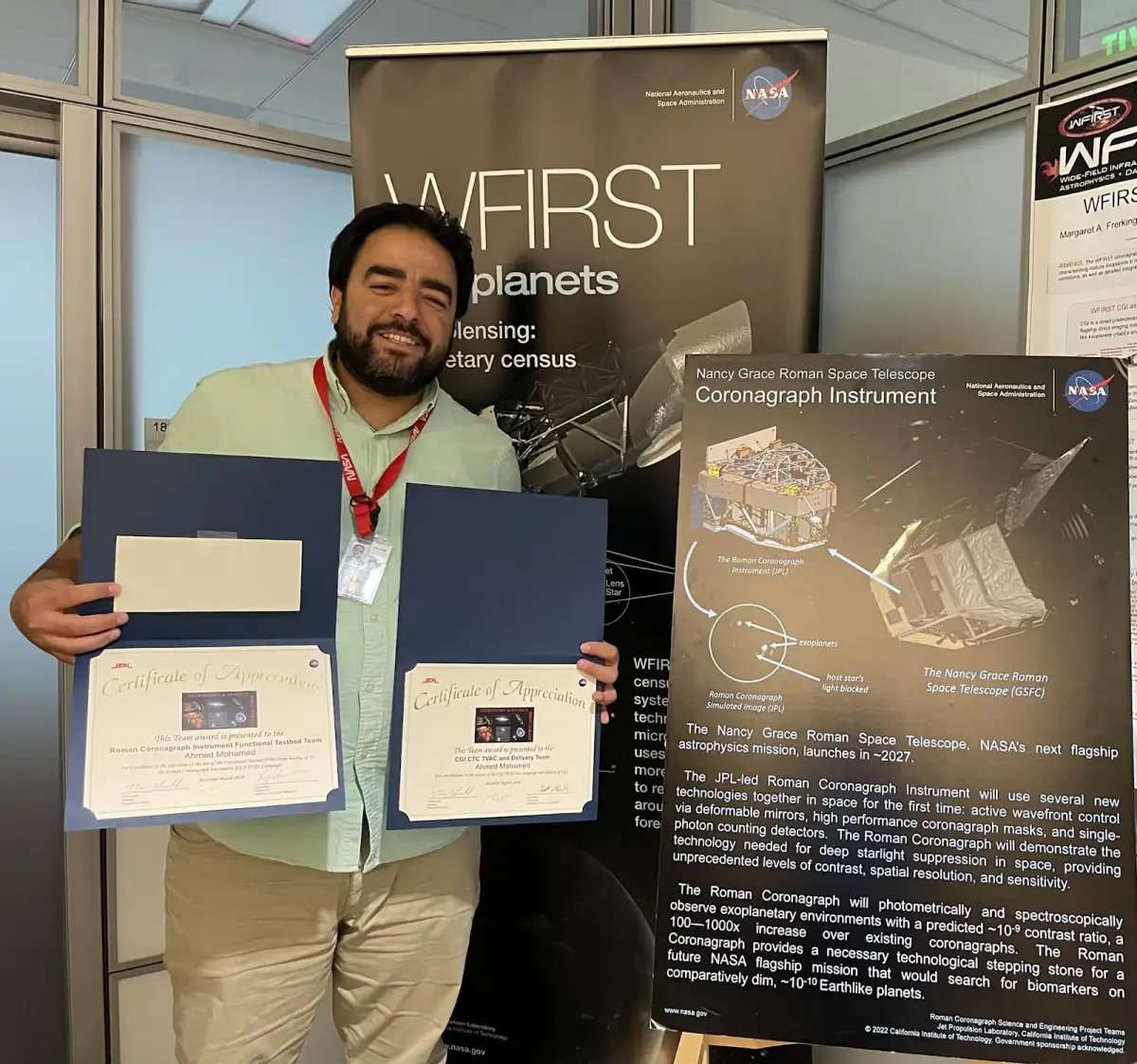
This approach contrasts with previous missions that relied on space-based coronagraphs or indirect detection methods. While NASA's 'Nancy Grace Roman Space Telescope' incorporates its own coronagraph (the 'CGI'), the hybrid model suggests a different, potentially more potent, pathway.
SEARCH FOR LIFE: A NEW FRONTIER?
The impetus behind this technological push is the persistent human curiosity about life beyond Earth. NASA's stated priorities include this search, with over 6,100 exoplanets already confirmed. While recent discoveries like HD 137010 b, an Earth-sized world orbiting a sun-like star, are significant steps, direct characterization remains the next hurdle.
This new observational strategy could potentially identify and analyze the atmospheres of these Earth-like worlds, searching for biosignatures. The ability to directly observe these planets offers a more concrete pathway to answering whether we are alone in the universe.
"The search for life beyond Earth is a key priority for both the public and NASA."
PREVIOUS DETECTION METHODS
Astronomers have historically relied on indirect methods to infer the presence of exoplanets:
Read More: US Space Force Victus Haze Mission Successfully Tests Orbital Intercepts
Transit Method: Detecting the slight dimming of a star as a planet passes in front of it.
Radial Velocity Method: Observing the "jiggly" wobble of a star caused by the gravitational tug of an orbiting planet. This method uses shifts in light frequencies, such as the "blue shift" when a star moves towards us.
While these methods have been successful in discovering thousands of exoplanets, they offer limited information about the planets' physical characteristics and atmospheric composition.

BACKGROUND: THE LONG QUEST FOR DISTANT WORLDS
The concept of observing exoplanets is not new. For decades, scientists have developed increasingly sophisticated techniques to find these celestial bodies. Early methods focused on detecting the presence of planets. The 'Hybrid Ground-Space Observatories' concept, discussed in workshops led by figures like Ahmed Soliman, Stuart Shaklan, and John Mather, represents an evolution toward characterizing them.
The 'Hybrid Observatory for Earth-like Exoplanets' (HOEE) study, referenced in a 'Nature Astronomy' paper from February 2026, outlines the potential of this hybrid architecture. This research builds upon foundational work and proposes a tangible path toward direct imaging, moving beyond speculation to concrete proposals for technological implementation.
The scale of the endeavor is immense. The E-ELT, once completed, will be one of the largest optical telescopes on Earth, providing the raw power needed. Coupling this with a precisely positioned starshade in space aims to circumvent the limitations imposed by Earth's own atmosphere and the immense distances involved. The implications, should this prove successful, are profound for our understanding of planetary systems and the potential for life elsewhere.
Read More: Astronomers' discoveries about comets and cosmic background radiation explained