Miniaturized Laser Systems Integrated with Novel Optical Isolators and Precision Packaging Developed
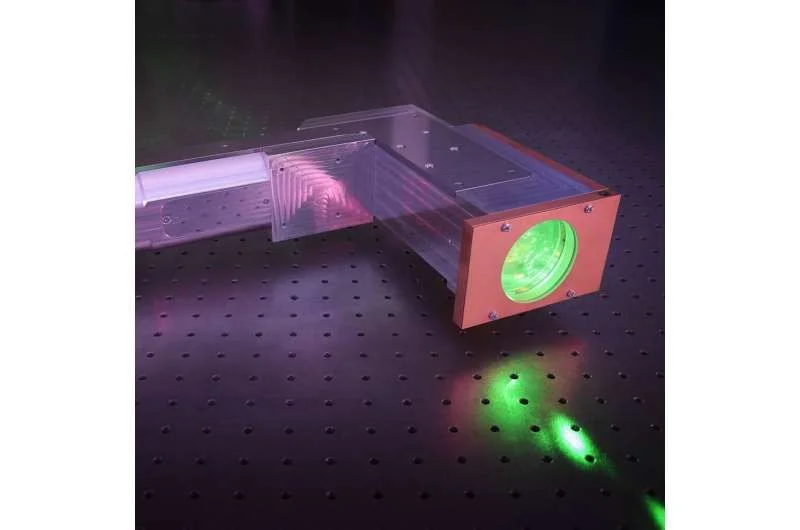
A consortium, operating under the 'HiPEQ' banner, has pushed forward the development of compact, sturdy laser sources vital for emerging quantum technologies. This advancement centers on integrating novel optical isolator crystals, grown and tested within the project, into miniaturized laser systems built upon photonic integrated circuits (PICs). These systems are designed to be far more robust and compact than current quantum technology beam sources, which are often large and not suited for real-world deployment.
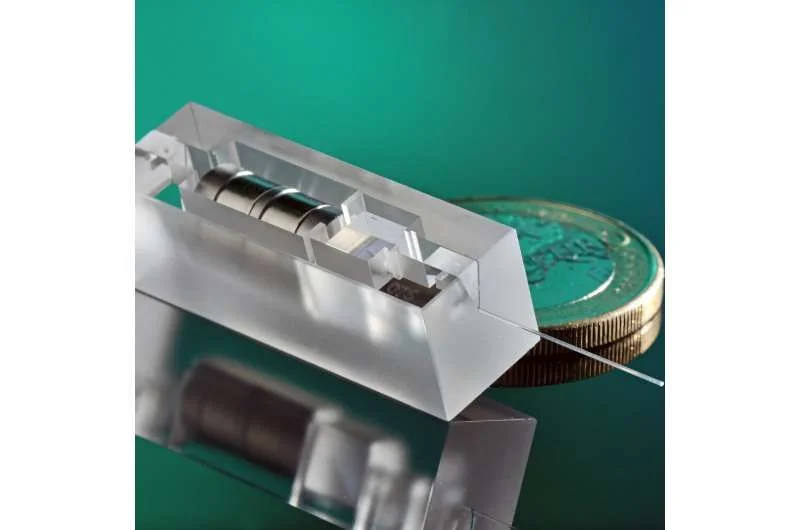
The laser systems themselves are modular, incorporating PICs, optical fibers, and specialized fiber couplers. A critical component is the optical isolator, which uses unique crystals exhibiting the magneto-optical Faraday effect. These crystals, crucial for preventing destabilizing light reflections, were grown using laser processes and boast a higher Verdet constant, enabling smaller designs that still offer essential shielding. This approach is key to creating narrow-linewidth quantum light sources required for precision applications.
Read More: Nvidia RTX 5090 Graphics Card Costs Under 500 Euros for Gamers

Scalable Visible Light Sources Emerge
In parallel efforts, separate research has yielded diode laser modules operating at specific visible wavelengths, namely 619 nm. These modules, achieving output powers over 10 mW with stabilized wavelengths and linewidths below 10 MHz, are deemed important for scalable quantum systems. Such sources are essential for exciting specific centers in materials like diamond, which are considered promising for future quantum communication networks. These visible laser advancements also point to applications in spectroscopy and automotive displays.

Laser Processes Enhance Packaging and Control
Beyond the core beam sources, laser techniques are also proving instrumental in packaging and refining the optical components. One subproject explored using lasers to manufacture and polish optics for light coupling and outcoupling. Another significant development involves a glass-based packaging platform created through selective laser-induced etching. This precision engineering allows for the integration of PICs, optical fibers, beam splitters, and isolators into a single, unified module. Experiments have demonstrated successful operation of these integrated systems at both blue and red wavelengths.
Read More: New Charge Method Changes How Chemists Work With Molecules
Broader Context: Quantum Needs and Laser Capabilities
The push for miniaturized and robust quantum beam sources is driven by the fundamental requirement for reliable, deterministic sources of quantum light, such as single photons or entangled photon pairs. These are the building blocks for a range of quantum technologies including quantum imaging, cryptography, and the development of future quantum networks.
Separately, advancements in laser technology are also exploring techniques like digital beam shaping, using Liquid Crystal on Silicon Spatial Light Modulators (LCOS-SLMs). Some LCOS-SLM models can handle significant laser input power, up to 200 watts, hinting at a convergence of precise laser control for both quantum applications and high-power industrial material processing. The characterization of laser beams for quantum optics experiments also remains an active area of research.