A recently detailed methodology employing migrating charges offers a new avenue for directly modifying recalcitrant carbon-hydrogen (C-H) bonds within organic molecules. This development, reported today, could significantly streamline the creation of complex organic compounds.
The core innovation lies in a charge-driven approach that allows chemists to target and alter C-H bonds, which are notoriously difficult to manipulate directly. This breakthrough has implications for various fields, from crafting sophisticated pharmaceutical agents to engineering novel functional materials and optimizing chemical manufacturing processes for enhanced efficiency and sustainability.
Unlocking Molecular Potential
Organic molecules, the building blocks of nearly all biological functions, are predominantly composed of carbon and hydrogen atoms. The abundance of C-H bonds presents a vast, largely untapped resource for chemical modification. This new method effectively circumvents the traditional challenges associated with activating these stable bonds.
Read More: Indigenous Data Rights Now Key in Conservation Genomics
Historically, approaches to C-H bond functionalization have involved:
Harsh oxidative conditions to break down simple alkanes.
Stoichiometric use of reactive reagents to achieve metalation of hydrocarbons.
Well-established palladium-catalyzed cross-coupling reactions, which typically require pre-functionalized starting materials like halides.
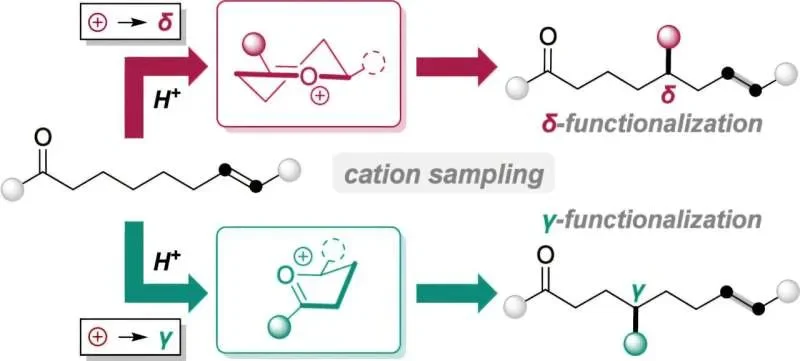
The new charge migration strategy promises a more direct and potentially less resource-intensive route, opening up possibilities for more intricate molecular architectures.
Broader Context of C-H Bond Activation
The pursuit of effective C-H bond activation has been a long-standing objective in chemistry. Early research focused on transforming readily available light alkanes into more complex liquid products. Significant advancements were made with the development of cross-coupling reactions, such as the Suzuki-Miyaura and Stille reactions, which have become workhorses in synthetic chemistry for assembling carbon frameworks. However, these methods often necessitate multi-step preparations of starting materials. The current research signifies a push towards more direct functionalization, potentially reducing synthetic steps and waste.