

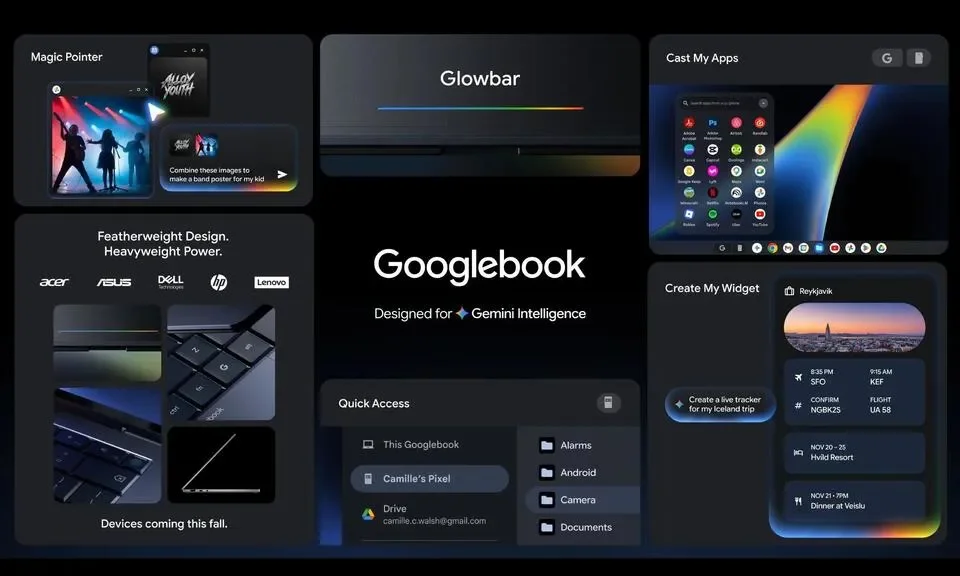
Google has officially introduced the Googlebook, a laptop series designed to integrate Gemini Intelligence with a unified platform spanning Android, Chrome, and Google Play. Despite the May 12 announcement, the company has provided limited technical specifics, including no confirmed pricing, launch dates, or clear definitions regarding the operating system—with reports hinting at a new environment internally referred to as Aluminium.
The central premise of the Googlebook is an 'AI-first' convergence of hardware and software, intending to bridge mobile and desktop workflows through shared files, cross-device cursor utility, and automated Gemini-powered widgets.
| Feature | Status |
|---|---|
| OS | Unconfirmed (Possibly 'Aluminium') |
| Primary Integration | Gemini Intelligence |
| Pricing | Undisclosed |
| Status of Chromebooks | Continued development / Co-existence |
The Friction of Purpose
Industry observation as of May 20, 2026, reveals a skeptical landscape. Critics point to a lack of utility justification; while Chromebooks initially solved a market need for accessible, low-cost computing, the Googlebook enters a saturated market with an unproven reliance on AI-driven workflows.
Read More: Chrome mimeHandler API lets extensions handle file types
Fragmented Hardware: Concerns remain regarding the mix of silicon across potential third-party manufacturers like Samsung.
The 'MacBook' Ambition: Google appears to be positioning the device as a premium competitor, yet the hardware lacks a clear unique selling point (USP) outside of deep Android ecosystem tethering.
Ambiguity: Google’s internal messaging remains opaque. While promoting this new category, they simultaneously maintain support for the existing Chromebook Plus lineup, leading to market confusion about long-term product roadmaps.
Background: From Chrome to Gemini
The transition marks a shift in how Google manages its Platform strategy. For years, the firm treated ChromeOS and Android as separate silos. The Googlebook project serves as an anchor for the Gemini intelligence engine, aiming to force a cohesive user experience where personal data, file management, and mobile applications interact without manual user intervention.
Despite these Technological promises, the market response has been tempered by the reality of current Android ecosystem fragmentation. As Google pushes for deeper integration, it faces the challenge of convincing users that an "AI-first" laptop is a necessary evolution rather than a software overlay on existing hardware paradigms. The lack of concrete details—ranging from the base Operating System to unit costs—continues to shadow the project's legitimacy.





.png)

