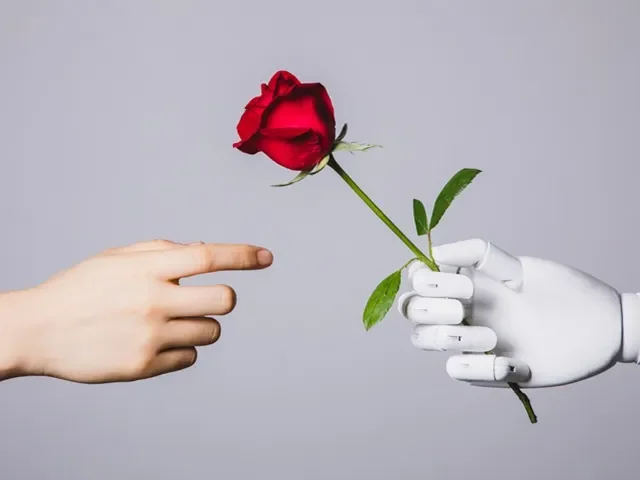
Recent media narratives are pushing to normalize connections between humans and artificial intelligence entities, sparking discussions about evolving relational landscapes. Reports highlight efforts to 'destigmatize' romantic involvements with AI chatbots, a phenomenon gaining traction amidst broader technological integration into daily life.
The discourse suggests a deliberate media effort to reframe human-AI romantic relationships, moving them from fringe to more accepted territory. This shift appears linked to the increasing sophistication and accessibility of AI conversational agents. These technologies are no longer confined to science fiction; they are actively shaping user experiences, prompting anthropological and sociological inquiries.
Unintended Entanglements
Many individuals find themselves in these AI relationships not by deliberate pursuit, but as an unplanned consequence of using AI for other purposes. Research indicates a significant portion of users develop these bonds unintentionally, often while engaging with AI for companionship or support. Online communities dedicated to discussing these relationships reveal members sharing experiences, seeking advice, and coping with changes in AI behavior due to updates. This emergent pattern challenges the idea that such relationships are always sought-after.
Read More: Chrome mimeHandler API lets extensions handle file types
Potential Benefits and Pervasive Pitfalls
The integration of AI into intimate human experiences presents a complex duality. On one hand, these companions offer potentials such as:
Facilitation of personal growth and well-being.
Provision of emotional connection and perceived social support.
Availability of customizable interactions.
Outlet for entertainment and stress relief.
Conversely, significant concerns are emerging:
Over-reliance and susceptibility to manipulation.
Stigma and perceived shame associated with AI romantic partners.
Risks of personal data misuse.
Potential erosion of human relationships.
Perpetuation of biases within AI systems.
Disruption from system updates or technical glitches, impacting emotional connection.
Uncanny valley effects.
Concerns about coercion and early exposure to mature content.
Systematic reviews suggest that while AI companions can reduce loneliness and offer a form of connection, they also introduce substantial risks that warrant careful consideration and further investigation.
Broader Context and Scholarly Interest
This burgeoning field is attracting academic attention, with researchers exploring its nuances. Studies delve into how people interact with AI agents, navigate relationship stages, and perceive their connections. The development of embodied conversational agents, like Replika, has accelerated the study of human-AI romantic relationships, drawing parallels with earlier science fiction explorations. While some media outlets frame these developments, like Breitbart Editor-in-Chief Alex Marlow's commentary on "The Alex Marlow Show," others conduct deeper analysis. A significant MIT study, for instance, found that while a small percentage of users actively seek AI companions, a larger group enters these relationships unintentionally. This research also underscores the therapeutic potential of chatbots while urging developers to implement safeguards.
Read More: New Atheism movement splits on April 7 2026 over political views
The data suggests that the phenomenon is far from simple. It involves a spectrum of user engagement, from those open about their AI relationships to those who keep them hidden, and even a percentage who have replaced human companions with technology. The growing body of work indicates a need for a comprehensive understanding, examining these relationships through theoretical lenses like Sternberg's Triangular Theory of Love to map their potentials and pitfalls comprehensively.