The tranquil image of Goa, famed for its sun-drenched beaches and vibrant culture, is now overshadowed by a fiery environmental battleground. At the heart of this conflict lies a proposed tiger reserve, a plan endorsed by a Supreme Court-appointed committee but vehemently opposed by the Goa government. This isn't just about protecting striped predators; it's a complex dance involving ecological integrity, the rights of local communities, and the very definition of what constitutes a "resident" tiger. The recent flurry of affidavits and reports paints a picture of deep-seated disagreements, raising crucial questions about the scientific basis of conservation efforts and the government's commitment to preserving its natural heritage.
The Tiger's Trail: From High Court Directive to Supreme Court Scrutiny
The saga of Goa's proposed tiger reserve is a multi-year legal and administrative tussle, reaching a critical juncture with the Supreme Court's intervention. The core issue stems from a Bombay High Court order in July 2023, which mandated the Goa government to notify five specific protected areas as a tiger reserve within three months. These areas, collectively referred to as the “Mhadei WLS and Other Areas,” encompass:
Read More: Plan to Build Big Ice Wall to Save Doomsday Glacier
Mhadei Wildlife Sanctuary
Bhagwan Mahavir Wildlife Sanctuary
Bhagwan Mahavir National Park
Netravali Wildlife Sanctuary
Cotigao Wildlife Sanctuary
This directive immediately sparked a strong reaction from the Goa government, which appealed the decision to the Supreme Court. The state's primary argument? The absence of a resident tiger population. This pivotal point has become the cornerstone of their opposition, leading to a series of legal maneuvers and the formation of a special committee to adjudicate the matter.
"Any proposal for notifying an area as a Tiger Reserve must be predicated upon the presence of breeding/resident Tigers in the concerned area." - Goa's Additional Principal Chief Conservator of Forests, K. Kumar, in an affidavit to the Supreme Court.
This statement from Goa's forest official encapsulates the state's stance, directly challenging the premise that mere transient tiger presence warrants a full-fledged tiger reserve.
Read More: Indian Shooter Aishwary Pratap Singh Tomar Wins Gold
The Central Empowered Committee's Blueprint
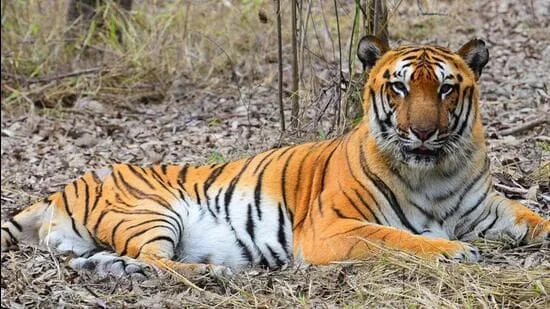
In response to the escalating dispute, the Supreme Court constituted the Central Empowered Committee (CEC), an expert body tasked with examining the feasibility and implications of the proposed tiger reserve. The CEC, after conducting its own assessments and hearing stakeholders, submitted a report recommending a phased approach to the notification. Their proposal aims to strike a balance between immediate conservation needs and addressing potential concerns of the local population.
The CEC's phased plan for the tiger reserve is as follows:
| Phase | Area | Designation | Key Characteristics |
|---|---|---|---|
| Phase 1 | ~468.6 sq km: Cotigao WLS & Netravali WLS (contiguous with Kali Tiger Reserve, Karnataka) | Core Area | Minimal human habitation, contiguous with Karnataka's tiger habitat. |
| Phase 1 | 64.9 sq km: Bhagwan Mahavir Wildlife Sanctuary; 107 sq km: Bhagwan Mahavir National Park (Northern Part) | Buffer Area | Relatively few households. |
| Phase 2 | Mhadei Wildlife Sanctuary | To be considered later | Potentially for future inclusion after initial phase. |
Read More: Cartoonist Rohan Chakravarty Uses Funny Pictures to Teach About Nature
This strategic, two-pronged approach is designed to:
Prioritize ecologically critical areas: The initial focus is on land directly connected to the established Kali Tiger Reserve in Karnataka, known for its strong tiger population.
Minimize immediate disruption: By proposing a phased rollout, the CEC aims to allow for community consultations and confidence-building measures.
Address governance gaps: The CEC's involvement suggests a need for an impartial assessment and a clear roadmap beyond the immediate legal directives.
Despite this seemingly structured proposal, the Goa government has continued to push back, deeming the CEC's report "vague and without legal or factual basis." This stark disagreement raises serious questions: Is the government misinterpreting scientific evidence, or are there genuine concerns being sidelined?

Goa's Counter-Argument: No Tigers, No Reserve?
The Goa government's primary contention against the tiger reserve notification hinges on the perceived lack of a resident tiger population. They argue that the occasional sighting of tigers, often transient individuals passing through from neighboring states like Karnataka, is insufficient grounds for declaring a protected area as a tiger reserve.
Read More: India Says US Trade Paper Changes Match What Was Agreed
"The government said there is no evidence that the two tigers spotted in Mhadei Wildlife Sanctuary and Mollem National Park were distinct individuals or the same tigers moving across adjoining areas." - Indian Express, October 27, 2025.
This assertion raises several critical questions:
What constitutes "resident"? Does it mean a stable breeding population, or is the presence of a viable corridor for tigers to move through also significant for their long-term survival?
Is scat DNA evidence conclusive? The government notes that scat DNA evidence, while indicating tiger presence, is "not conclusive evidence of the presence of resident tigers." How much weight should such evidence carry in conservation decisions?
Are current protections adequate? The government posits that existing wildlife sanctuary status already provides sufficient safeguards for tigers and other animals. If so, what additional benefits does a "tiger reserve" designation offer that current protections do not?
Read More: UK Winters Are Getting Wetter, Scientists Say
The state government's affidavit in the Supreme Court has been unequivocal:
"The protected area proposed to be declared a tiger reserve has a huge population of about 1,00,000 inhabitants, spread across several villages and that these people would be most unwilling to be relocated elsewhere." - Goa Government's submission to the CEC.
This highlights a significant point of friction: the potential impact on livelihoods and human populations. However, environmental advocates counter this by emphasizing that the proposed areas for the first phase of the tiger reserve have minimal human habitation.
Netravali Wildlife Sanctuary: Approximately 50 households.
Cotigao Wildlife Sanctuary: Approximately 41 households.
Bhagwan Mahavir Wildlife Sanctuary (Northern Part): 9 households.
Bhagwan Mahavir National Park: 2 households.
These figures, provided by the CEC, directly challenge the scale of the displacement concern articulated by the Goa government, particularly for the initial phase of the proposed reserve.
Read More: India's January Inflation Rate is 2.75% with New Measuring System
The Environmentalist's Stand: Corridors, Conservation, and Commerce
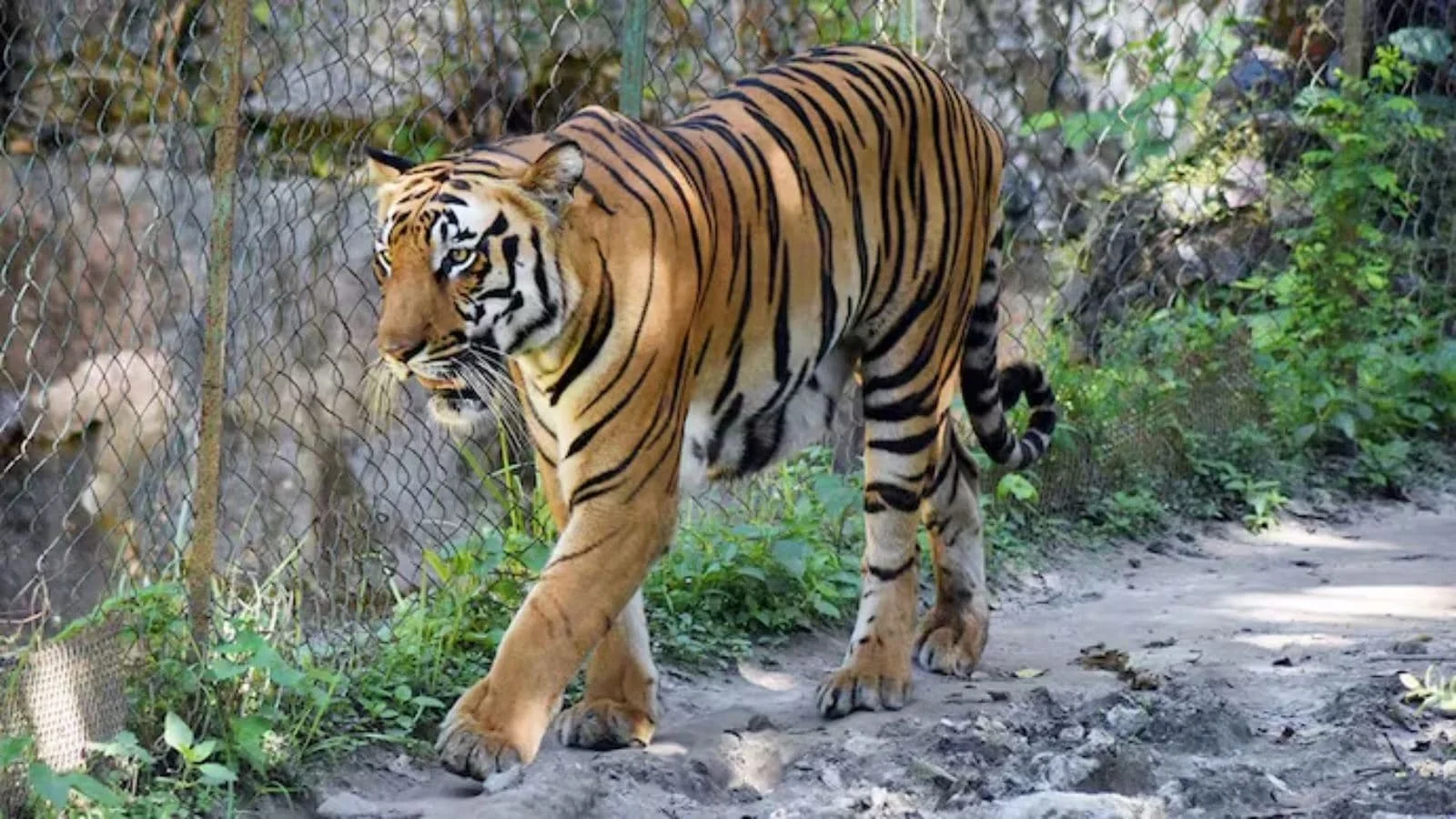
Environmental groups, led by the Goa Foundation, have been staunch advocates for the tiger reserve, arguing that the proposed areas are crucial for tiger conservation and maintaining vital ecological corridors. Their perspective is grounded in the understanding that tiger survival is not solely dependent on isolated pockets but on interconnected landscapes.
"The forests of Goa, particularly its wildlife sanctuaries, often form a contiguous corridor for tigers in the Kali Tiger Reserve in Karnataka and the Sahyadri in Maharashtra." - The Hindu, November 29, 2025.
This connectivity is a key argument for the tiger reserve:
Landscape-level Conservation: The proposed Goa Tiger Reserve, when combined with the Kali Tiger Reserve in Karnataka, creates a significantly larger protected landscape (approximately 1,814 sq km). This integrated approach is considered essential for the long-term survival of species like tigers that require vast territories.
Safe Corridors: The reserve aims to ensure safe passage for tigers moving between the established populations in Karnataka and potentially further north towards Maharashtra.
Ecosystem Health: Advocates argue that protecting these areas as a tiger reserve will safeguard not only tigers but also the entire biodiversity of the Western Ghats, a UNESCO World Heritage site.
Read More: Study Says UK Electric Cars and Heat Pumps Don't Save Carbon Yet
The Goa Foundation has actively challenged the state government's stance, pointing out what they perceive as a conflict of interest:
"Government-approved eco-tourism projects in core sanctuary zones threaten both the tiger habitat and the broader ecosystem." - Advocate Norma Alvares, Goa Foundation.
This suggests that the government's resistance to the tiger reserve might be linked to its plans for development and eco-tourism within these ecologically sensitive areas. The Supreme Court's order to maintain status quo on development activities in the proposed reserve areas since September 2025 underscores the urgency and the potential for conflict between conservation goals and commercial interests.

Legal Quagmire and Missing Files: A Tangled Web
The legal battle has been characterized by procedural complexities and, in at least one instance, a baffling administrative lapse. The Goa government's appeal against the Bombay High Court's directive has led to the Supreme Court mandating the CEC to examine the issue. During these proceedings, a rather peculiar revelation emerged:
Read More: Nationwide Strike Had Small Effect in Most Places
"Goa’s principal conservator of forests Kamal Datta said it was a fact that the file containing the tiger reserve proposal is missing." - Hindustan Times, September 19, 2025.
The disappearance of such a critical file raises serious questions about the government's administrative efficiency and its genuine commitment to addressing the tiger reserve issue:
What caused the file to go missing? Was it negligence, an intentional act, or something else entirely?
What was in the missing file? Did it contain crucial historical data, previous assessments, or specific government decisions that might shed light on their current opposition?
How does a government lose a file pertaining to a Supreme Court-mandated environmental assessment? This lack of basic record-keeping is highly concerning.
This missing file adds another layer of suspicion to the ongoing dispute. It emboldens critics who suggest that the government is perhaps less interested in a rigorous, transparent process and more focused on obstructing the tiger reserve notification. The CEC's directive to the state to initiate the notification process within three months, as reported in November 2025, indicates a continued push for action, irrespective of the missing paperwork.
The Path Forward: Scientific Rigor vs. Political Will
The Supreme Court's ongoing involvement and the CEC's recommendations highlight a critical juncture for Goa's environmental future. The core of the dispute—whether the presence of transient tigers necessitates a tiger reserve—remains contested. However, the broader implications extend far beyond this specific definition.
The CEC's phased approach, focusing initially on areas with minimal human habitation and strong connectivity to existing tiger habitats, appears to be a pragmatic attempt to move forward. It allows for:
Scientific validation: The core areas identified are ecologically significant and already protected, making them ideal candidates for enhanced conservation status.
Community engagement: The emphasis on stakeholder consultations in the phased approach acknowledges the human dimension of conservation.
Phased development control: The status quo ordered by the Supreme Court provides a much-needed pause on potentially harmful development projects.
However, the Goa government's persistent opposition, citing "vague and unscientific" grounds and highlighting potential livelihood concerns (which seem disproportionate to the proposed Phase 1 areas), warrants closer scrutiny. Are these genuine ecological and social concerns, or are they a smokescreen for other developmental agendas?
| Aspect | Goa Government's Stance | CEC / Environmentalists' Stance |
|---|---|---|
| Tiger Presence | "No resident tigers"; transient tigers are insufficient justification. | Tigers use Goa as a vital corridor between Karnataka and Maharashtra; presence, even if transient, indicates ecological significance. |
| Proposed Reserve Area | Concerns about large population (~100,000 inhabitants) needing relocation. | Phase 1 areas have minimal habitation (tens of households); concerns are exaggerated or misrepresented. |
| Scientific Basis of CEC Report | "Vague and unscientific." | Report provides a structured, phased approach based on ecological connectivity and human habitation data. |
| Development Concerns | Underlying interest in hinterland tourism and other projects. | Development projects in core sanctuary zones threaten habitats and ecosystems. |
| Administrative Process | Significant file related to the proposal reported missing. | Adds to concerns about the government's commitment and transparency. |
The Supreme Court’s directive for the CEC to hear all stakeholders and submit a report is a crucial step. It ensures that all voices are heard and that decisions are based on comprehensive data and expert opinions, rather than solely on political will or administrative convenience. The fate of Goa's wild heart now rests on the CEC's ability to present an irrefutable case and the Supreme Court's resolve to enforce conservation imperatives, ensuring that the tigers, and the forests they depend on, are protected for generations to come. The question remains: will Goa embrace its role as a critical link in India's tiger conservation efforts, or will it allow other interests to pave over its wild heritage?