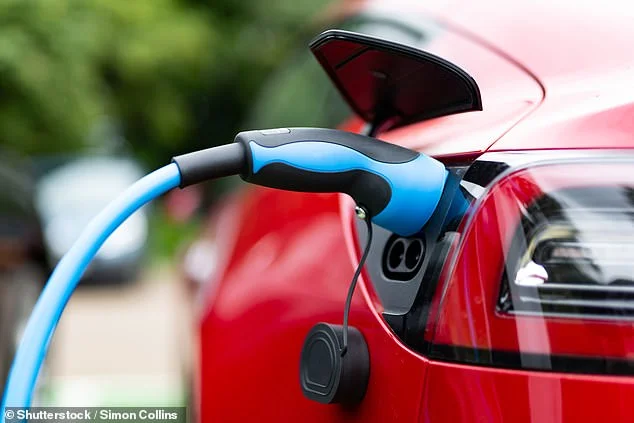
A recent study has raised significant questions about the actual carbon savings delivered by electric vehicles (EVs) and heat pumps in the United Kingdom. Researchers from Queen Mary University of London suggest that, given the current state of the UK's electricity grid, these technologies may not be reducing emissions as widely assumed. The findings challenge prevailing net-zero planning strategies and call for a re-evaluation of priorities.
The central argument of the study is that until the UK's electricity generation is substantially decarbonised and its grid infrastructure is strengthened, the widespread adoption of EVs and heat pumps does not yield "proven carbon savings." This assertion stems from the fact that a significant portion of the UK's electricity is still generated from fossil fuels. Therefore, the energy used to power EVs and heat homes, while potentially cleaner at the point of use, carries "embedded emissions" from the power generation process. The study's authors describe their work as a "sanity check" on current net-zero strategies, urging a focus on foundational issues before accelerating electrification.
Read More: Cartoonist Rohan Chakravarty Uses Funny Pictures to Teach About Nature
Study's Core Arguments and Proposed Solutions
The research, published in Environmental Research: Energy, posits that a fundamental shift in the UK's energy approach is necessary. The authors argue that the current emphasis on accelerating electrification, such as the push for EVs and heat pumps, is misplaced until key infrastructural and supply-side problems are addressed.
The study outlines four urgent priorities:
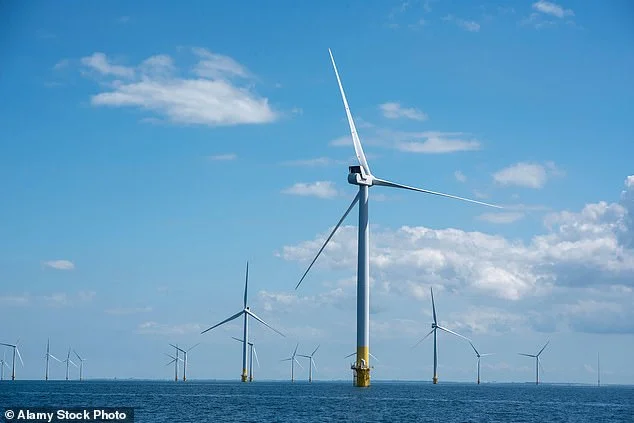
Grid Strengthening: Enhancing the electricity grid's capacity to handle and transport generated power from renewable sources to where it is needed. This aims to reduce the "curtailment" of wind generation, where turbines are shut down because the grid cannot accept the energy produced.
Renewable Generation Acceleration: Speeding up the installation of renewable energy sources like wind and solar power.
Surplus Energy Absorption: Introducing technologies that can absorb excess renewable energy, such as those used for green hydrogen production or synthetic fuel generation.
Carbon Capture and Storage: Rapidly implementing carbon capture and storage (CCS) for gas plants, which are expected to remain operational for a significant portion of the time in the coming years.
Read More: Many People Still Waiting Long Times for NHS Hospital Care
The researchers emphasize that EVs and heat pumps will likely become valuable tools for emissions reduction in the future, but only when the UK possesses a substantial surplus of clean energy generation and a resilient grid to support it.
Examination of Current Grid Limitations
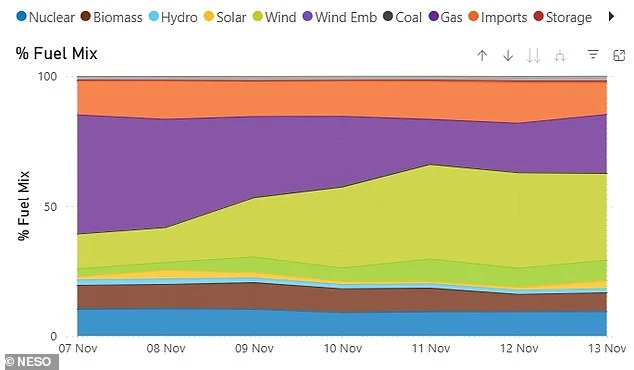
A key piece of evidence supporting the study's claims is the observation that wind turbines are sometimes shut down. This phenomenon, known as curtailment, indicates that the electricity grid cannot currently manage the full capacity of renewable energy being generated. This suggests that even if more EVs are introduced, their power source is still heavily reliant on fossil fuels when renewables are intermittent or at peak production.
"The UK is prioritising the wrong things. EVs and heat pumps will be valuable later — but for now, we must stop pretending they are reducing emissions when the data shows they aren’t." - Study Authors
Read More: UK Winters Are Getting Wetter, Scientists Say
The authors argue that many existing studies on EV carbon savings are based on optimistic assumptions about future grid conditions or do not account for the full lifecycle emissions.
Counterarguments and Alternative Perspectives
Some analyses suggest that the study's conclusion might be based on a narrow interpretation of carbon savings. For instance, one perspective notes that while EVs do carry embedded emissions from electricity generation, a comprehensive lifecycle assessment must consider both upstream and downstream emissions for both electric and combustion vehicles.
"The study’s core point is straightforward: because the UK grid still relies partly on fossil fuels, the electricity used to charge EVs carries embedded emissions. It leans on a narrow analysis from Queen Mary University of London and presents it as a sweeping verdict on EVs. In reality, it is a limited snapshot of operational emissions that leaves out major parts of both electric and combustion vehicle lifecycles." - EVWorld.com
Read More: UK Economy Grows Very Slowly at End of 2025
Furthermore, historical studies have indicated that EVs can achieve lower emissions than their fossil fuel counterparts over their lifetime, though the mileage required to "break even" can be substantial. One comparative study suggested an electric Golf needs to be driven 80,000 miles to have lower emissions than a diesel Golf in a typical European country.
Expert Commentary
Professor David Dunstan and Professor Alan Drew from Queen Mary University of London are cited as the lead researchers.
Professor Dunstan stated, "We hope this paper empowers policymakers and the public to engage with the real numbers."
Professor Drew emphasized, "The UK urgently needs to rethink its priorities. The real work right now is strengthening the grid, building renewables and addressing the enormous challenge of storage for surplus electricity that renewables create."
These statements underscore the study's intent to foster a more data-driven approach to net-zero planning.
Implications and Next Steps
The study's findings imply that the UK's current strategy for decarbonizing transport and heating may be inefficient, potentially leading to a misallocation of resources. If the core infrastructure issues are not addressed, accelerating the adoption of EVs and heat pumps could merely shift emissions rather than reduce them, or even increase overall energy demand without corresponding emissions cuts.
Read More: Old Economic Plans Not Good Enough for Climate Problems
The research urges policymakers to:
Prioritize grid upgrades and renewable energy expansion.
Invest in technologies for energy storage and absorption of surplus clean energy.
Re-evaluate the timeline and immediate benefits of widespread EV and heat pump adoption until the grid is significantly greener.
This "sanity check" suggests that a more pragmatic and foundational approach to decarbonization is required to achieve genuine and proven carbon savings.
Sources Used:
Article 1: Daily Mail. (Published 20 hours ago). "Electric cars deliver 'no proven carbon savings' in UK, scientists say." https://www.dailymail.co.uk/sciencetech/article-15549255/electric-cars-deliver-no-carbon-savings.html
Article 2: Queen Mary University of London. (Date not specified, seen on Brave). "No carbon savings from EVs and heat pumps." https://www.qmul.ac.uk/media/news/2026/science-and-engineering/se/sanity-checkwarns-evs-and-heat-pumps-deliver-no-proven-carbon-savings-ahead-of-2030-clean-power-target.html
Article 3: Tech Xplore. (Published 2 days ago). "'Sanity check' warns EVs and heat pumps deliver 'no proven carbon savings' ahead of 2030 clean‑power target." https://www.techxplore.com/news/2026-02-sanity-evs-proven-carbon-cleanpower.html
Article 4: Gazeta Express. (Published 12 hours ago). "Electric cars don't save carbon, scientists warn." https://www.gazetaexpress.com/en/Electric-cars-don't-save-carbon—scientists-warn/
Article 5: ScienMag. (Published 2 days ago). "Sanity Check Raises Concerns Over EVs and Heat Pumps Showing “No Proven —-." https://scienmag.com/sanity-check-raises-concerns-over-evs-and-heat-pumps-showing-no-proven-carbon-savings-before-2030-clean-power-goal/
Article 6: Mirage News. (Seen on Brave). "Sanity Check: EVs, Heat Pumps Lack Carbon Savings." https://www.miragenews.com/sanity-check-evs-heat-pumps-lack-carbon-savings-1617909/
Article 7: NetFM. (Published 20 hours ago). "Electric cars deliver 'no proven carbon savings' in the UK, scientists warn in 'sanity check' study." https://www.netfm.net/news/science-and-technology/electric-cars-deliver-no-proven-carbon-savings-in-the-uk-scientists-warn-in-sanity-check-study/
Article 8: EV World. (Seen on Brave). "Do Electric Cars Deliver Carbon Savings? A Critical Look." https://www.evworld.com/article.php?id=600&slug=do-electric-cars-deliver-carbon-savings-a-critical-look
Article 10: Daily Mail. (Published July 20, 2023). "Why your electric car is nowhere near as green as you think." https://www.dailymail.co.uk/sciencetech/article-12317297/Why-electric-car-near-green-think-hidden-eco-pitfalls-NetZero-causes-pin-up.html
Article 11: Carbon Brief. (Published August 28, 2025). "Factcheck: 21 misleading myths about electric vehicles." https://www.carbonbrief.org/factcheck-21-misleading-myths-about-electric-vehicles/
Article 12: The Guardian. (Published February 26, 2024). "Do electric cars really produce fewer carbon emissions than petrol or diesel vehicles?" https://www.theguardian.com/business/2023/dec/23/do-electric-cars-really-produce-fewer-carbon-emissions-than-petrol-or-diesel-vehicles
Article 13: LSE Grantham Institute. (Published August 16, 2024). "Daily Mail misleads its readers about electric vehicles." https://www.lse.ac.uk/granthaminstitute/news/daily-mail-misleads-its-readers-about-electric-vehicles/
Read More: Minister Asks to Stop Firing Top Civil Servant While New Papers Come Out