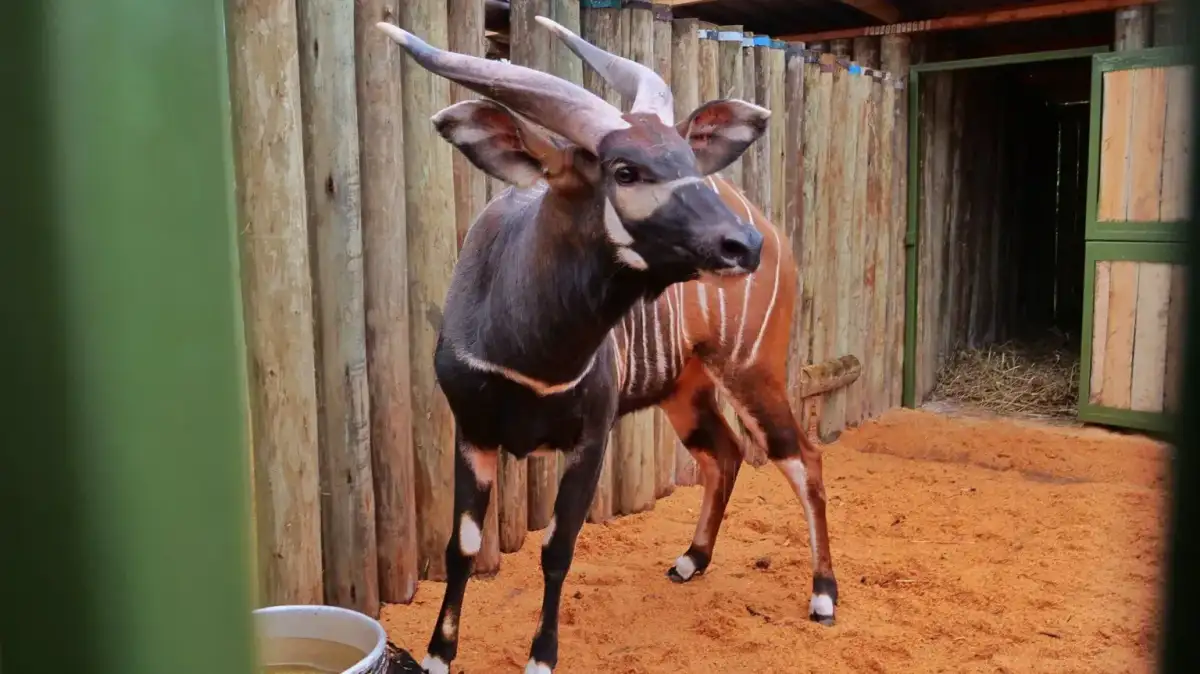
Four critically endangered mountain bongos have arrived in Kenya, marking a significant step in efforts to bolster the dwindling wild population of this native antelope species. The animals, flown from a zoo in the Czech Republic, will undergo adaptation and acclimatization phases at the Mount Kenya Wildlife Conservancy (MKWC) before potential reintroduction into their natural highland forest habitats.
This translocation is framed as a 'historic homecoming' and a symbol of international conservation cooperation. The arrival of these four bongos, specifically chosen for their age, health, and genetics, aims to enhance the genetic diversity within the MKWC's existing breeding program. The Kenyan government states that fewer than 100 mountain bongos remain in the wild, a stark decline from an estimated 500 in the 1970s.

International Partnership Fuels Conservation Effort
The relocation highlights a perceived "long-standing partnership between the Czech Republic and Kenya in conservation," according to Czech Republic Ambassador Nicol Adamcova. This initiative underscores a shared commitment to safeguarding species threatened by factors including poaching and disease.
Read More: Unregulated Tourism Hurts Tiger Breeding in India
The bongos will join over 100 individuals already housed at the MKWC. Conservationists emphasize the species' ecological role in maintaining forest health, which is vital for Kenya's water supply. The process of reintroduction into the wild involves multiple adaptation stages to ensure the animals develop the necessary immunity.
Background on Mountain Bongo Conservation
Mountain bongos, a species indigenous to Kenya's highland forests, have faced severe population decline. A significant portion of the current captive population are descendants of individuals originally taken from Kenya to the USA in the 1960s and 1970s. Efforts to restore their numbers have included coordinated breeding programs across various international zoos.
Conservation organizations, such as Chester Zoo, have reportedly spent over a decade coordinating European breeding programs in anticipation of such reintroduction opportunities. Advanced conservation technologies, including AI-powered detection systems using camera networks, are also being employed to monitor the animals' behavior, movement, and health in real-time without direct disturbance.
Read More: Nairobi AI Job: DeepAI hires for sensor network building