Dual-camera drones are being deployed in a bid to better identify Australian fur seals caught in marine debris. Research from Monash University and Phillip Island Nature Parks shows the combination of standard colour and thermal imaging offers a significant improvement in spotting seals entangled in plastics and other trash.
The core insight: Thermal imaging, by detecting elevated surface temperatures often associated with wounds or inflammation, enhances the detection of entanglement compared to visual inspection alone. This technology is proving instrumental in locating animals suffering from injuries, including those inflicted by shark bites.
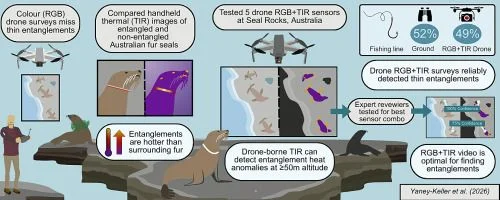
The system combines traditional RGB cameras with thermal infrared (TIR) imaging. Researchers observed that entanglements often appeared as 'thermal anomalies' – areas of heightened temperature – in the TIR feed. This thermal signature was present in 81 per cent of drone detections where entanglements were identified by the combined RGB+TIR method. Human reviewers achieved a 95 per cent agreement on these detections, indicating a high level of reliability.

Improving Conservation Efforts
The implications for wildlife conservation are considerable. Marine debris entanglement is a known and growing danger to seals and other marine creatures. Such entanglements can lead to serious injury, hinder movement, and force animals to expend more energy just to survive.
Read More: Unregulated Tourism Hurts Tiger Breeding in India
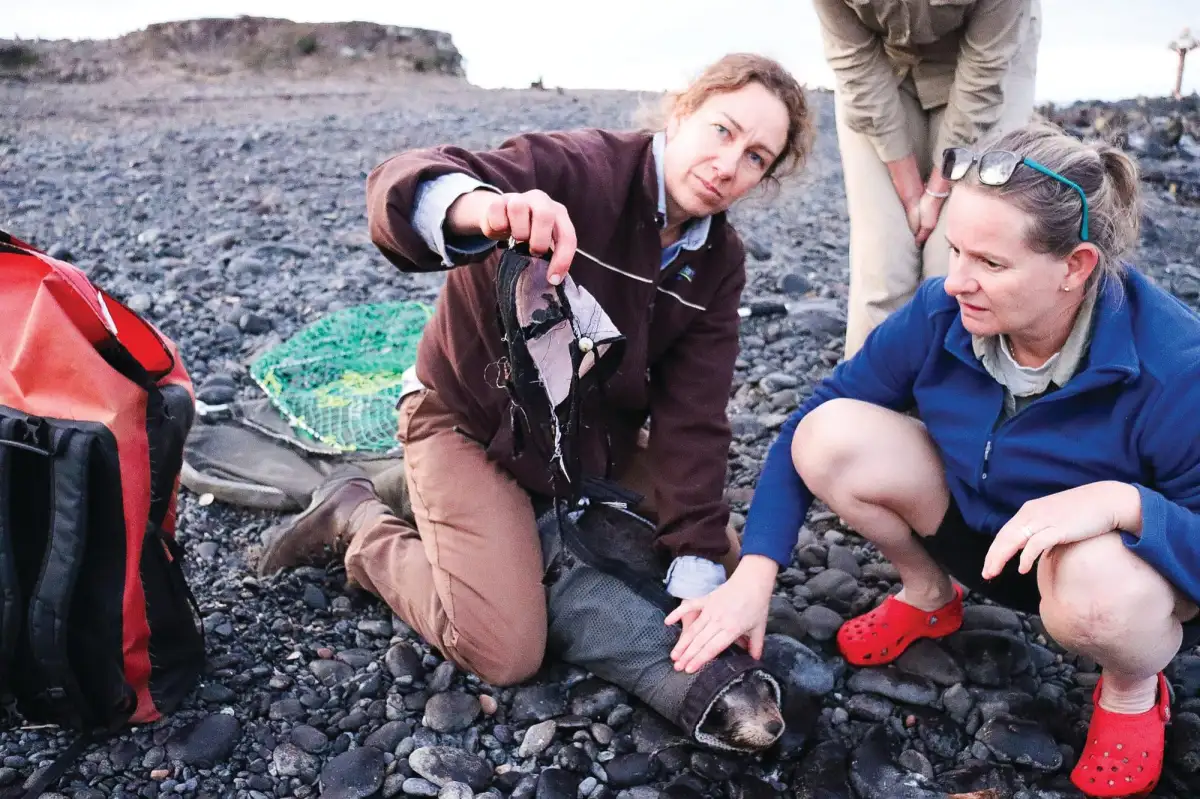
“Using thermal drones to scan fur seal colonies is a major breakthrough for conservation,” stated Rebecca McIntosh, a Marine Scientist at Phillip Island Nature Parks.
This dual-camera approach appears to be more effective than relying on visual observation alone. The thermal aspect can reveal injuries that might otherwise be missed, especially in dense colonies or challenging environmental conditions.
Seal Rocks: A Focal Point
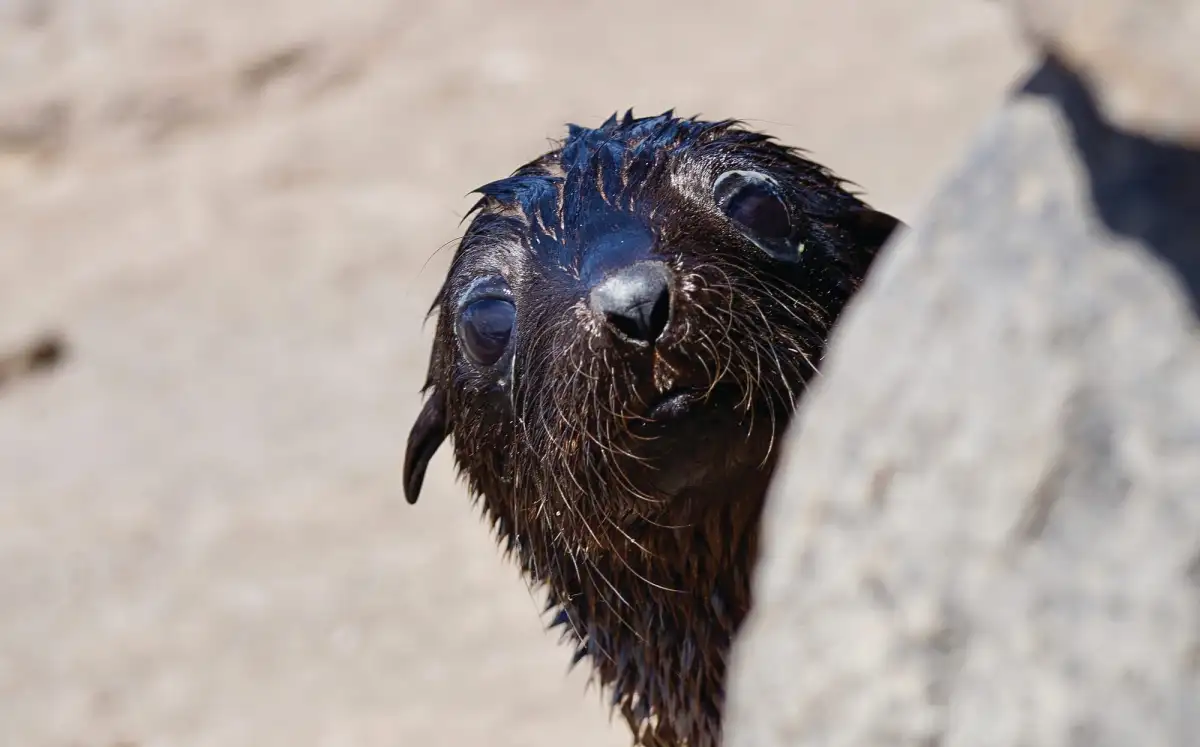
The research specifically focused on Seal Rocks, a location identified as home to Australia's largest colony of Australian fur seals, housing an estimated 19,000 individuals. This represents a substantial portion of the species' population. The seals here are vulnerable, with younger animals, in particular, falling victim to entanglements due to their curious nature. Instances of seals being trapped in items like hats, spearfishing bands, and plastic bags have been documented.
Future Directions
Beyond mere detection, the researchers plan to track the movements of released seals. The goal is to identify 'hot spots' of marine plastic pollution. This monitoring will involve mapping where seal movements intersect with fishing activities and areas where plastic waste accumulates, particularly in Bass Strait. This could provide valuable data for targeting pollution reduction efforts.
Read More: Chrome mimeHandler API lets extensions handle file types
This method represents a step forward from earlier assessments, where entanglement materials were detected with similar effectiveness to ground surveys, but the combined aerial method offers improved recall and precision.