The planet sweltered through its warmest years on record, as Europe in particular grappled with extreme heat and consequential floods, according to recent meteorological reports. 2024 stood out as Europe’s warmest year, marked by a striking east-west temperature contrast and widespread inundation. Across the continent, all seasons saw temperatures above average. This aligns with global trends, where July 2025 saw record-breaking heatwaves affect regions from Scandinavia to North Africa.

Glacial Melt Accelerates
In Europe, the relentless warmth manifested in tangible losses. Glaciers across all European regions shed ice, with Scandinavia and Svalbard experiencing their highest rates of mass loss on record. This phenomenon underscores the continent’s status as the fastest-warming landmass, with observable impacts of climate change becoming increasingly evident.

Heatwaves Clamp Down Globally
The heat was not confined to Europe. Morocco issued heat warnings for temperatures reaching 47 degrees Celsius, while Japan shattered its national temperature record, hitting 41.8 degrees Celsius. West Asia, Central Asia, the southwestern US, North Africa, and southern Pakistan also endured temperatures surpassing 42 degrees Celsius, with some locales exceeding 45 degrees Celsius. Southeast Europe faced its own heatwaves, contributing to wildfire activity. Türkiye, for instance, recorded a new national high of 50.5 degrees Celsius.
Read More: World Water Day 2024: River Restoration and Women's Water Crisis Focus

Extreme Events Fueling Wildfires and Flooding
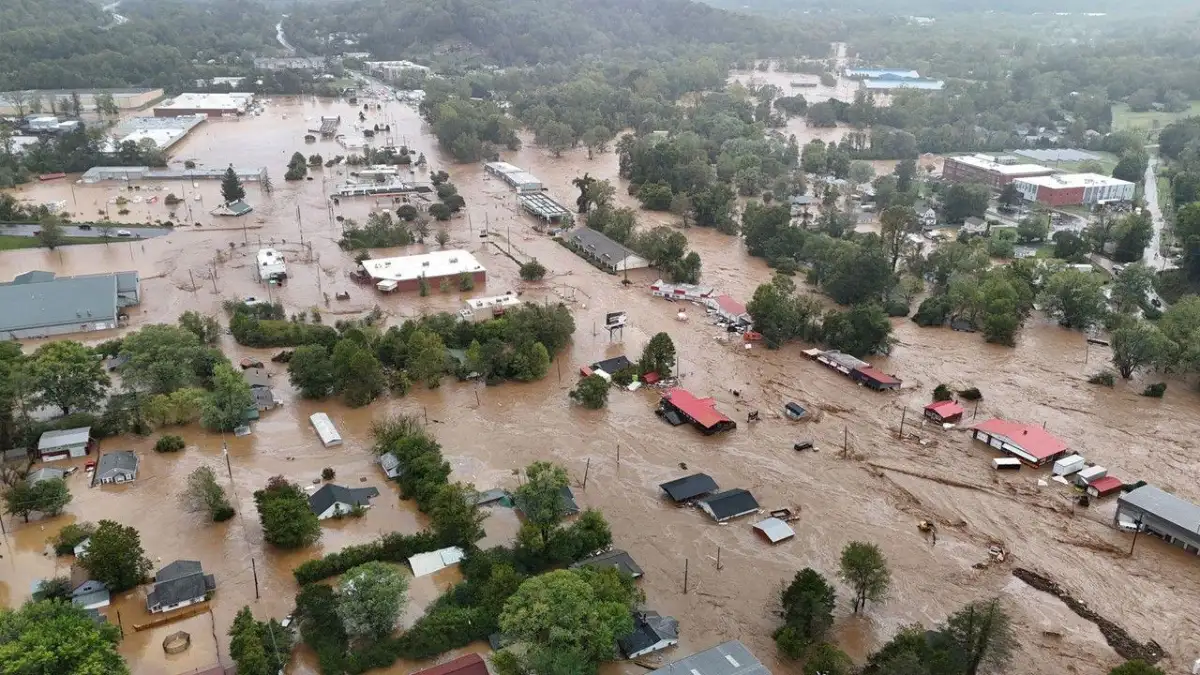
The juxtaposition of soaring temperatures and atmospheric disturbances fueled a range of extreme weather. In Spain, a DANA weather event in September 2024 brought catastrophic flooding to the eastern part of the country, while wildfires raged across the continent. The Atlantic hurricane season commenced early and with unprecedented intensity. The correlation between these extreme events and climate change is being increasingly noted, with studies suggesting that human-induced warming makes such heatwaves significantly more probable.
Shifting Climate Data and Renewable Energy
The reporting on climate data itself appears to be evolving. A statistical approach using a moving average is now employed to investigate infrequent climate events, diverging from traditionally fixed 30-year averages. Amidst these concerning climate indicators, there was a concurrent rise in renewable energy generation in Europe, reaching new highs, and cities are reportedly making progress in climate adaptation efforts.
Read More: EU Investigates Broadcom's VMware Partner Changes After Cloud Provider Complaint
Background:
The data aggregates information from multiple sources, including reports from the Copernicus Climate Change Service, the World Meteorological Organization (WMO), and analyses published in scientific journals like Nature Reviews Earth & Environment. These reports collectively paint a picture of a planet experiencing unprecedented climatic shifts, characterized by record-breaking temperatures and a surge in extreme weather events. Europe's role as the fastest-warming continent is a central theme, with documented impacts ranging from glacial melt to widespread flooding and intense heatwaves. The global reach of these phenomena is emphasized, with specific instances cited from Japan, Morocco, and various parts of Asia and North America. The underlying drivers, broadly attributed to climate change, are being scrutinized through increasingly sophisticated scientific methodologies.


.jpg)