European nations have largely stayed away from the inaugural meeting of Donald Trump's "Board of Peace," a US-led initiative aimed at addressing the situation in Gaza. This absence has highlighted existing divisions and raised questions about the plan's potential effectiveness at a critical juncture for the Gaza ceasefire.

The "Board of Peace" was presented as a key component of Trump's strategy for post-conflict governance in Gaza. However, the decision by several prominent European allies, including France, Norway, and Sweden, to decline their invitations, and the noncommittal stance of the European Union's executive arm, signals a hesitation and potential lack of consensus among Western nations regarding the initiative.

Background and Key Developments
Donald Trump announced the formation of the "Board of Peace" to address issues related to Gaza, including post-conflict governance and rebuilding efforts. The initiative is intended to be broader in scope, with aspirations to foster global peace.
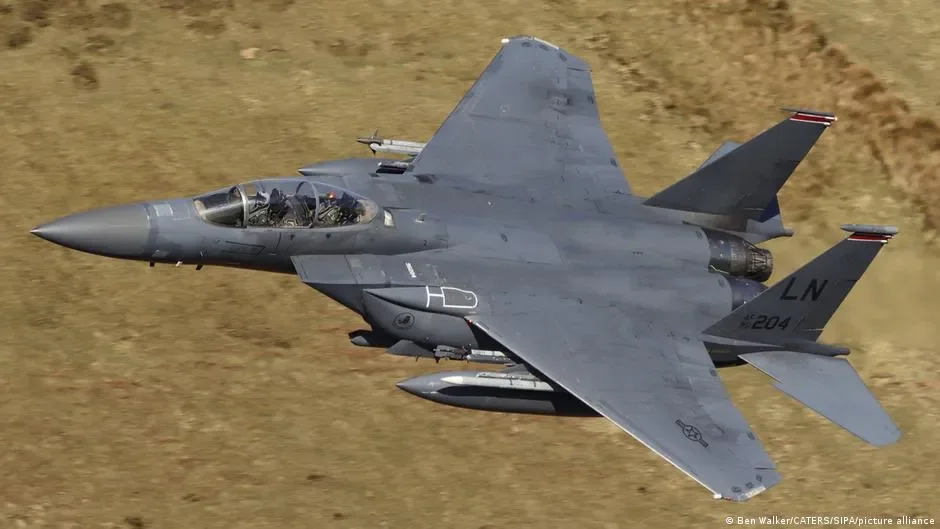
Read More: US F-15 Jet Crashes in Iran, One Pilot Rescued, One Missing

Initiation: The "Board of Peace" was unveiled by Donald Trump at the World Economic Forum in Switzerland last month.
Meeting: The inaugural meeting was scheduled to take place in Washington at the US Institute of Peace, which Trump has renamed.
Attendees: While a significant number of countries, reportedly over 20 and with up to 50 invited, were expected to join, notable European allies have abstained.
Global Response: A bloc of Muslim-majority nations, including Egypt, Indonesia, Jordan, Pakistan, Qatar, Saudi Arabia, and the United Arab Emirates, announced their leaders would participate. Key parties to the Gaza ceasefire, Egypt and Israel, also stated they would join.
Dissent: Canada was initially invited but its invitation was later revoked by Trump. The United Kingdom has also declined to join.
European Hesitation and Concerns
Several European nations have publicly expressed reservations or opted out of joining Trump's "Board of Peace." Officials indicate a focus on reinforcing the existing Gaza ceasefire framework.

Focus on Existing Framework: European officials state their priority is to reinforce the ceasefire framework currently in place. They believe this approach is essential for:
Facilitating aid deliveries.
Supporting rebuilding efforts.
Ensuring basic security.
Critique of the Board: Some European leaders have questioned the board's mandate and its connection to established international bodies.
Kaja Kallas, the EU's High Representative for Foreign Affairs, reportedly accused Trump of using the "Board of Peace" as a personal vehicle, noting its lack of reference to the UN mandate for Gaza's post-war governance and reconstruction.
Lack of Progress: Reports suggest that political and security organizations under the Trump-backed plan have shown limited progress in resolving the conflict or easing Gaza's humanitarian crisis. There is also little clarity on how the "Board of Peace" could help overcome the deadlock in negotiations between Israel and Hamas.
Absence of Palestinian Representation: Concerns have been raised by rights experts and others regarding the lack of Palestinian representation on the board's executive committee for Gaza.
Divergent Views on the Initiative
While some European nations have distanced themselves, a group of Muslim-majority countries and certain European leaders have shown support or noncommittal stances, indicating a complex geopolitical landscape.
| Participating Nations | Declining Nations | Noncommittal/Invited |
|---|---|---|
| Egypt, Israel, United Arab Emirates, Saudi Arabia, Qatar, Indonesia, Jordan, Pakistan | France, Norway, Sweden, United Kingdom, Canada (invitation revoked) | European Union's executive arm |
| Argentina, Armenia, Azerbaijan, Bahrain, Belarus, Hungary, Kazakhstan, Kosovo, Morocco, Uzbekistan, Vietnam |
The differing levels of engagement suggest varied strategic priorities and assessments of the initiative's potential impact.
Expert Perspectives
Analysis of the situation points to several factors influencing the international response to Trump's "Board of Peace."
Nickolay Mladenov, who is slated to act as the board's high representative for Gaza, has had limited visibility and offered little information about his role. His sentiment that going to Gaza now "would be very unconstructive" reflects the perceived current ineffectiveness.
One perspective suggests that the lack of tangible progress from initiatives under the Trump-backed peace plan, both in resolving the conflict and alleviating Gaza's humanitarian situation, is a significant deterrent.
The broader ambition of the "Board of Peace," as acknowledged by Trump to extend "far beyond Gaza" and potentially "peace all over the world," has led some to question if it is intended to challenge the role of the United Nations in global conflict resolution, especially given his comments about the UN not living up to its potential.
Conclusion and Implications
The absence of key European allies from the inaugural meeting of Donald Trump's "Board of Peace" signifies a divergent approach to resolving the Gaza conflict.
Western Disunity: The lack of broad European participation underscores hesitation and potential skepticism regarding the initiative's structure, mandate, and ultimate effectiveness.
Focus on Existing Mechanisms: European nations appear to prioritize reinforcing current ceasefire efforts and diplomatic channels, suggesting they view the "Board of Peace" as a less immediate or potentially less viable mechanism for achieving stability in Gaza.
Broader Ambitions: Trump's stated goal for the "Board of Peace" to address global conflicts raises questions about its intended relationship with existing international institutions like the United Nations.
Uncertainty for Gaza: The effectiveness of the "Board of Peace" in advancing the Gaza ceasefire, facilitating aid, or supporting reconstruction remains uncertain, particularly without the robust engagement of major European powers. The initiative's success will likely depend on its ability to demonstrate concrete progress and gain wider international legitimacy.
Sources Used:
IBTimes UK: https://www.ibtimes.co.uk/european-allies-skip-trump-board-peace-meeting-1780292 - Report on European allies' absence and focus on ceasefire reinforcement.
The Guardian: https://www.theguardian.com/us-news/2026/feb/18/trump-board-of-peace-first-meeting - Details on the lack of progress and doubts about the board's ability to resolve the conflict.
Politico EU: https://www.politico.eu/article/europe-backs-away-from-donald-trumps-board-of-peace-gaza/ - Discusses the shift from initial praise to alarm among European allies.
CNN Politics: https://www.cnn.com/2026/02/18/politics/trump-launches-board-of-peace - Information on the meeting's format and expected updates.
AP News (via Bing): https://apnews.com/article/trump-netanyahu-gaza-board-of-peace-a4a296f736474e8c6a4edacd7109b8e5 - Lists countries joining and declining, including Canada's revoked invitation.
PBS NewsHour: https://www.pbs.org/newshour/world/divisions-emerge-among-western-european-nations-over-trumps-board-of-peace-for-gaza - Highlights divisions, declining invitations from Western European nations, and participation from Muslim-majority countries.
Middle East Eye: https://www.middleeasteye.net/news/eu-leaders-slam-trumps-gaza-board-peace-security-conference - Reports on EU leaders condemning the board and questioning its mandate.
NBC News: https://www.nbcnews.com/world/gaza/trump-board-of-peace-first-meeting-gaza-un-israel-rcna259509 - Covers the first meeting, absence of key allies, criticism of the board, and its broader ambitions.