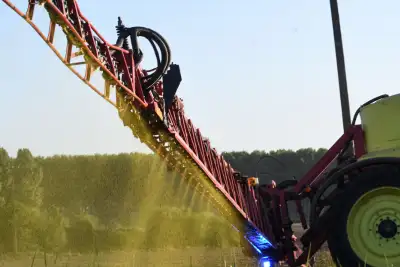
The Environmental Protection Agency (EPA) has given its nod to a widely deployed weedkiller, declaring it unlikely to push species toward the abyss of extinction. This pronouncement clears a path for the chemical's ongoing deployment.
The agency's assessment suggests that atrazine, a herbicide long in use and previously connected to birth defects and cancers in humans, can continue to be employed without exacerbating the plight of endangered species. This decision, released yesterday, effectively counters previous environmental concerns that had sought to limit or ban its application.
A SHIFT IN REGULATORY WINDS
This latest pronouncement from the EPA arrives alongside other recent regulatory actions. Notably, in October 2024, the agency approved glufosinate-P, a different herbicide. This new chemical was put forth as a substitute for dicamba, a weedkiller that had faced judicial roadblocks due to its link to cancer. Glufosinate-P was the first to undergo the EPA's revamped method for gauging risks to delicate ecosystems and species, including plans to lessen any negative impacts.
Read More: Clean air efforts may weaken Atlantic ocean current
THE GLYPHOSATE UNCERTAINTY
Meanwhile, questions linger around glyphosate, another common weedkiller. Reports from early April 2026 indicate politicians have raised alarms about its cancer-causing potential. However, the evidence remains muddled.
Studies examining links between glyphosate and cancer have yielded conflicting outcomes.
Some research relied on self-reported exposure histories, a method prone to unreliability.
A substantial study on human populations did not establish a connection between glyphosate exposure and cancer.
Ongoing debates question whether the risks are distinct between glyphosate alone versus glyphosate-based formulations, which include other, sometimes undisclosed, ingredients.
Different groups employ varying definitions of risk and exposure scenarios, leading to divergent conclusions.
The differing approaches to assessing these chemicals highlight the complexities and evolving methodologies within environmental regulation, where scientific data is filtered through a framework of public health and ecological preservation.