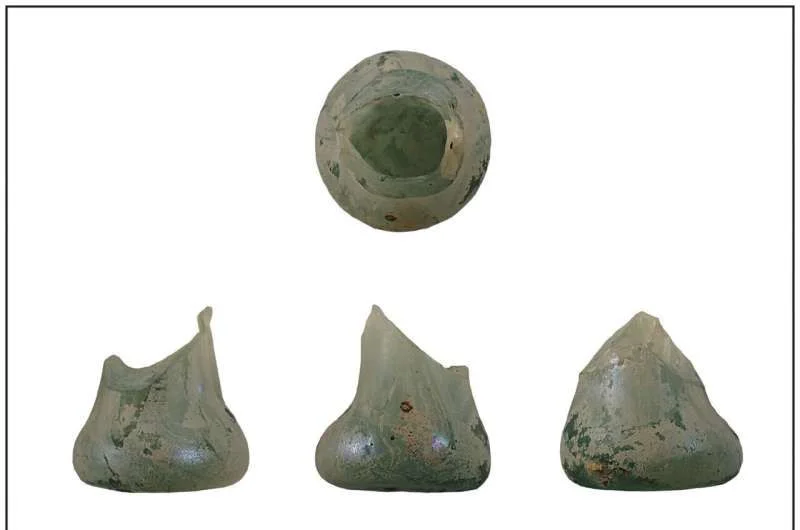
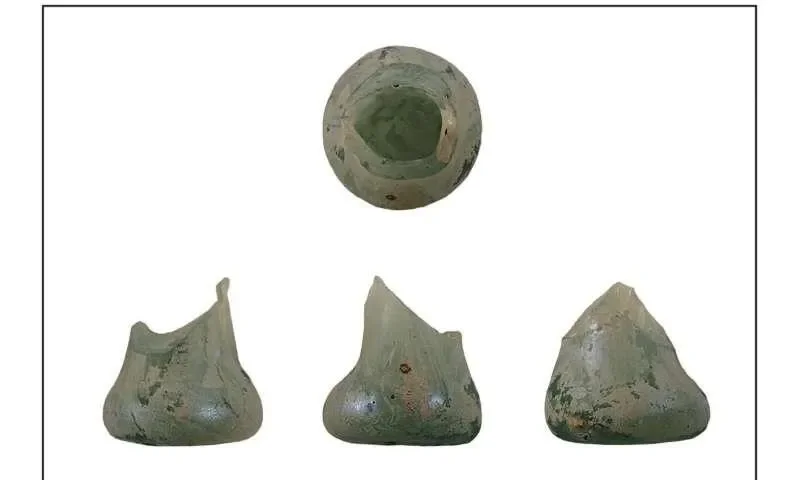
A glass bottle, unearthed in York, bears striking resemblances to containers used for kohl, a cosmetic pigment prevalent in ancient Egypt. The flask's distinctive internal structure—a cylindrical hollow mirroring the external form—aligns with specific glassmaking techniques employed in Egypt during the 1st and 2nd centuries AD. This stylistic echo raises the provocative possibility that the artifact may have arrived in Roman Britain via an Egyptian individual.
A Glimpse into Ancient Cosmetics and Trade
The bottle’s potential function as a kohl container is significant. Kohl, more than just a cosmetic in ancient Egypt, held cultural and spiritual importance. While typically found within Egypt and Sudan, kohl containers have surfaced in limited numbers outside these regions. Recoveries at Egyptian military sites like Umm Balad and Didymoi, as well as in extensive refuse deposits at Fort Wadi Abu Ma'amel, underscore the prevalence of such vessels. The specific construction of the York bottle matches Egyptian glass production methods of the era, indicating a deliberate craftsmanship that traveled.
Read More: 5,900-Year-Old Child Skull Found in Norway Cave
While other artifacts like cosmetic spoons were part of the beautification ritual, they served different purposes than storing kohl itself. The spoons were for applying various pigments and unguents, with kohl sticks often accompanying the jars for this precise application. The York find, however, points directly to the container for the pigment.
The broader implications of this find touch upon the extensive networks of trade and movement that characterized the Roman Empire. The presence of an artifact so closely linked to Egyptian culture in a Roman settlement in Britain suggests personal connections or the movement of goods across vast distances.
Contextualizing the Discovery
The discovery in York, a significant Roman city, places the artifact within a context of Roman administration and settlement. Roman Britain was a region that saw the influx of people and goods from across the empire. The bottle’s existence there suggests that the reach of Egyptian influence, or at least the circulation of its material culture, extended to the farthest reaches of Roman dominion. The dating of similar Egyptian glass production techniques to the 1st and 2nd centuries AD aligns with the period of Roman presence in Britain.
Read More: St. Augustine's ideas on justice help explain US politics
The find is documented in academic circles, with research noting similar artifacts. Further investigation into the specific glass composition and potential trace residues within the bottle could offer more definitive answers about its origin and contents. The broader context of archaeological findings in York and Roman Britain may also shed light on other imported goods or the presence of foreign individuals during the Roman occupation.