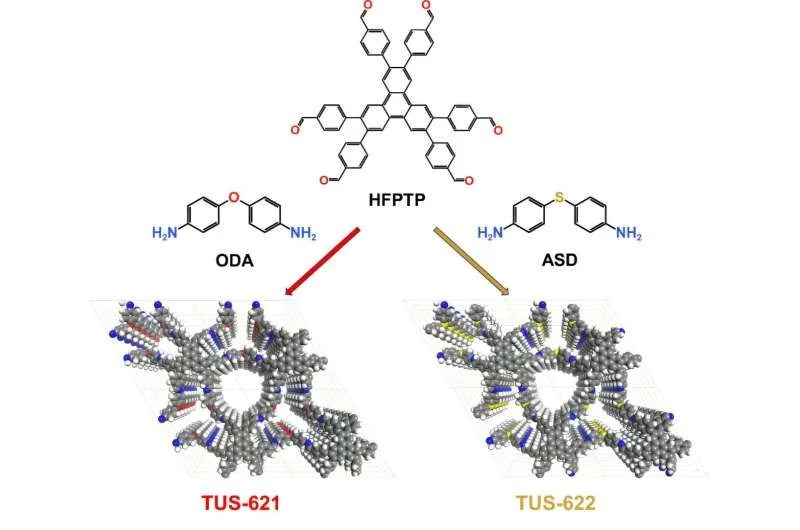
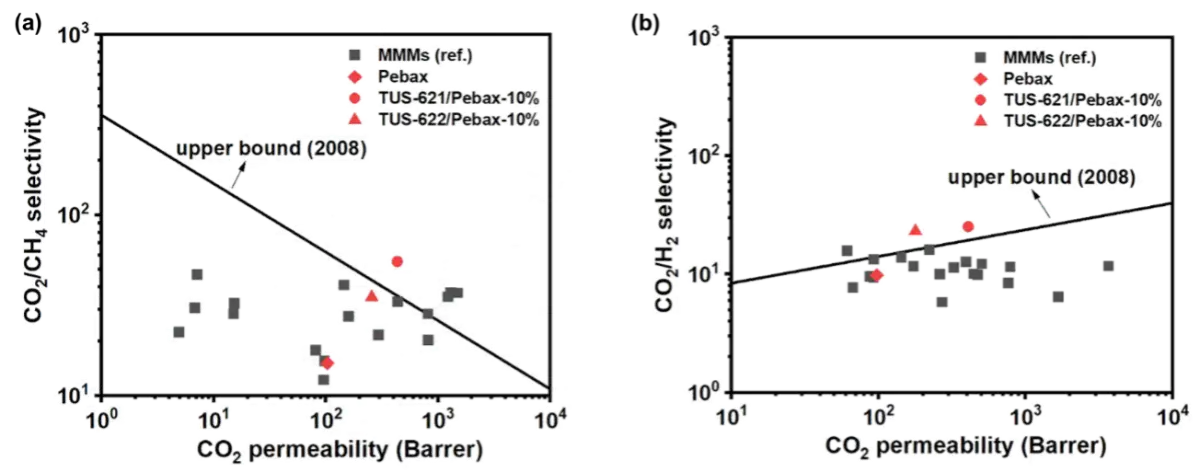
Researchers from Tohoku University and associated institutions have unveiled a new generation of covalent organic framework (COF)-based mixed matrix membranes that shatter established benchmarks for carbon dioxide (CO2) separation. These novel materials demonstrate exceptional performance, surpassing the 2008 Robeson upper bound, a long-standing theoretical limit for gas separation membranes.
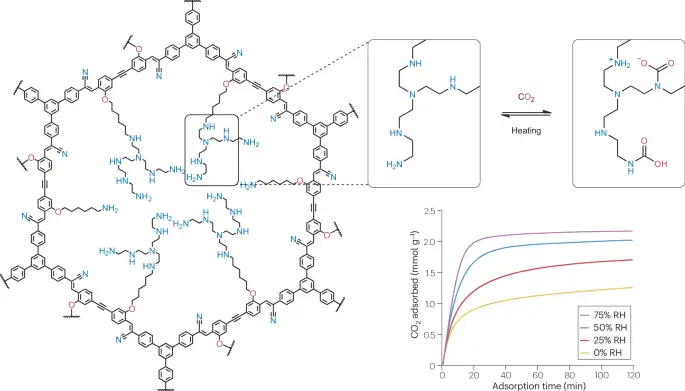
The key innovation lies in tailoring the 'pore chemistry' of the COFs, specifically through the incorporation of heteroatoms. This engineered structure facilitates a dual advantage: rapid CO2 transport coupled with highly precise separation from other gases, notably methane and hydrogen. Conventional membranes typically face a trade-off, where speed in CO2 passage compromises selectivity, or vice versa. This new class of membranes appears to circumvent that compromise.

Carbon Capture's Evolving Landscape
The urgency for improved CO2 separation is underscored by its critical role in diverse industrial processes. Applications span the purification of natural gas, the production of hydrogen, and crucially, the broad field of carbon management and mitigation. Direct capture of CO2 from ambient air is also an area of active research, with COFs showing promise in this domain.
Read More: Indigenous Data Rights Now Key in Conservation Genomics
Recent developments, such as the engineered COF COF-999, highlight advancements in capturing CO2 directly from the air. Modifications like attaching amine groups to create polyamines within the COF structure have been shown to significantly enhance affinity for CO2, leading to efficient and stable capture over numerous cycles. These advancements point towards a future where facilities equipped with such COFs could function as large-scale air purifiers, contributing to global carbon neutrality goals.
The Science Behind the Advance
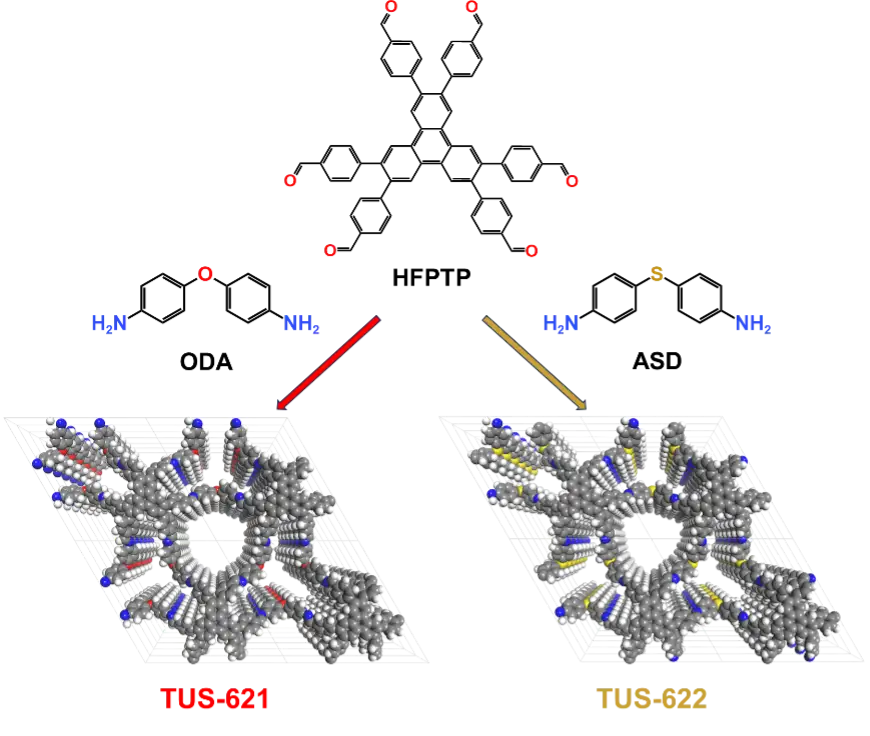
Covalent organic frameworks, a class of porous materials, offer tunable structures that are amenable to specific chemical engineering. The 'mixed matrix' approach involves incorporating these COFs into a polymer membrane, leveraging the COFs' unique separation properties within a more conventional membrane format.
While the precise mechanisms continue to be explored, a comparative study noted that membranes with an 'oxygen-rich' COF component, such as TUS-621, exhibited a stronger attraction to CO2. This increased affinity facilitates easier passage of CO2 through the material, directly correlating with improved separation performance.
Read More: Amazon Land Use Changes Cause Disease Clusters in Brazil
A Field in Motion
The scientific literature indicates a sustained and growing interest in COFs for CO2 separation. Recent publications from November 2024 through February 2026 touch upon:
Fundamentals and synthesis of COFs for CO2 adsorption.
Recent advances and challenges in using COF membranes for CO2 separation.
The direct capture of CO2 from ambient air using COFs, sometimes in conjunction with metal-organic frameworks and water-enhanced processes.
Computational modeling that elucidates the molecular-scale interactions between COFs and CO2.
This ongoing research suggests a dynamic field actively pursuing breakthroughs in materials science for environmental applications.