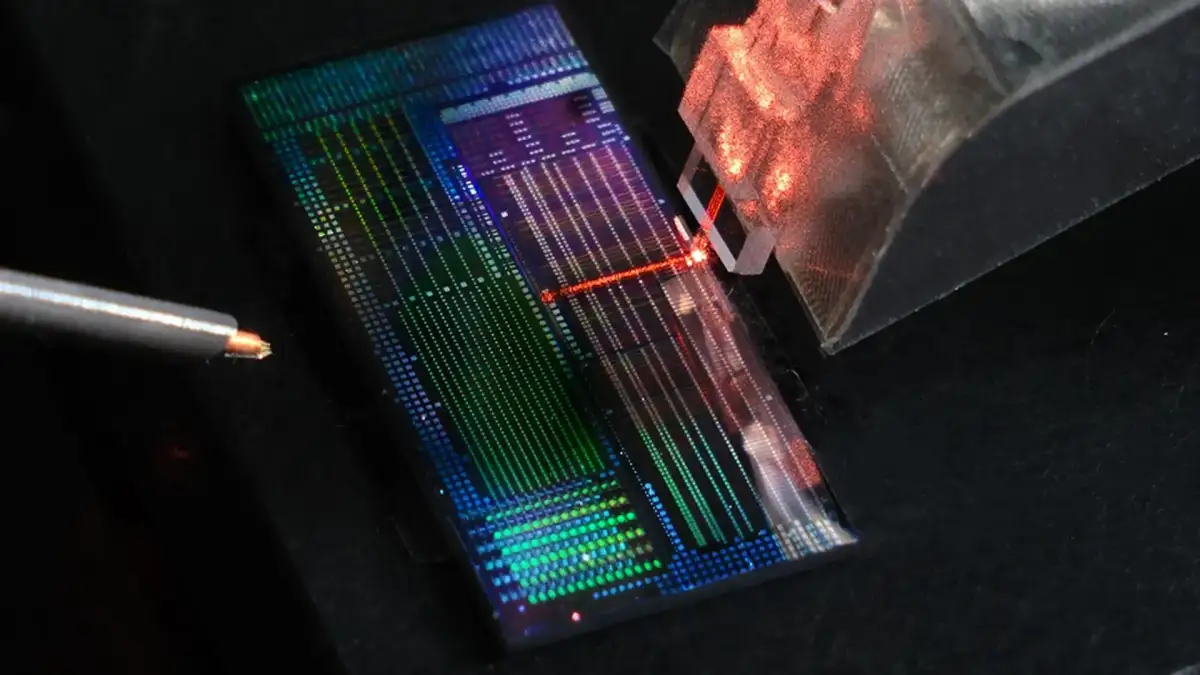
Monash University Researchers Create New Light Chip System

Researchers at Monash University have created a new chip that controls light signals. This system works at room temperature, unlike many other advanced technologies.

A research team at Monash University reportedly assembled a nanoscale circuit capable of managing light-based information on a single chip. This development, detailed 10 hours ago from Melbourne, suggests a step toward altering data processing and communication architectures. The fabricated system, according to Monash, generates specific light signals, directs them precisely, and converts them into electrical pulses, all within a compact chip.

This Monash effort, led by Dr Haoran Ren of the NanoMeta Group and Dr Chi Li, ostensibly resolves a key impediment that has limited advancements in integrated photonics.

This integrated chip system operates using ultra-thin materials, measured at just a few atoms thick, combined with specially designed nanostructures. A notable aspect, highlighted an hour ago, is its purported function at room temperature, departing from many quantum systems that demand extreme cooling. The developers suggest this capacity might open possibilities for a new category of compact, programmable photonic devices, leading to faster, more energy-efficient computation and novel secure communication methods.

Frequently Asked Questions

Q: What did Monash University researchers announce 10 hours ago in Melbourne?
Researchers at Monash University have created a nanoscale circuit that can manage light-based information on a single chip. This system generates light signals, directs them, and converts them into electrical pulses.
Q: How does this new light chip system work?
The system uses very thin materials, only a few atoms thick, and special nanostructures. It is notable because it can work at room temperature, which is different from many quantum systems that need extreme cold.
Q: Who is affected by this new Monash University technology?
This development could affect people who use computers and communication systems. It might lead to faster, more energy-efficient computing and new ways to communicate securely.
Q: What are the next steps for this Monash University light chip technology?
The developers suggest this technology could lead to new types of compact, programmable photonic devices. These could be used for faster computation and secure communication methods in the future.