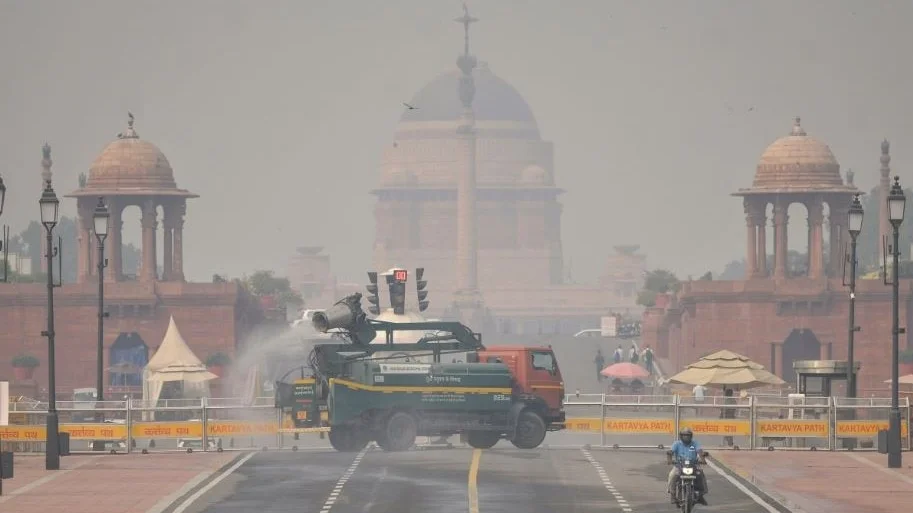
Delhi woke up to a chilly embrace on Saturday, with the mercury dipping to a brisk 11.8°C, a significant 2.4 notches below the usual for this time of year. While the India Meteorological Department (IMD) predicts a warmer daytime high of 24.8°C, coupled with strong winds, the air quality tells a different, grimmer story. The Air Quality Index (AQI) clocked in at a concerning 214 at 9 AM, firmly planting the city in the ‘poor’ category. This isn't just a fleeting moment; it's a recurring symptom of a larger malady affecting the capital.
The air we breathe is a critical determinant of our health and well-being. When the AQI slides into the ‘poor’ range, it means even healthy individuals might experience breathing discomfort, while those with pre-existing respiratory conditions are at serious risk. So, as the city grapples with dropping temperatures and a smoggy veil, one must ask: Are we merely experiencing a seasonal chill, or is this a stark reminder of the ongoing environmental battle Delhi is fighting?
THE COLD FRONT AND THE SMOG SCREEN: A FACTUAL OVERVIEW
On Saturday, the narrative of Delhi's atmosphere was one of stark contrasts. The IMD reported a minimum temperature of 11.8°C, a notable dip that was 2.4 notches below the season's average. This cool air was accompanied by a forecast of strong winds, with the maximum temperature expected to reach 24.8°C, which is 1.5 degrees above the norm. Humidity levels stood at a damp 82 percent at 8:30 AM.
Read More: Indian Shooter Aishwary Pratap Singh Tomar Wins Gold

However, this meteorological dance was overshadowed by the persistent pollution. The Central Pollution Control Board (CPCB) data revealed an AQI of 214 at 9 AM, firmly placing the city in the ‘poor’ category.
| Metric | Value | Implication |
|---|---|---|
| Minimum Temp. | 11.8°C (2.4°C below season average) | Unseasonably cold start to the day. |
| Maximum Temp. | 24.8°C (1.5°C above season average) | Warmer temperatures predicted later in the day. |
| Humidity | 82% (at 8:30 AM) | Damp conditions, potentially aiding pollutant build-up. |
| AQI (at 9 AM) | 214 | Classified as ‘poor’ by CPCB standards. |
| CPCB AQI Scale | 201-300 | ‘Poor’ - Increased health risk for sensitive groups. |
This scenario has become a grim tableau for Delhi. The CPCB’s classification of AQI levels is a critical tool for understanding the air quality:
0-50: Good
51-100: Satisfactory
101-200: Moderate
201-300: Poor
301-400: Very Poor
401-500: Severe
An AQI of 214 signifies that air quality is beginning to pose risks, particularly to vulnerable populations.
Read More: Plan to Build Big Ice Wall to Save Doomsday Glacier

PAST ECHOES: A RECURRING NIGHTMARE
This isn't the first time Delhi has found itself under a blanket of smog and struggling with low temperatures. Looking back, we see a pattern of environmental distress:
December 27, 2025: Reports indicated Delhi's air quality was in the ‘very poor’ category with an AQI of 355, even as dense fog enveloped the city. The minimum temperature recorded was 7.8°C. (Source: The Hindu)
October 25, 2025: Delhi experienced its coldest October night in two years, with temperatures dropping to 17°C. The AQI was 275, categorized as ‘poor’, with some areas even seeing ‘very poor’ air. (Source: Business Today)
November 30, 2025: The city recorded its coldest November in five years, with an average minimum temperature of 11.5°C until November 29. Delhi's AQI stood at 270, also in the ‘poor’ category, after periods of ‘very poor’ and ‘severe’ pollution. (Source: WION)
Read More: India Says US Trade Paper Changes Match What Was Agreed
These incidents highlight a consistent struggle: as temperatures drop, air quality tends to worsen, and the city often finds itself oscillating between ‘poor’, ‘very poor’, and ‘severe’ AQI levels. The question that looms large is: why does this cyclical degradation of air quality seem to intensify with colder weather?
THE COLD HARD FACTS OF AIR POLLUTION
What exactly happens when temperatures drop, and how does it impact air quality? Several scientific factors come into play:

Temperature Inversion: Colder air is denser than warmer air. In winter, this can lead to temperature inversions, where a layer of warm air traps a layer of cold air close to the ground. This trapped air acts like a lid, preventing pollutants from dispersing upwards and outwards, leading to their accumulation. This phenomenon effectively creates a stagnant air mass, concentrating pollutants at ground level.
Slower Wind Speeds: Winter months in Delhi often experience lower wind speeds. Winds are crucial for dispersing pollutants. When they weaken, pollutants linger in the atmosphere, contributing to higher AQI readings.
Increased Emissions: While not directly caused by temperature, colder weather often leads to increased reliance on heating sources, which can include burning fossil fuels or biomass, thereby adding to the pollutant load. Additionally, certain industrial activities might also be more prevalent during colder periods.
Relative Humidity: As seen with the 82% humidity on Saturday, higher humidity levels can sometimes contribute to the formation of secondary pollutants and make particulate matter feel more intense.
Read More: Cartoonist Rohan Chakravarty Uses Funny Pictures to Teach About Nature
| Factor | Impact on Air Quality |
|---|---|
| Temp. Inversion | Traps pollutants near the ground, increasing concentration. |
| Low Wind Speed | Reduces the dispersal of pollutants, causing them to linger in the air. |
| Increased Burning | Combustion for heating or other activities releases more particulate matter and gases. |
| High Humidity | Can aid in secondary pollutant formation and perception of pollution. |
Are these meteorological conditions simply unavoidable seasonal challenges, or are they exacerbated by human-induced factors that are not being adequately addressed?
WHO’S TO BLAME? THE MANY FACES OF POLLUTION
Identifying the sources of Delhi's pollution is a complex investigation, involving multiple stakeholders and contributors. The data from the CPCB, coupled with historical reports, points to a confluence of issues:
Vehicular Emissions: A staggering number of vehicles on Delhi’s roads contribute significantly to the release of particulate matter (PM2.5, PM10), nitrogen oxides, and other harmful gases. Even with advancements in vehicle technology, the sheer volume of traffic remains a major challenge.
Industrial Pollution: Though many heavy industries have been moved out of Delhi, surrounding areas still house significant industrial clusters whose emissions can travel to the capital.
Construction Dust: The continuous infrastructure development and renovation in a rapidly growing city like Delhi generate vast amounts of dust, a primary contributor to PM levels.
Stubble Burning: While primarily a seasonal issue (late October to November), the smoke from agricultural stubble burning in neighbouring states can drift into Delhi, severely impacting air quality. Reports from October and November in past years have often cited this as a major culprit.
Waste Burning: Unregulated burning of garbage, both in open dumps and at smaller scales, releases a cocktail of toxic pollutants.
Read More: India's January Inflation Rate is 2.75% with New Measuring System
| Source Category | Primary Pollutants | Historical Impact Evidence || :———————— | :————————- | :————————————- || Vehicular Traffic | PM2.5, PM10, NOx, CO | Consistently high contribution year-round. || Construction Dust | PM10, PM2.5 | Widespread urban development ensures constant generation. || Industrial Emissions | SO2, NOx, PM | Impact often seen from surrounding NCR regions. || Stubble Burning | PM2.5, CO, VOCs | Major seasonal spike, typically Oct-Nov. || Waste Burning | Dioxins, Furans, PM | Localized but significant contribution to air toxicity. |
Have current policies and enforcement mechanisms been effective in curbing emissions from these diverse sources? Are we seeing a systemic failure to control the most significant contributors, or are external factors beyond Delhi's direct control holding the city hostage?
THE LONG GAME: WHAT ARE THE PROPOSED SOLUTIONS?
Addressing Delhi’s persistent air pollution requires a multi-pronged approach, involving governmental policies, technological innovations, and public participation. Over the years, various measures have been proposed and implemented:
Read More: UK Winters Are Getting Wetter, Scientists Say
Odd-Even Scheme: A road rationing scheme designed to reduce the number of vehicles on the road.
Shift to Cleaner Fuels: Promoting the use of CNG, electric vehicles, and cleaner cooking fuels.
Green War Room & Graded Response Action Plan (GRAP): These mechanisms are designed to monitor air quality and implement pre-defined actions based on the severity of pollution.
Industrial Regulations: Stricter norms for industrial emissions and fuel usage.
Afforestation and Green Cover Expansion: Increasing the city's green spaces to help absorb pollutants.
Addressing Crop Burning: Initiatives to provide alternatives to farmers for stubble management.
The question remains: are these measures sufficient, or are they merely scratching the surface? The recurring ‘poor’ and ‘very poor’ AQI ratings suggest a gap between intention and implementation, or perhaps a need for more radical interventions. For instance, how effectively is the transition to electric vehicles being managed, and what are the challenges faced? What concrete progress has been made in curbing industrial pollution from the National Capital Region (NCR) periphery?
EXPERT VOICES: WHAT DO THE ANALYSTS SAY?
Dr. Anumita Roy Chowdhury, Executive Director of the Centre for Science and Environment (CSE), has consistently highlighted the need for stricter emission standards and a reduction in vehicular load. "Delhi’s air quality is a complex interplay of local emissions and regional factors," she has stated in past analyses. "While meteorological conditions can exacerbate pollution, the root cause lies in the unchecked growth of polluting activities, especially vehicular traffic and dust."
Read More: Nationwide Strike Had Small Effect in Most Places
"The continuous cycle of poor air quality, especially during colder months, is a stark reminder that our current mitigation strategies are not enough. We need a more aggressive, integrated approach that prioritizes public health over short-term economic gains."
- Unnamed Environmental Analyst
Another environmental researcher, Mr. Surya Prakash, has pointed to the effectiveness of GRAP, but also its limitations. "GRAP is a vital tool, but its success hinges on timely and decisive implementation across all NCR states," he noted in a recent discussion. "The delayed response to changing pollution levels, or partial enforcement, can render even the best-laid plans ineffective."
THE ROAD AHEAD: A CALL FOR ACTION AND ACCOUNTABILITY
The recent reports of Delhi's low temperatures coinciding with ‘poor’ air quality are not isolated incidents but symptoms of a chronic, systemic issue. The data consistently points towards a recurring problem where colder weather traps pollutants, amplified by various emission sources.
Read More: Study Says UK Electric Cars and Heat Pumps Don't Save Carbon Yet
The AQI of 214 on Saturday is a warning sign, indicating potential health risks that are becoming a norm rather than an exception.
Historical data shows a clear pattern of worsening air quality during colder months, often peaking in ‘very poor’ or ‘severe’ categories.
Multiple sources – vehicular, industrial, construction, and agricultural – contribute to this persistent pollution, suggesting that piecemeal solutions are insufficient.
The critical question is: what are the definitive, long-term strategies that will break this cycle? Is there a lack of political will, insufficient enforcement, or are the solutions too expensive or complex to implement effectively across the entire region? The health of millions hangs in the balance, and a more transparent, accountable, and aggressive approach to air quality management is no longer a choice, but an urgent necessity. We must demand answers and hold those responsible accountable for ensuring that the air Delhi breathes becomes progressively cleaner, not perpetually hazardous.
Sources:
Deccan Herald: https://www.deccanherald.com/india/delhi/delhi-records-low-of-118-deg-c-aqi-poor-at-214-3889883
The Hindu Business Line: https://www.thehindubusinessline.com/news/national/delhi-records-low-of-118-deg-c-aqi-poor-at-214/article70602874.ece
The Tribune: https://www.tribuneindia.com/news/delhi/delhi-records-of-11-8c-aqi-poor-at-214/
The Hindu: https://www.thehindu.com/news/cities/Delhi/delhi-air-pollution-aqi/article70442492.ece
Business Today: https://www.businesstoday.in/india/story/delhi-records-coldest-october-night-in-two-years-aqi-improves-to-poor-499537-2025-10-25
News Drum: https://www.newsdrum.in/national/delhi-records-low-of-118-deg-c-aqi-poor-at-214-11083947
WION: https://www.wionews.com/india-news/delhi-records-coldest-november-in-5-years-city-breathes-better-air-after-days-check-aqi-today-1764480329305