The smog-choked skies over Delhi offered a sliver of respite this past Sunday, with the Air Quality Index (AQI) hovering around a "moderate" 196. While this represents a slight dip from the "poor" categories of previous days, residents are left gasping for a truly clear breath. Is this a genuine improvement, or merely a seasonal trick of the light and fog, masking the deeper, persistent pollution that plagues the National Capital Region? We delve into the data, past incidents, and ask the hard questions about what this temporary lull truly signifies.
The Foggy Façade: What Does 196 Really Mean?
On Sunday morning, data from the Central Pollution Control Board (CPCB) painted a picture of a marginally cleaner Delhi. An AQI of 196 officially lands in the 'moderate' category, a step up from the 'poor' (201-300) and 'very poor' (301-400) ranges that have become all too familiar. However, a closer look reveals a city still grappling with significant pollution.
Read More: Indian Shooter Aishwary Pratap Singh Tomar Wins Gold
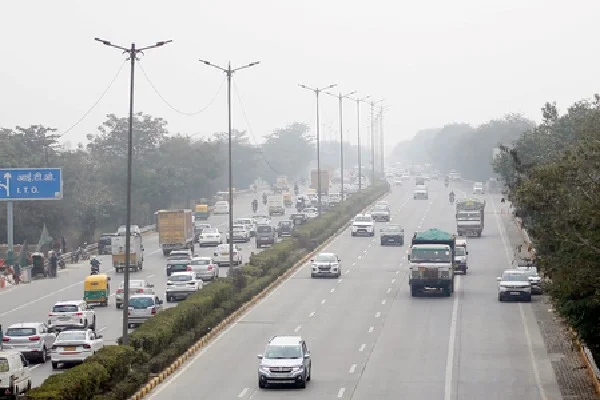
Patchy Pockets of Pollution: While the average might suggest improvement, specific areas like ITO recorded an AQI of 223 and Chandni Chowk a concerning 232, both firmly in the 'poor' category. This highlights the uneven nature of air quality within the city itself.
A False Sense of Security? Areas like Sri Aurobindo Marg showed significantly better readings, with an AQI of 126, alongside IGI Airport (131) and Aya Nagar (136), all within the 'moderate' bracket. But can these isolated pockets of relative cleanliness be a true indicator of the city's overall health?
The Lingering Smog: Crucially, reports consistently mention a "thin layer of smog" persisting. This visual cue suggests that while particulate matter might have seen a minor reduction, the hazy shroud remains, a constant reminder of underlying pollution issues.
The AQI of 196 is a statistical improvement, but the presence of smog and significantly higher readings in key areas indicate that the problem is far from solved.
A Pattern of Fluctuations: Delhi's Air Quality Rollercoaster
This recent "improvement" isn't an isolated incident; it's part of a recurring pattern of temporary relief followed by renewed deterioration. We've seen this play out repeatedly.
Read More: Plan to Build Big Ice Wall to Save Doomsday Glacier

Historical Context of Delhi's Air Quality Woes:
Winter Woes: Delhi's winters are notoriously bad for air quality. Factors like lower wind speeds, diurnal temperature variations, and stubborn inversions trap pollutants close to the ground.
Seasonal Triggers: While farm fires from neighbouring states have been a major culprit in the past, especially in October and November, the current situation appears to be more influenced by local emissions and prevailing weather conditions.
Past Incidents: Remember the days when the AQI breached 400 ('severe') and even 500 ('severe plus')? Reports from December 2025 noted AQI levels around 234 (poor) with predictions of further deterioration, and even higher levels like 271 just a day prior. Another report from December 2025 highlighted that 19 out of 39 monitoring stations reported 'very poor' air quality. These past crises underscore the cyclical nature of the problem.
Read More: India Says US Trade Paper Changes Match What Was Agreed
| Incident / Period | Approximate AQI Range | Category | Key Contributing Factors Mentioned (if any) |
|---|---|---|---|
| Sunday (Recent Report) | 196 (Average) | Moderate | Slight improvement, smog persists |
| Previous Day (Sat) | 227 | Poor | |
| Dec 25, 2025 (Approx.) | 234 | Poor | Transport emissions, neighboring cities |
| Dec 4, 2025 (Approx.) | Mixed (Poor/Very Poor) | Poor/V. Poor | |
| Earlier Crises (Past) | 400+ | Severe | Farm fires, local emissions, weather |
"Despite this improvement, a thin layer of smog persists in parts of the city, and overall air quality remains poor." - Article 1
This persistent pattern of seasonal fluctuations and temporary dips suggests that underlying pollution sources are not being effectively addressed.
The Role of Fog and Temperature: Nature's Mask or a Genuine Change?
The recent slight improvement coincides with chilly weather and the presence of fog. How much of this "moderate" AQI is a genuine win, and how much is a meteorological illusion?

Fog's Double-Edged Sword: Fog, particularly dense fog, can sometimes scatter sunlight and reduce visibility, making pollution appear less severe. However, fog droplets can also trap pollutants, potentially leading to higher concentrations in the air at ground level. The reports mention a "thin layer of smog" and "moderate fog," which suggests a complex interaction.
Temperature Drop: A drop in temperature, as predicted, can often lead to stagnant air conditions, trapping pollutants. So, while the air might feel colder, this doesn't automatically translate to cleaner air in the long run. In fact, it can exacerbate pollution.
The "Improvement" Factor: The articles explicitly state this is an improvement compared to Saturday (AQI 227). This suggests a real, albeit small, reduction in pollutants. But the question remains: why this reduction, and how sustainable is it?
Read More: Cartoonist Rohan Chakravarty Uses Funny Pictures to Teach About Nature
"Delhi air quality improves slightly but remains poor as smog persists, chilly weather and fog expected through the week." - Article 2
The interplay between fog, temperature, and pollution is complex. While weather conditions can influence daily AQI readings, they don't fundamentally solve the problem of emissions. Is the current improvement a symptom of the cold and fog, or a result of active interventions?
Action and Inaction: Are Measures Truly Making a Difference?
Amidst the fluctuating air quality, there are mentions of efforts to combat pollution. But do these actions translate into tangible, long-term solutions, or are they mere band-aids?
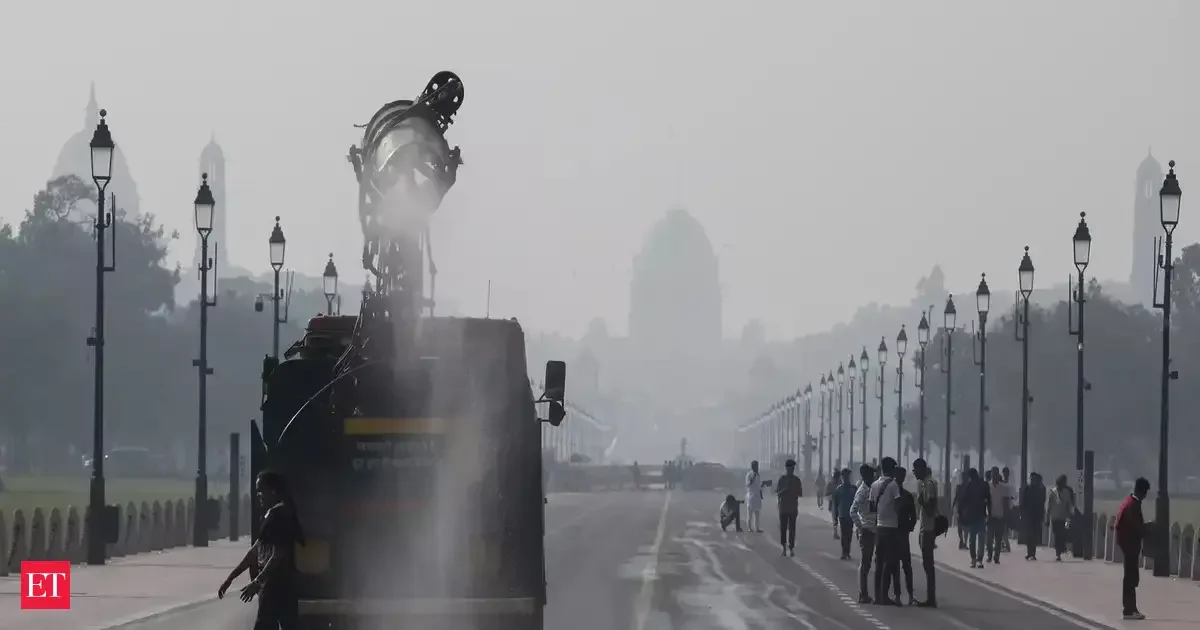
Delhi Metro's Anti-Smog Guns: The Delhi Metro has reportedly installed mist spray systems and anti-smog guns at all 143 elevated stations. This is a commendable step in localized pollution control.
Question: How effective are these systems on a large scale? What is their impact on the overall AQI, and are they deployed strategically based on real-time pollution data?
Broader Pollution Control: Beyond the metro, what other stringent measures are in place to tackle the persistent sources of pollution – vehicular emissions, industrial output, and construction dust?
Question: Are existing regulations being strictly enforced? What is the quantifiable impact of these measures over time, not just on a single day's AQI?
The Contribution of Neighbours: Reports often cite transport emissions and pollution from neighbouring cities as significant contributors.
Question: What collaborative efforts are being made with neighbouring states to address transboundary pollution? Are regional solutions being effectively implemented and monitored?
Read More: India's January Inflation Rate is 2.75% with New Measuring System
"Delhi Chief Minister Rekha Gupta said the Delhi Metro has completed the installation of mist spray systems and anti-smog guns at all 143 elevated stations, marking a significant step in efforts to curb air pollution." - Article 2
The introduction of measures like anti-smog guns by the Delhi Metro is a positive sign, but their localized impact needs to be assessed against the backdrop of continuous, large-scale pollution sources.
The Verdict: A Breath of Fresh Air, Or Just a Momentary Pause?
The AQI of 196 on Sunday is statistically better than the 'poor' readings of the preceding day. However, it's crucial to interpret this improvement with extreme caution.
The Persistence of Smog: The persistent presence of smog, even a thin layer, indicates that the underlying problem of particulate matter remains.
Uneven Air Quality: The disparity between different locations within Delhi (e.g., ITO vs. Sri Aurobindo Marg) shows that the air quality is not uniformly bad, but it's also not uniformly good.
The Bigger Picture: Delhi has a long history of battling severe air pollution, particularly during the winter months. This slight dip in AQI could be a natural fluctuation influenced by weather patterns, rather than a definitive victory over pollution.
Read More: UK Winters Are Getting Wetter, Scientists Say
Until there is a sustained and significant reduction in pollutants across all major sources, and a consistent AQI in the 'good' or 'satisfactory' range, any claims of "improvement" must be viewed with a healthy dose of skepticism. Delhi deserves more than fleeting moments of cleaner air; it needs a permanent solution.
Sources:
The Hindu: https://www.thehindu.com/news/cities/Delhi/delhi-air-quality-slightly-improves-aqi-level-at-196/article70606539.ece
Business Standard: https://www.business-standard.com/india-news/delhi-air-quality-improves-slightly-stays-poor-cold-fog-persists-1260208000861.html
India.com: https://www.india.com/news/india/delhi-air-quality-improves-slightly-but-remains-poor-as-smog-persists-is-the-capital-breathing-easier-compared-to-january-8297505/
New Kerala: https://www.newkerala.com/news/a/delhi-air-quality-slightly-improves-aqi-level-196-261.htm
AP7AM: https://www.ap7am.com/en/119963/delhis-air-quality-improves-slightly-to-moderate-category-smog-persists-in-several-areas
India Today: https://www.indiatoday.in/cities/story/delhi-air-quality-improves-slightly-cold-wave-alert-issued-temperatures-dip-2830377-2025-12-04
The Economic Times: https://economictimes.indiatimes.com/news/india/delhi-air-quality-improves-as-aqi-drops-to-234-deterioration-likely-in-coming-days/articleshow/126174933.cms