


Critica Limited has reported a significant advancement in its processing capabilities, achieving a 97.1 per cent total rare earth oxide (TREO) concentration in its latest mixed rare earth oxide (MREO) product from the Jupiter project in Western Australia. This latest output, a third iteration of the MREO from the project, demonstrates a material improvement in product quality compared to earlier tests.
The enhanced purity levels, coupled with recovery rates of up to 71 per cent for TREO and 76 per cent for magnet rare earth oxides (MagREO), are presented as key factors that could bolster the project's viability for future development. Higher TREO content is generally understood to signify a greater concentration of valuable rare earth elements and a reduction in unwanted contaminants, potentially influencing both the product's worth and its marketability.
The recent findings build upon previous MREO products that yielded 84 per cent and 86 per cent TREO, tested in late October and early December of last year. Critica's efforts appear focused on demonstrating the commercial potential of the Jupiter resource, described as Australia's largest clay-hosted rare earth deposit.
Read More: FireFly Metals Finds Big Copper-Gold Near Green Bay, Canada
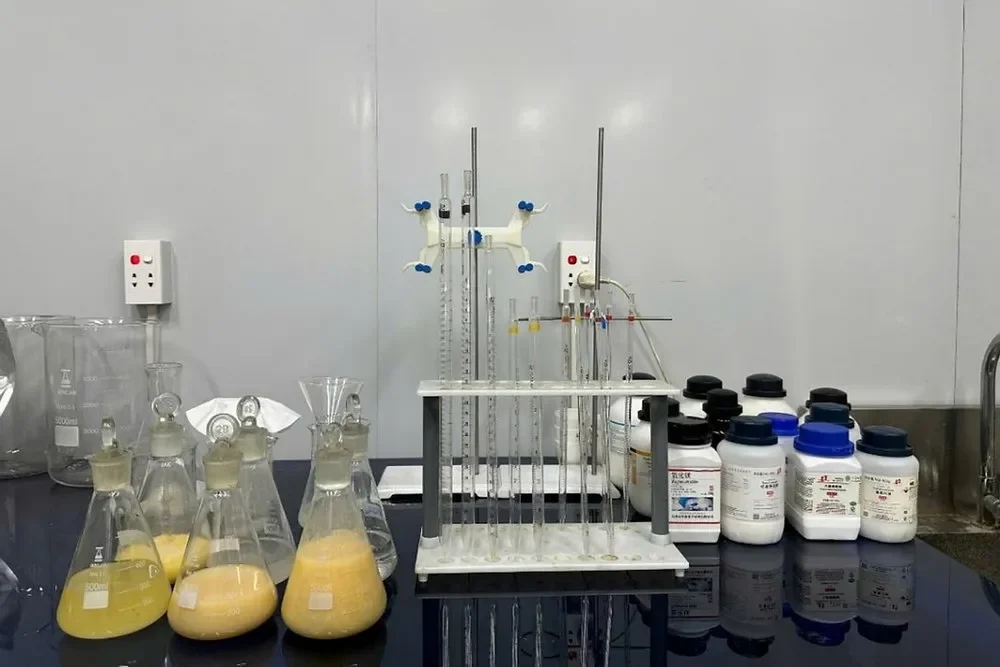
Progress in Rare Earth Oxide Production
Critica Limited, an entity focused on clay-hosted rare earth elements (REE) with holdings across Western Australia and Tasmania, has issued these updated figures. The Jupiter project is situated approximately 250km east of Geraldton in Western Australia. The company's chief executive, Jacob Deysel, has previously characterized the production of a high-purity mixed rare earth product as a "pivotal step," suggesting that the beneficiated Jupiter concentrate can be processed using conventional hydrometallurgical methods to yield an oxide product. The company's stated objectives include focusing on " optimization ," product specification refinement, and discussions with potential offtake and strategic partners.
Understanding the Metrics: Purity and Recovery
The significance of Total Rare Earth Oxide (TREO) lies in its measurement of the combined percentage of rare earth oxide compounds within a mixed rare earth product. In the rare earth market, the price offered by refiners or offtake partners, often referred to as 'payability,' is typically calculated based on the amount of contained rare earth oxides.
Read More: FIFA World Cup 2026 Revenue Reaches $15 Billion With New Ticket Prices
Magnet rare earth oxides (MagREO) – specifically neodymium, praseodymium, dysprosium, and terbium – are considered commercially critical metrics, especially for investors tracking the rare earth sector. Their recovery rates, alongside the overall TREO grade, carry substantial weight in assessing project economics. The Jupiter project itself reportedly holds a substantial global resource of 1.8 billion tonnes, with an average grade of 1700 parts per million total rare earth oxides.
Historical Context and Strategy
Previous test results from September 2025 indicated that the Jupiter project's ore could undergo beneficiation, consistently rejecting around 95 per cent of waste material while increasing TREO grades significantly. Critica has emphasized a "beneficiation-first strategy," suggesting that Jupiter's unique non-ionic clay mineralogy provides an advantage over ionic clay deposits. The company's broader objective has been to produce mixed rare earth carbonate and oxide products. This latest advancement appears to be a continuation of a program that also encompasses oxide and carbonate specifications, as noted in earlier reports from October 2025.
Read More: Augustus Starts New Gold Search Near Leonora


