OBSERVATIONS SHOW GAS RATIOS ALTERED POST-CLOSEST APPROACH TO SUN
== A recent analysis of comet 3I/ATLAS, using data from the Subaru Telescope, suggests a marked change in its chemical composition, specifically a decrease in the ratio of carbon dioxide (CO2) to water (H2O) after its closest approach to the Sun (perihelion).== This finding, detailed in a paper published recently and supported by spectroscopic readings, indicates the comet's gaseous halo (coma) has a different makeup than previously observed when it was on its inward journey. The coma's gas originates from the nucleus, thus offering insights into the nucleus's actual makeup.
The team behind the observation, led by Dr. Yoshiharu Shinnaka, employed the Subaru Telescope's multi-wavelength capabilities, utilizing V-band, R-band, and I-band filters to distinguish various emission signatures around the comet. This method allowed for the isolation of specific features, such as the forbidden [O I] lines, which were instrumental in estimating the CO2/H2O abundance ratio. The calculated green-to-red [O I] intensity ratio yielded a value of 0.339±0.027.
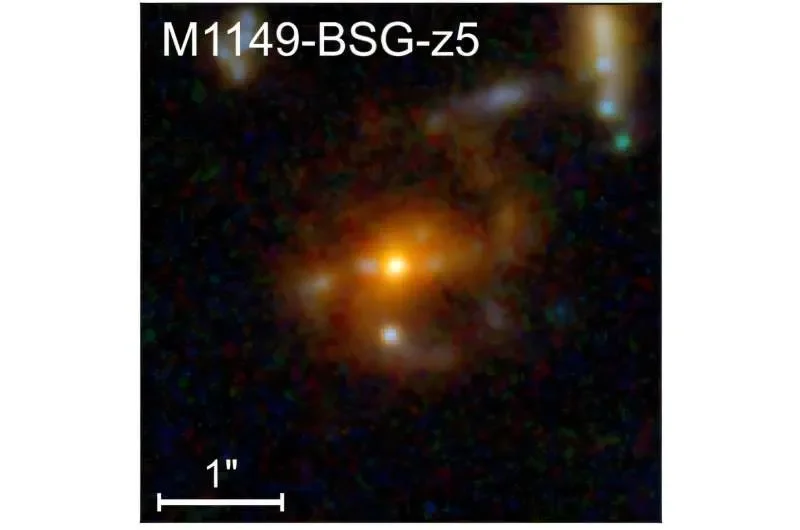
Read More: JWST Finds Oldest Barred Spiral Galaxy M1149-BSG-z5
This derived ratio is notably lower than that observed during the inbound trajectory, where infrared observations at a distance of approximately 3.3 astronomical units (au) suggested a much richer CO2 content. However, the current post-perihelion ratio remains higher than typical values found in comets originating within our own Solar System. Researchers noted that while H2O and CO2 are considered the primary sources for the oxygen emissions detected, other oxygen-bearing compounds are expected to have a less significant impact under normal conditions.
INTERSTELLAR ORIGINS AND THE SEARCH FOR CLUES
Comet 3I/ATLAS, an object identified as having an interstellar origin, offers a rare window into the chemical environment of other star systems. Each such visitor is seen as a unique record of its parent stellar system's composition and the processes it underwent. The application of techniques refined over decades of studying Solar System comets to this interstellar visitor lends new significance to the findings.
Read More: US Space Force Victus Haze Mission Successfully Tests Orbital Intercepts
Early observations in March 2026, when the comet was approximately 286 million kilometers from Earth, had already revealed gas jets. The development of systems like ATLAS has significantly advanced the early detection of such objects. Predictions regarding the comet's future brightness continue to guide amateur observations. Research groups are also formulating theories about the comet's origins based on its observed speed and composition.
The Subaru Telescope's ability to gather data across multiple spectral bands is highlighted as crucial for isolating diverse emission features within the cometary coma. This detailed chemical comparison between comets from different stellar environments sets a precedent for future research into extrasolar objects and their roles in planetary formation.