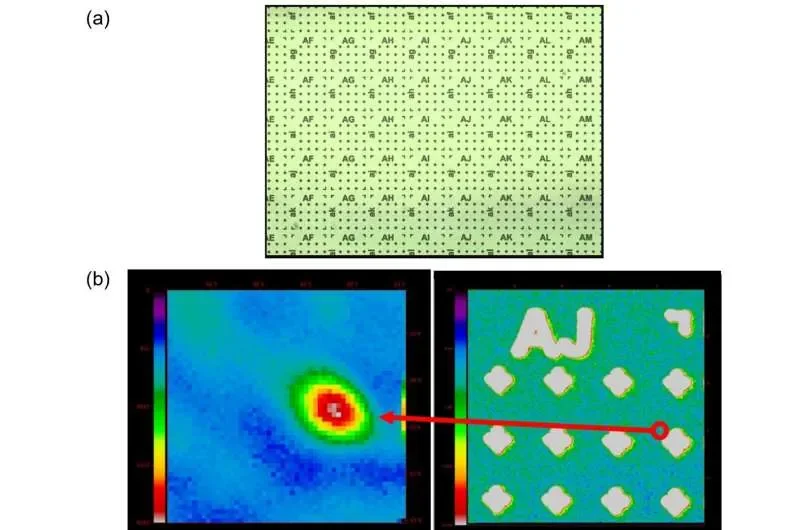
New methods for focusing X-ray optics, using technology termed 'lobster-eye' optics, are being developed to better capture and study distant, energetic cosmic events. These events, known as gamma-ray bursts (GRBs), are among the most powerful explosions observed since the universe's inception. The HiZ-GUNDAM EAGLE project, specifically, involves meticulously aligning multiple Micro Pore Optics (MPO) segments. These MPOs are thin glass plates dotted with microscopic channels, and their precise arrangement is crucial for concentrating X-ray emissions from these fleeting, far-off explosions. A recent demonstration involved selecting four MPO segments with remarkably similar focal points and minimal distortion, then mounting them onto a prototype structure. Through a cycle of careful measurement and subtle adjustment, the team successfully brought these segments into a tight, functional alignment. This advancement promises a more detailed understanding of these cataclysmic celestial occurrences.
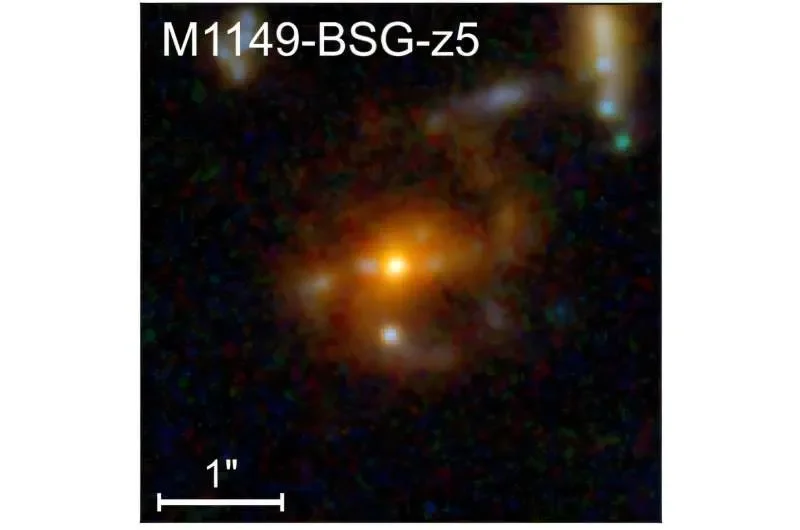
Read More: JWST Finds Oldest Barred Spiral Galaxy M1149-BSG-z5
Cosmic Light Shifts and Burst Classifications
The nature of these powerful cosmic blasts, gamma-ray bursts, is further complicated by their immense distances. The expansion of the universe itself can shift the light emitted by these events into longer, infrared wavelengths, making them harder to detect in visible light. This was noted in observations of a particular GRB detected on April 23, 2009, where an X-ray afterglow was visible, but the event remained unseen in optical spectrums.
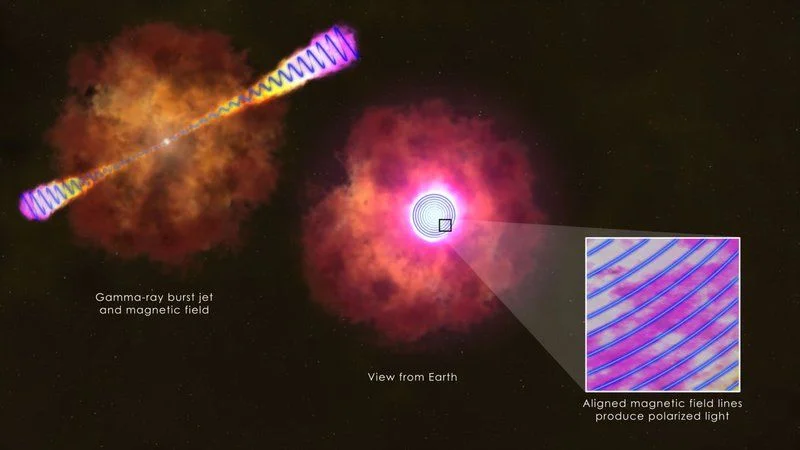
Astronomers currently categorize GRBs into two main types: 'short' bursts, lasting under two seconds, and 'long' bursts, extending for two seconds or more. However, recent discoveries continually challenge these classifications, with researchers exploring the phenomenon of 'ultra-long' GRBs. The study of GRBs is essential for astrophysics, providing insights into extreme physical conditions that cannot be replicated on Earth, acting as natural laboratories for testing fundamental laws of physics under immense gravitational and magnetic forces.
Read More: Indigenous Data Rights Now Key in Conservation Genomics
Unexpected Behavior and Repeating Explosions
Recent observations have revealed GRBs exhibiting behavior far beyond initial expectations. The event GRB 250702B, detected on July 2, 2025, did not occur as a single, instantaneous explosion. Instead, it presented a pattern that played out over 24 hours, exhibiting a "cosmic heartbeat." NASA's Fermi telescope recorded three distinct bursts of gamma rays spread across several hours. Data from the Einstein Probe later indicated activity nearly a full day prior to these observations, transforming what was initially thought to be a singular flash into a day-long, repeating spectacle. This unexpected temporal behavior challenges existing models and underscores the complexity of these cosmic phenomena.
GRBs as Laboratories of Extreme Physics
Gamma-ray bursts are recognized as the most violent events in the universe since the Big Bang. Their study is a significant focus in modern astrophysics. These bursts offer a unique opportunity to examine physics under conditions of extreme gravity and magnetic fields, offering glimpses into processes that defy terrestrial laboratory replication. They are also considered potential sources of both high-energy particles and 'gravitational waves' – ripples in the fabric of spacetime caused by immense cosmic events. The more these explosive events are studied, the more likely it is that astronomers will encounter occurrences that push the boundaries of current scientific understanding.
Read More: Astronomers' discoveries about comets and cosmic background radiation explained