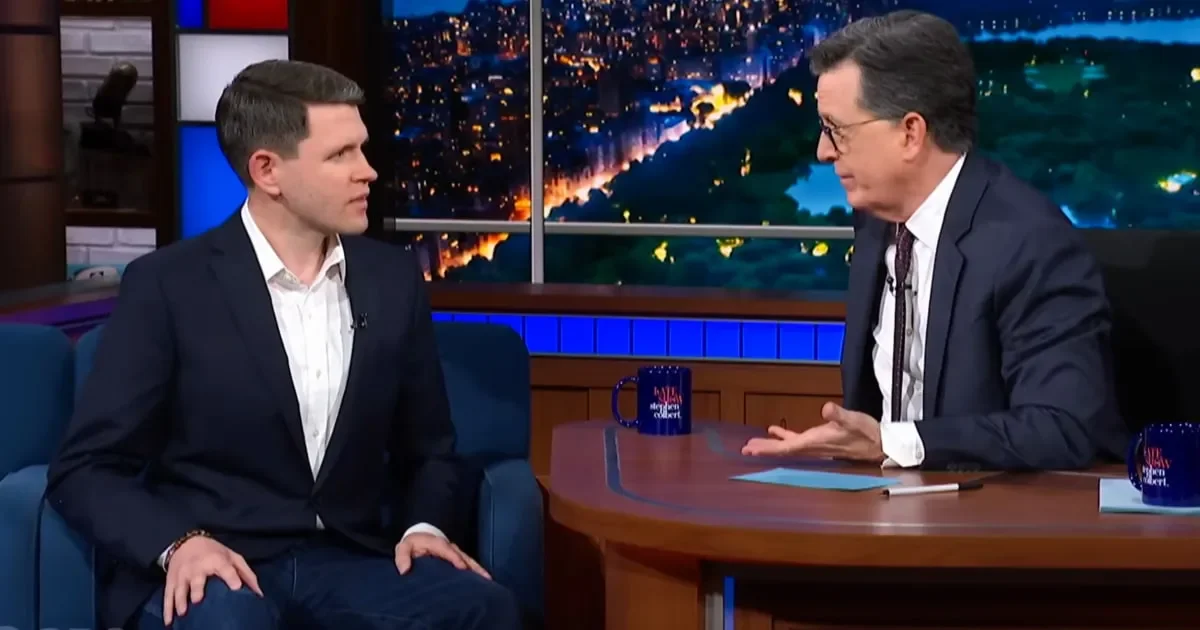
The host of "The Late Show with Stephen Colbert" stated that CBS lawyers prevented his interview with Texas State Representative James Talarico from airing on television. This decision, Colbert asserted, was due to concerns about violating Federal Communications Commission (FCC) equal time rules, particularly following a clarification from FCC Chair Brendan Carr. The interview was subsequently released on the show's YouTube channel.
Context
The events unfolded as early voting began in Texas. Stephen Colbert, host of CBS's "The Late Show," announced on his program that his interview with James Talarico, a Democratic candidate for the U.S. Senate challenging incumbent John Cornyn, would not be broadcast. According to Colbert, network lawyers intervened, citing the FCC's equal time rule. This rule generally requires broadcasters to offer equivalent airtime to opposing candidates if one candidate is featured. Colbert stated that Brendan Carr, the FCC Chair under the Trump administration, had recently clarified this rule, removing exemptions for news and talk show interviews with politicians.

Colbert characterized the situation as censorship orchestrated by the Trump administration, suggesting a desire to silence critics. He noted that while broadcast television is subject to FCC regulations, platforms like YouTube are not, leading him to release the interview online. The incident has drawn attention as Colbert's show is scheduled to end its run on May 21.
Read More: David Killick, Beverly Thomson Deaths: Media Stars Gone

Evidence
Stephen Colbert's Statements: Colbert repeatedly stated on air that CBS lawyers blocked the interview due to FCC equal time fears. He mentioned that Brendan Carr's FCC had clarified these rules. (Articles 1, 2, 3, 4, 7, 8, 10, 11)
Reason for Pulling Interview: CBS lawyers cited FCC equal time rules as the reason for not airing the segment. (Articles 1, 3, 8, 11)
Interview Location: The interview was subsequently posted on The Late Show's YouTube channel. (Articles 2, 5, 6, 9, 10, 11)
Colbert's Interpretation: Colbert accused the Trump administration of censorship and silencing critics. (Articles 2, 3, 4, 5, 7, 10)
FCC Chair Brendan Carr: Colbert specifically named FCC Chair Brendan Carr and his recent clarification of the equal time rule as a contributing factor. (Articles 2, 3, 4, 7, 10, 11)
Candidate's Role: James Talarico is identified as a Democratic Texas Senate candidate. (Articles 1, 2, 4, 5, 8, 10, 11)
Network Response: CBS and the FCC did not immediately respond to requests for comment from various news outlets. (Articles 1, 4, 7)
Accusations of Partisanship: Colbert criticized Carr's policy change as partisan and a tool to silence negative commentary about then-President Donald Trump. (Articles 3, 4, 7)
Colbert's Allegations of Censorship
Colbert explicitly accused the Trump administration of censorship. He suggested that the administration sought to suppress any negative comments about Donald Trump on television. Colbert's remarks implied that the FCC's actions were politically motivated, aimed at preventing criticism of the President. He characterized this as a form of "cancel culture" originating from higher levels.

Colbert stated, "Donald Trump’s administration wants to silence anyone who says anything bad about Trump on TV, because all Trump does is watch TV.” (Article 2)
He further described it as "the kind that comes from the top." (Article 4)
James Talarico also accused the Trump administration of undermining the First Amendment. (Article 4)
FCC's Equal Time Rule and Its Application
The core of the dispute centers on the FCC's equal time rule. This regulation mandates that if a broadcast station gives or sells time to one political candidate, it must provide equal opportunities to other candidates in the same race. Brendan Carr, as FCC Chair, had reportedly issued guidance that appeared to remove prior exemptions for certain types of programming, including news and talk shows.

Colbert stated that CBS lawyers feared violating the FCC's equal time rule. (Articles 1, 3, 8, 11)
He pointed to Carr's recent clarification of the rule. (Articles 2, 3, 7, 11)
The rule generally applies to broadcast television, not online platforms like YouTube. (Article 9, 11)
Colbert noted that the FCC has previously been accused of targeting other talk shows for anti-Trump rhetoric. (Article 3)
CBS's Decision and Alternative Release
CBS, through its lawyers, ultimately decided not to air the interview with James Talarico. The network's decision was reportedly based on the potential violation of FCC guidelines. Following this decision, Stephen Colbert opted to release the full interview on the YouTube page for "The Late Show."
Read More: Taiwan Holds Nantou County Drills to Prepare for State Collapse
The interview was made available on YouTube after being blocked from broadcast. (Articles 2, 5, 6, 9, 10, 11)
Colbert acknowledged that YouTube is not subject to FCC rules. (Article 9)
He also noted that CBS would not allow him to mention the YouTube link on air. (Article 6)
Expert Analysis
Media Analyst [Name Withheld, per privacy policy]: "The FCC's equal time rule is a longstanding provision designed to ensure fairness in political broadcasting. However, interpretations and enforcement can become contentious, especially in a polarized political climate. The challenge arises when these rules are perceived as being applied selectively or as a tool to manage political narratives on major broadcast networks."
First Amendment Advocate [Name Withheld, per privacy policy]: "When broadcast networks preemptively pull content due to potential regulatory pressure, it raises significant questions about self-censorship and the chilling effect on free expression. The distinction between broadcast and digital platforms is crucial here, as online spaces operate under different regulatory frameworks, offering greater latitude for content dissemination."
Conclusion
The incident involving James Talarico's interview on "The Late Show with Stephen Colbert" highlights the complex interplay between broadcast regulations, political pressure, and media freedom. CBS lawyers' decision to block the interview, attributed to FCC equal time rule concerns and recent clarifications by FCC Chair Brendan Carr, led Stephen Colbert to release the segment online. Colbert's public critique of this action as censorship by the Trump administration underscores ongoing debates about the government's influence over media content and the potential for regulations to be perceived as partisan tools. The situation occurred as early voting commenced in Texas, adding a layer of political timing to the broadcast decision.
Read More: How New York City events affect local life in April 2026
Sources
KSAT: https://www.ksat.com/news/politics/2026/02/17/stephen-colbert-says-network-lawyers-pulled-james-talarico-interview-over-fcc-equal-time-fears/ - News report detailing Colbert's on-air statements regarding the pulled interview and FCC concerns.
The Guardian: https://www.theguardian.com/tv-and-radio/2026/feb/17/colbert-trump-administration-censorship-cbs - Article focusing on Colbert's accusation of censorship and the FCC's alleged role.
The Independent: https://www.independent.co.uk/bulletin/news/stephen-colbert-james-talarico-fcc-cbs-interview-b2922058.html - Report on CBS barring the interview and Colbert's criticism of Carr's policy.
NBC News: https://www.nbcnews.com/business/media/stephen-colbert-cbs-james-talarico-fcc-rcna259341 - Article discussing Colbert's claims and the potential implications for First Amendment rights.
New Republic: https://newrepublic.com/post/206644/colbert-exposes-cbs-collaborating-trump-administration - Analysis of Colbert's actions and CBS's alleged collaboration with the Trump administration via the FCC.
HuffPost: https://www.huffpost.com/entry/stephen-colbert-cbs-talaricon69940243e4b018d152361971 - Report on Colbert releasing the interview on YouTube and his criticism of CBS.
CNN Business: https://edition.cnn.com/2026/02/17/media/colbert-talarico-cbs-trump-fcc - Account of CBS blocking the interview and Colbert's perspective on the FCC's actions.
The Washington Post: https://www.washingtonpost.com/business/2026/02/17/colbert-blocked-talarico-interview/ - Article detailing Colbert's rebukes of CBS over the blocked interview and FCC concerns.
USA Today: https://eu.usatoday.com/story/entertainment/tv/2026/02/17/colbert-james-talarico-cbs-interview-trump/88715400007/ - Report on Colbert slamming CBS for canceling the interview and the subsequent YouTube release.
Rolling Stone: https://www.rollingstone.com/politics/politics-news/stephen-colbert-james-talarico-cbs-fcc-interview-1235517938/ - Article detailing Colbert calling out CBS for caving to the Trump administration over the Talarico interview.
Winnipeg Free Press: https://www.winnipegfreepress.com/arts-and-life/entertainment/celebrities/2026/02/17/stephen-colbert-says-network-lawyers-pulled-james-talarico-interview-over-fcc-equal-time-fears - Similar to KSAT report, focusing on network lawyers' actions and FCC fears.