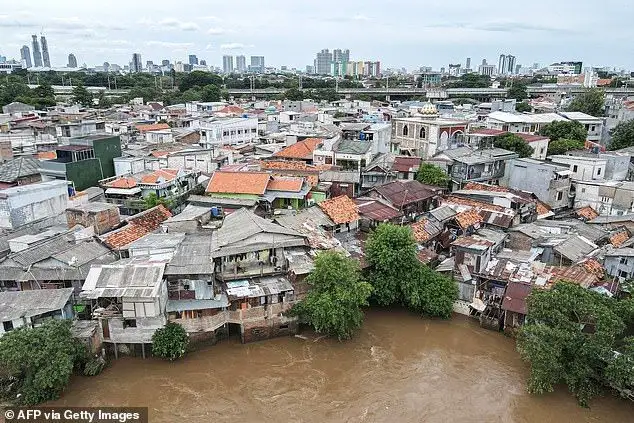
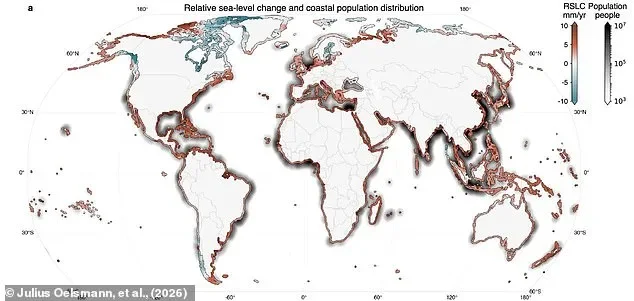
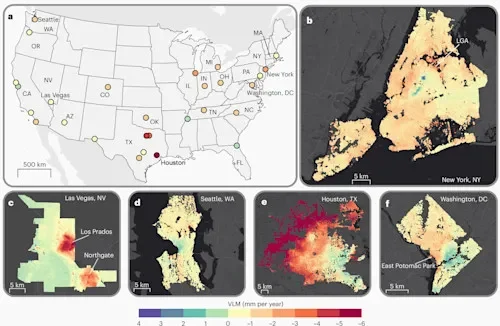
As of May 19, 2026, a new research analysis led by Julius Oelsmann confirms that urban land subsidence is currently the primary driver of relative sea-level rise for many coastal populations. While global sea levels rise at an absolute rate of approximately 3.15mm annually, coastal cities are sinking at rates that frequently double this figure, creating a compounded threat for millions of inhabitants.
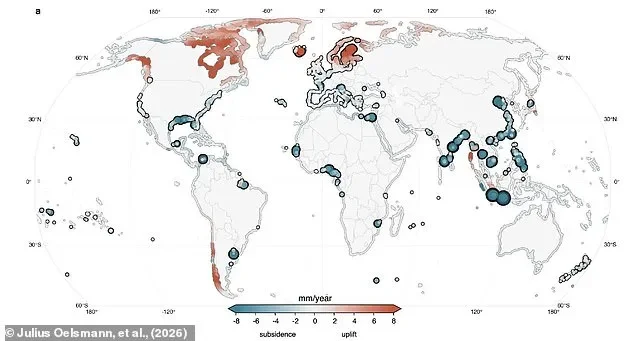
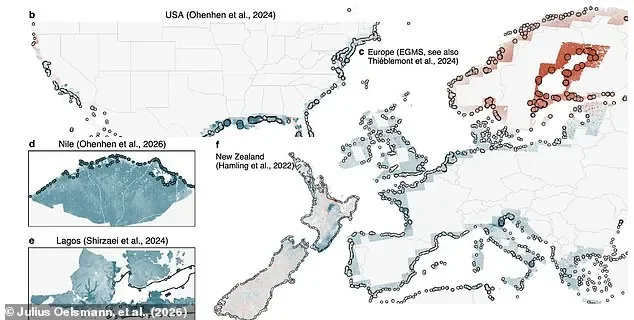
The velocity of sinking land in key urban centers often eclipses the vertical growth of global oceans, rendering traditional sea-level models insufficient for local risk assessment.
| City | Observed Annual Subsidence (Approx.) |
|---|---|
| Jakarta | ~14mm |
| Tianjin/Bangkok/Lagos/Alexandria | 4mm – 13.5mm |
| Global Urban Average | ~2mm |
Drivers of Urban Compression
The degradation of the Earth's surface beneath these metropolitan hubs is not a singular phenomenon. Investigations identify three primary mechanisms accelerating this decline:
Groundwater Extraction: The primary catalyst. As cities drain underground aquifers, the structural integrity of the soil fails, leading to permanent land collapse.
Urban Loading: The 'sheer weight' of massive infrastructure projects creates downward pressure, compressing sub-surface layers.
Sediment Disruption: Human intervention in river deltas restricts the natural replenishment of silt, causing the ground to settle.
Case Studies in Equilibrium and Decline
The geography of risk is asymmetrical. While cities like Jakarta face acute displacement threats, other regions experience the opposite. In Finland and Sweden, geological rebound is actually elevating land faster than the oceans rise, resulting in a relative sea-level drop.
Read More: Amazon Land Use Changes Cause Disease Clusters in Brazil
Conversely, Tokyo offers a blueprint for mitigation. By shifting water policy and securing alternative resources to stop aggressive groundwater depletion, the city successfully decelerated its subsidence rate, which had previously spiked beyond 10mm per year.
"Tackling both land subsidence and sea-level rise is key if we want to protect coastal communities," notes the Oelsmann study.
Investigative Context: The Delta Crisis
More than half of the world's river-delta regions are currently sinking. These areas, home to massive agricultural and economic activity, are losing their elevation to a combination of tectonic shifts and anthropogenic water use. Research using satellite radar tracking suggests that even under moderate climate scenarios, the downward movement of the ground will remain the dominant factor in flooding for the next several decades.
Current mitigation efforts, including the work mentioned by the World Economic Forum, suggest that reversing these trends requires deep structural reform in urban water management and industrial policy. The reliance on simple sea-wall construction is increasingly viewed as a temporary aesthetic, rather than a solution to the fundamental collapse of the substrate upon which these cities are built.
Read More: 15-Minute City Model Needs Services Close to Homes