Global sentiment data suggests a tightening race between China and the United States regarding international approval, with China showing an upward trend and the U.S. experiencing a dip. While the United States still holds an edge in overall global leadership approval, the gap has diminished, and both nations' net approval ratings remain in negative territory across many countries.
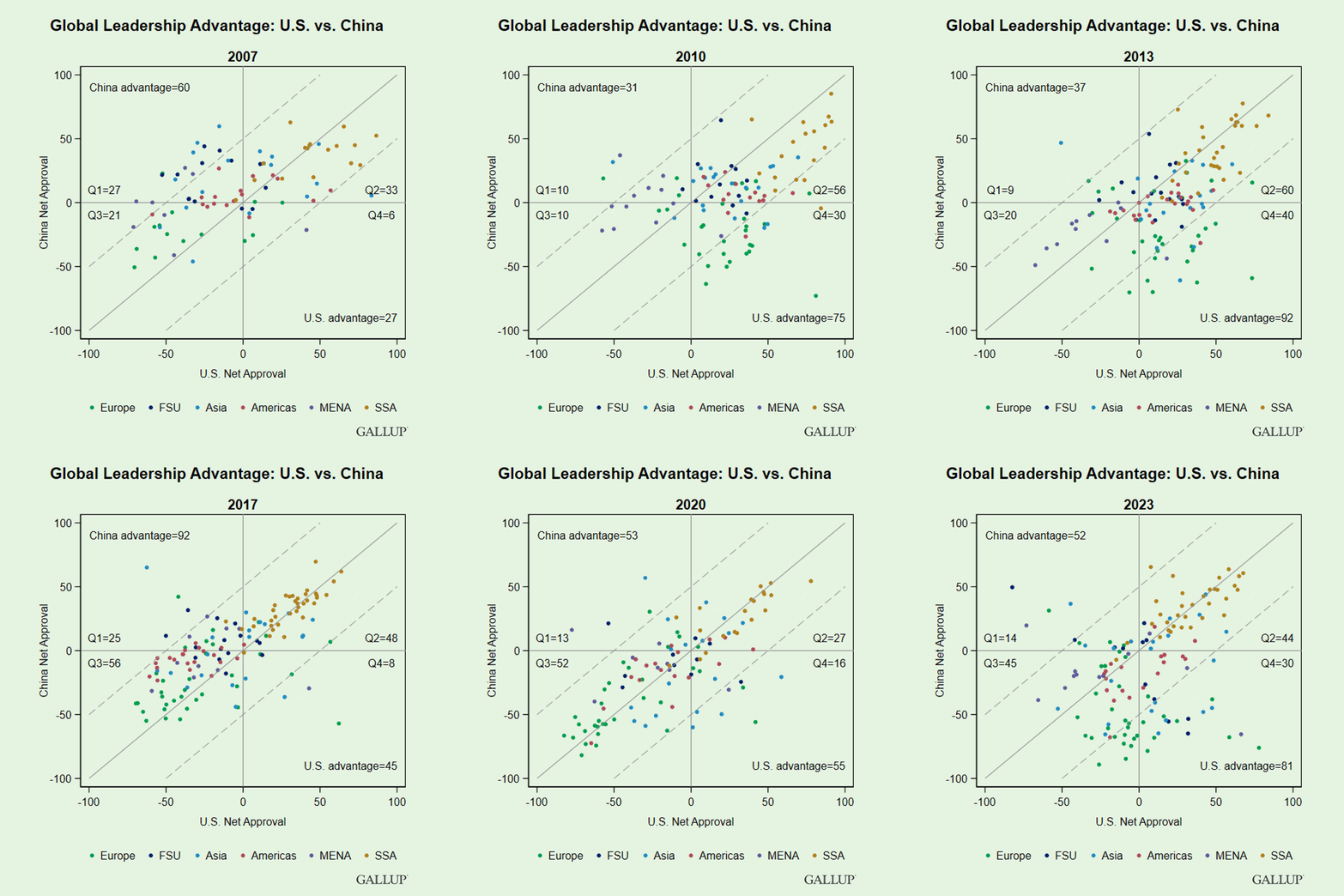
China has edged past the U.S. in net approval ratings, a measure calculated by subtracting the percentage of those who disapprove from those who approve. This shift indicates a growing, albeit still largely undecided, global perspective. Most nations surveyed do not express a strong preference for either superpower.

Tracking Global Perceptions
The Gallup World Poll, a comprehensive global survey, underpins these findings. It allows for comparisons between the U.S., China, and other major powers like Germany and Russia. The data reveals specific country-level leanings, with the relative net approval score (U.S. net approval minus China's net approval) ranging from +200 to -200.
Read More: US Lawmakers Criticize Trump's Iran Plan as 'Illegal' and 'Dangerous'
Russia shows a significant advantage for China, with a relative net approval score of -132.
Conversely, Kosovo exhibits the strongest U.S. net approval advantage, registering +154.
These figures are often presented in quadrants that categorize countries based on their net approval of both China and the U.S., whether positive or negative. The distribution of countries within these quadrants shifts annually, offering a snapshot of evolving geopolitical leanings.
Shifting Leadership Tides
Historical data from Gallup indicates that global approval of U.S. leadership fluctuates significantly with presidential administrations. Reports suggest that U.S. support tends to be higher under Democratic leadership compared to Republican leadership.
While the U.S. currently leads China in global leadership approval, the dynamic is complex. Previous reports have placed Germany as the top-rated power, with the U.S. in second place. Russia and China are also notable in their relative standings, although their overall favorability among Americans has seen a decline. Canada and Great Britain consistently rank as the most favorably viewed countries by Americans, while Russia and North Korea have faced diminishing favorability.
Read More: Seoul and Paris Agree New Defense and Energy Deals on Friday