
The United States is witnessing a burgeoning craze for 'grey-market' injectable peptides, substances with cryptic names such as BPC-157, GHK-Cu, or TB-500. These compounds, explicitly marketed as 'not for human consumption,' have cultivated a fervent following among self-styled 'biohackers' and 'health optimizers.' The central concern revolves around the inherent risks of these unregulated substances, whose exact composition and intended effects remain profoundly obscure.
Doctors Reddy and Gelber, when confronted with patients using these grey-market peptides, universally advise discontinuation. For those unwilling to cease their peptide regimen, these medical professionals offer 'harm reduction' advice. This pragmatic approach acknowledges the reality of the trend while attempting to mitigate potential damage. The lack of precision regarding the peptides’ exact nature and their intended therapeutic targets forms the bedrock of this medical apprehension.
Read More: Jane Fallon stable after breast cancer surgery, shares recovery update

Online personalities, such as Joe Smith, a trainer with a significant TikTok following, have become vocal proponents. Smith's journey reportedly began with what he terms the "Barbie drug," escalating within 18 months to injecting himself with concoctions like "Smurf Juice." His public pronouncements on these unregulated substances underscore their spread beyond clandestine circles into more visible platforms.
THE ALLURE OF THE UNKNOWN
Despite explicit warnings and the absence of regulatory oversight, the appeal of these injectable peptides appears undimmed. One individual, identified only as Katie, recounts a history of persistent physical ailments. Traditional medical interventions, including physiotherapy sessions prescribed by a general practitioner, offered no substantial relief. It was in this context of unmet medical needs that Katie turned to peptide therapy. This underscores a potential driver for the trend: a perceived void in conventional healthcare, pushing individuals towards experimental, unverified solutions.
Read More: Black Americans Hold Different Views on Race, Rice University Study Finds
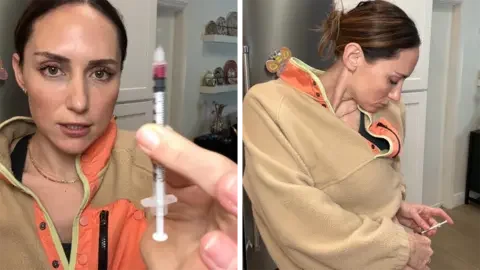
While physicians cannot endorse these unregulated peptides as legitimate treatments for specific conditions, some acknowledge a capacity to inform patients about available products. This information is dispensed with the explicit caveat that the peptides are not sanctioned for human use. The patients, in turn, must provide ‘full consent,’ a legally and ethically fraught undertaking given the unknown consequences. This dynamic highlights a complex intersection of patient autonomy, medical ethics, and the proliferation of unproven therapies.
The phenomenon, framed by some as a 'wellness peptide craze,' draws parallels to the public's historical fascination with unproven remedies and quick fixes. The emphasis on appearance and perceived self-optimization, as hinted at by the description of men and women as 'vain,' suggests a societal undercurrent that these unregulated substances tap into. The narrative of individuals transforming themselves into 'human guinea pigs' serves as a stark indictment of the risks inherent in this rapidly expanding grey market.
Read More: Plant Drug Ingredients Market to Reach $7.8 Billion by 2036, Reports Say