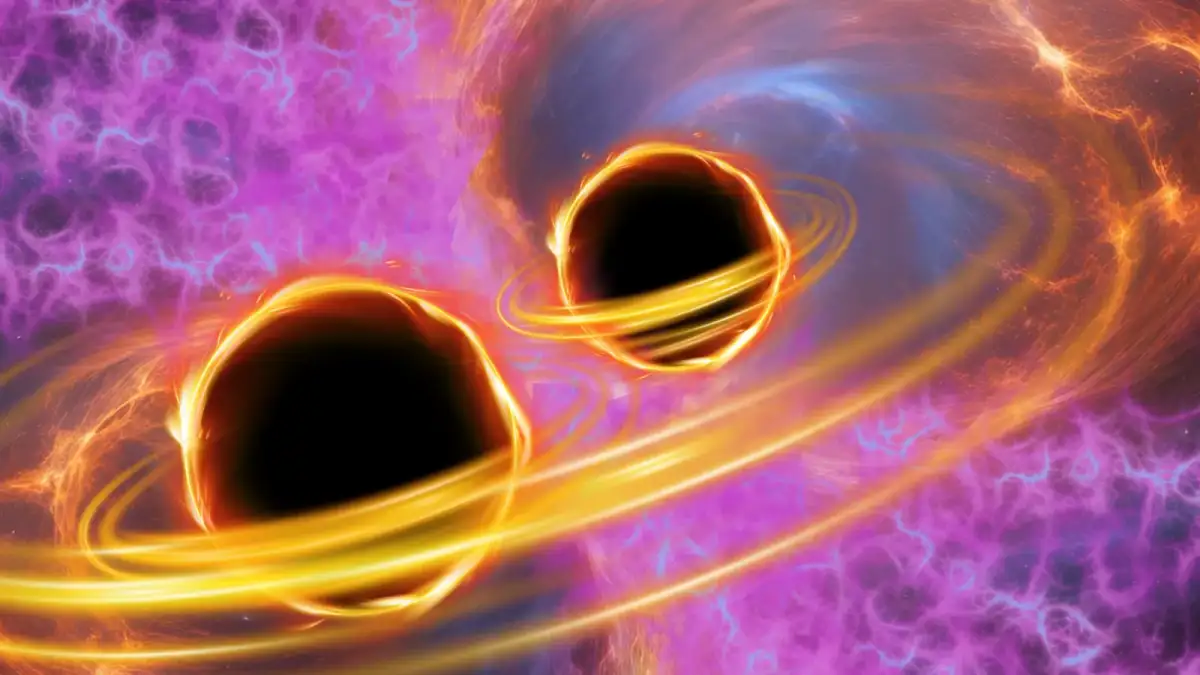
The James Webb Space Telescope has apparently zeroed in on a black hole that predates its host galaxy. This observation challenges current understandings of cosmic development. The discovery, detailed in recent findings, suggests black holes may have established themselves before the stellar collections they inhabit. Researchers are grappling with the implications, as this timeline contradicts established cosmological models.
Chronological Quandary
The celestial object's existence prior to its galaxy's formation presents a significant puzzle. Existing theories posit that galaxies coalesce first, providing the gravitational anchor for black holes to form within their dense cores. This new data, however, implies a reversal of that perceived order. Scientists are now examining various astrophysical mechanisms that could account for such an anomaly.
Background: The James Webb Space Telescope (JWST) is a powerful orbital observatory designed to peer deeper into the universe than previously possible. Its advanced infrared capabilities allow it to detect light from the earliest epochs of cosmic history. Investigations into early cosmic structures are a primary objective of the JWST mission.
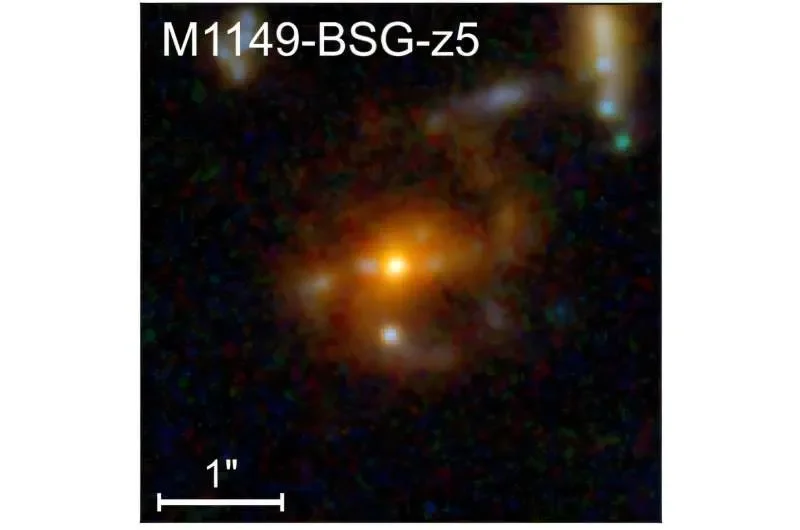
Read More: JWST Finds Oldest Barred Spiral Galaxy M1149-BSG-z5