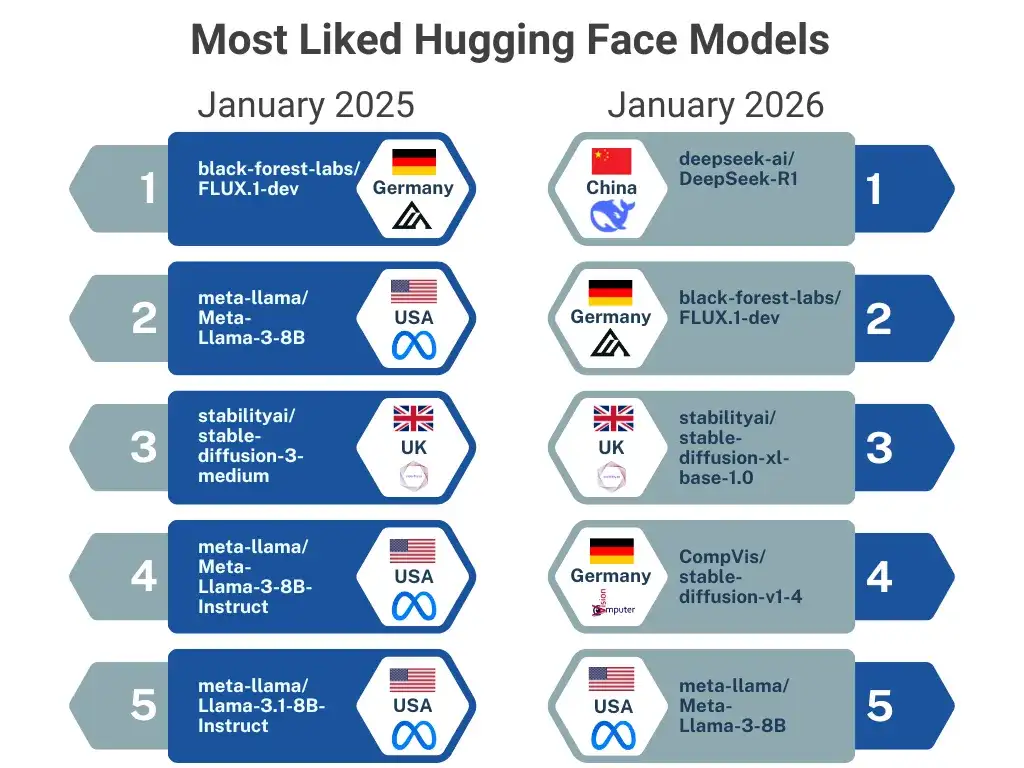
Chinese entities appear to be driving the open-source AI model development, yet the underlying computational hardware and services largely remain within the dominion of a single US corporation. This dynamic highlights a complex global AI landscape where innovation in models originates from diverse sources, while the very ability to deploy and scale these models is concentrated. While China leads in the proliferation and accessibility of open-source AI models, a significant portion of the necessary processing power and the platforms facilitating their use are tethered to American technological foundations.
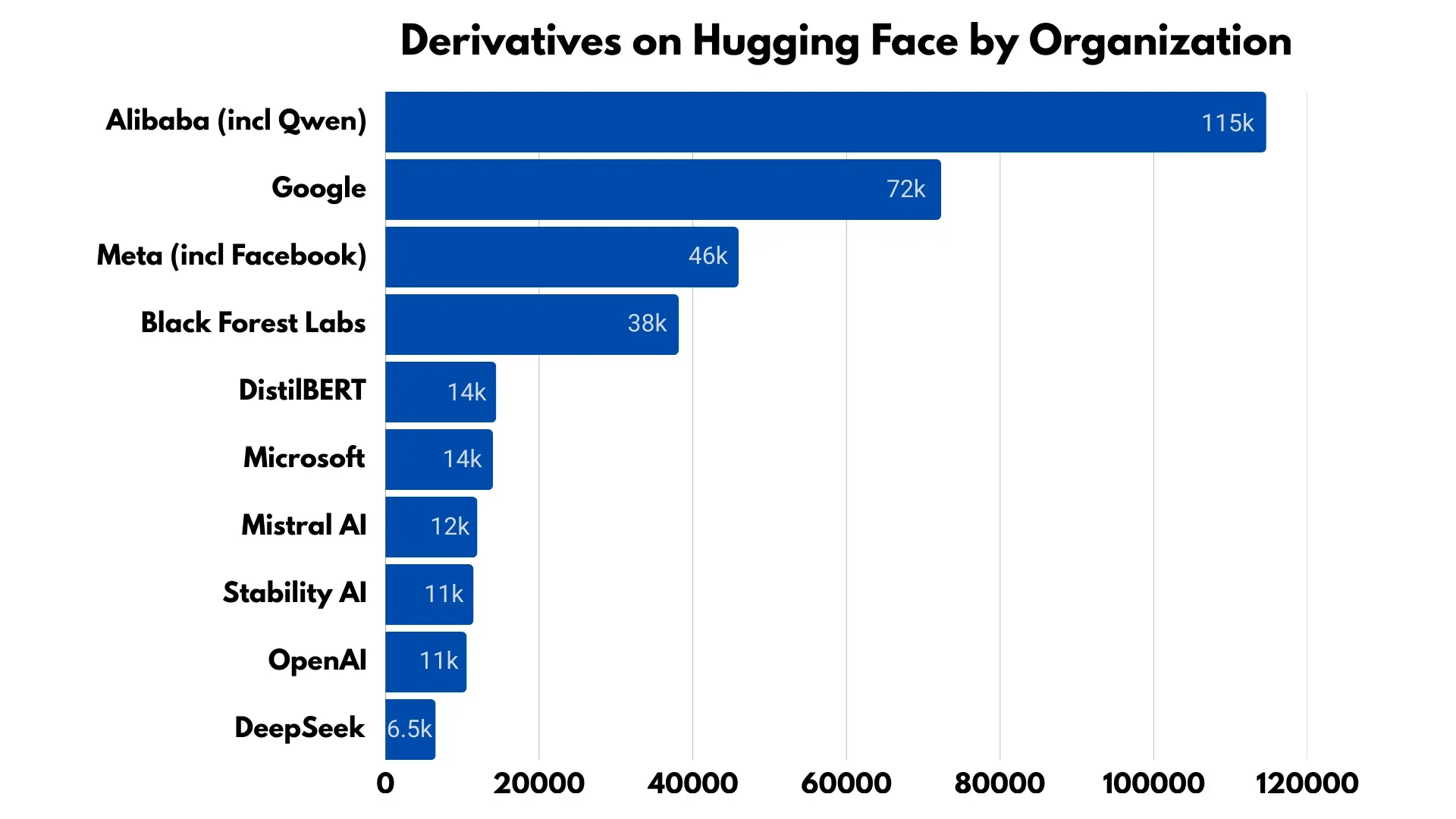
Reports from March 2026 indicate that while the spotlight often falls on large proprietary models from firms like Anthropic, OpenAI, and Google, the infrastructure level, particularly graphics processing units (GPUs), remains a critical bottleneck controlled by Nvidia. This dependency is mirrored on platforms like 'Hugging Face', a central hub for AI model sharing, where developer choices in building upon existing frameworks reveal a consistent reliance on these US-based hardware and software solutions.
Read More: Ricky Williamson Questions Human Self With AI's Rise

Contrasting Strategies: Openness vs. Capital Investment
In parallel, American tech giants are reportedly forging capital-intensive alliances. Oracle, for instance, aims to convert raw GPU capacity into predictable AI services, integrating 'Nvidia AI Enterprise' and 'NIM' microservices into its cloud offerings. This approach involves substantial, long-term commitments, with examples including 'OpenAI' securing chip supplies from 'AMD', 'AMD' reinvesting in manufacturing, 'Nvidia' funding 'Intel' for assembly expansion, and 'Oracle' pre-purchasing GPU clusters.

China's Efficiency and Adaptability
Conversely, Chinese AI players are doubling down on open-source principles and frugality. Their strategy emphasizes widespread innovation across a broader spectrum of firms, prioritizing open-source development and tailoring models for domestic hardware. This contrasts with the Western model, which, despite leading in raw AI capability, is seen as lagging in efficiency, cost-effectiveness, scale, and the momentum of open-source adoption. Reports from November 2025 suggest that China's open-ended approach to developing large language models (LLMs) has yielded significant results, with many of the top-performing open-source models originating from China. Furthermore, China's manufacturing prowess offers advantages, particularly for AI applications interacting with the physical world, and established consumer platforms can accelerate AI agent deployment.
Read More: New LLMs Can Now Use Text, Images, and Sound Together
Market Dynamics and Monetization Hurdles
Despite these apparent advantages, Chinese AI firms may face challenges in monetizing their offerings due to hypercompetitive domestic markets where price and performance are key differentiators. However, strategic advantages such as cheaper energy, increasing capital expenditure, and a vibrant open-source developer community are seen as positioning China favorably in the AI race. Recent private equity investments in the software sector, coinciding with the potential disruption of business models by AI, add another layer to this complex economic landscape.
The emergence of 'OpenClaw', a large open-source model developed by researchers in China, further illustrates the nation's growing influence in the open-source AI domain. The development and deployment of such models are supported by an environment that encourages sharing and collaborative improvement, a stark contrast to the more guarded, proprietary approaches often seen elsewhere.
Read More: Space Junk Falling to Earth Risks Planes and People in May 2026