A confidential U.S. intelligence assessment concludes that China is significantly benefiting from the ongoing war involving Iran and the United States, capitalizing on the conflict to bolster its standing across military, economic, and diplomatic spheres. This assessment circulates as President Donald Trump commences a visit to Beijing, signaling a complex geopolitical landscape.
The conflict, which erupted after U.S. and Israeli operations against Iran began in February, is being analyzed through the Pentagon's "DIME" framework (diplomatic, informational, military, and economic dimensions of national power). Beijing, according to the report, has incorporated popular criticisms of the war into its public messaging, labeling the conflict "illegal."
Chinese firms are reportedly plotting secret arms sales to Iran, with U.S. officials indicating that China is preparing to deliver new air defense systems. This move is considered provocative, especially as Beijing claims to have brokered a fragile ceasefire. The U.S. intelligence findings suggest China is sharing targeting coordinates on U.S. military forces and equipment with Iran, primarily through GEOINT from satellites.
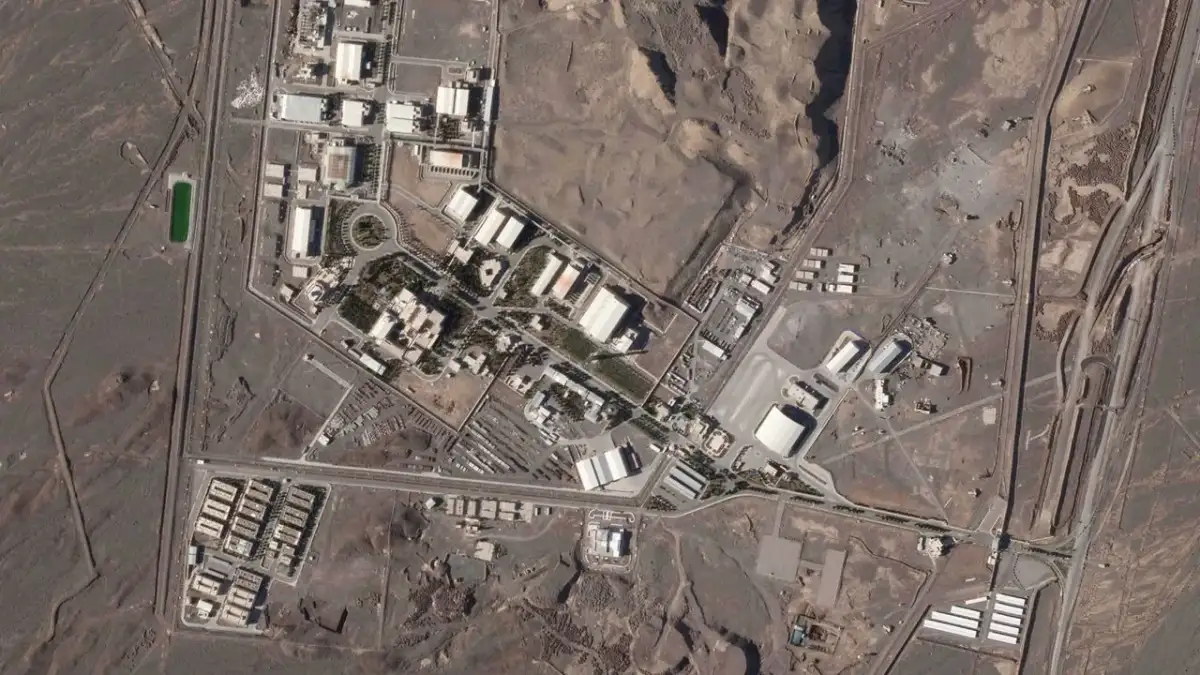
Read More: Iran Zagros Mountain Nuclear Site Construction Update April 2026
The war's second-order financial consequences, particularly concerning energy markets and global trade routes like the Strait of Hormuz, have benefited China. Furthermore, the conflict has provided China with a live case study, offering valuable insights into U.S. military capabilities, weapons employment, and logistical strain under fire. This analysis is particularly relevant for China's strategic considerations, especially regarding Taiwan. The diversion of U.S. attention and military resources towards the Middle East is also seen as advantageous for Beijing, potentially leading to redeployments from the Indo-Pacific.
The prolonged conflict has reportedly depleted U.S. weapons stockpiles, including precision-guided munitions and air defense systems, deemed crucial for potential confrontations with China over Taiwan. Hezbollah's development of unjammable drones, built from commercially available components, poses a new threat to Israel and highlights a different dimension of the regional instability, even as the U.S. focuses on the larger geopolitical contest.
Read More: Iran Warns Gulf States After U.S. Naval Clash
Context and Background
The U.S. intelligence report emerges as President Donald Trump embarks on a trip to China, intended for high-level discussions with Chinese leader Xi Jinping. The White House has acknowledged that such talks have been occurring amidst the Iran ceasefire negotiations.
China's existing military and economic relationships with Iran and Russia are long-established. The conflict has also prompted commentary from some Chinese analysts who highlight perceived limits in U.S. military capacity. Concerns are reportedly mounting among U.S. allies in Asia regarding the regional security balance as American resources are redirected.
The geopolitical situation is further complicated by reports that Europe is increasingly shrugging off President Trump's recent threats, feeling less alarmed and better prepared in the face of shifting U.S. troop commitments.
The U.S. war effort against Iran has been ongoing for some time, with reports dating back to March detailing China's strategic gains and military analysts studying the conflict for lessons applicable to potential operations. Earlier in April, CNN reported on U.S. intelligence indicating China's preparations for weapons shipments to Iran, even as a ceasefire was being negotiated.
Read More: 40 Die in Quetta to Peshawar Bus Crash in Balochistan on April 3 2026
While China's diplomatic and economic engagement with Iran is significant, with China accounting for approximately 90 percent of Iran's oil exports, the precise reasoning behind its intelligence-sharing activities remains difficult to gauge. The potential impact on U.S. service members remains unclear.