Scientists Point to Significant Heat Risk for Players and Fans
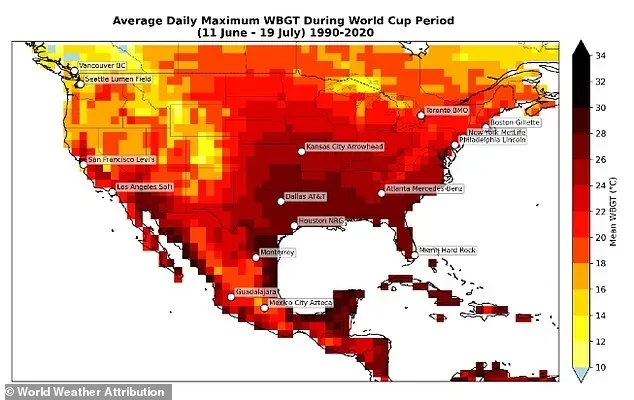
A substantial portion of the 2026 FIFA World Cup matches, potentially a quarter, are projected to occur under conditions that pose significant heat stress risks to both players and spectators. This prediction, based on analysis by climate scientists, highlights a growing concern about player safety and performance due to rising global temperatures and the tournament's scheduling during warmer months across multiple host cities in the United States, Canada, and Mexico.
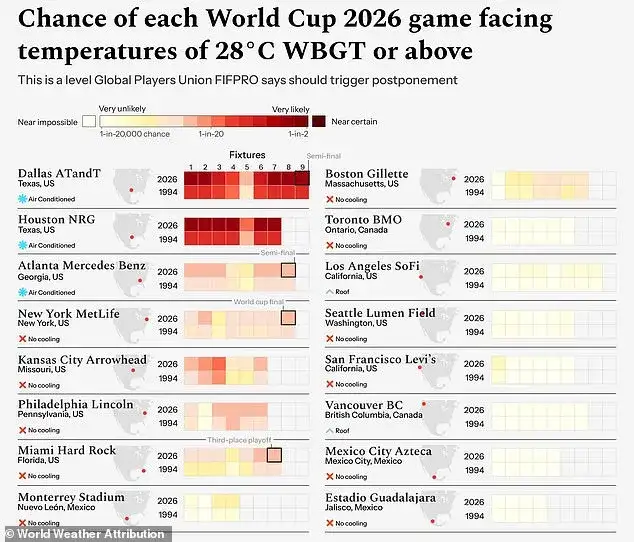
Researchers from World Weather Attribution (WWA) have modelled conditions for all 104 matches, finding that temperatures are expected to exceed 26°C Wet Bulb Globe Temperature (WBGT) for a significant number of games. For specific dates like July 11 and July 18, there's a one-in-33 chance that the WBGT will surpass 28°C. At this higher threshold, which equates to approximately 38°C in dry heat or 30°C in high humidity, performance can suffer significantly, and serious health issues become a greater risk.
Read More: FIFA World Cup 2026 Revenue Reaches $15 Billion With New Ticket Prices
Venue Vulnerabilities and Calls for Mitigation
Multiple studies and reports underscore the inadequacy of some venues in mitigating extreme heat. At least half of the 16 host stadiums are identified as requiring "immediate environmental intervention" to prevent harm. While three venues currently have cooling measures, over a third of games with a high chance of exceeding 26°C WBGT are scheduled in locations without air conditioning.
Scientists are urging FIFA and host city officials to implement a series of precautionary measures. These include:
Increased hydration stations and robust cooling infrastructure.
Scheduled heat breaks during matches.
Provision of shaded areas and ice towels.
Access to cold fluids.
Adjustments to warm-up schedules.
Enhanced medical monitoring during games.
One expert noted that when WBGT exceeds 26°C, player performance can suffer, and the threshold of 28°C is considered a level where matches might warrant postponement or cancellation according to some football bodies.
Climate Change as a Key Factor
The increased likelihood of extreme WBGT conditions is confidently attributed to anthropogenic climate change. Projections indicate that further global warming will exacerbate these risks. The current scheduling of the World Cup, a departure from previous summer tournaments like the 2022 Qatar event which was moved to winter due to heat, is now under scrutiny.
Read More: Amazon Land Use Changes Cause Disease Clusters in Brazil

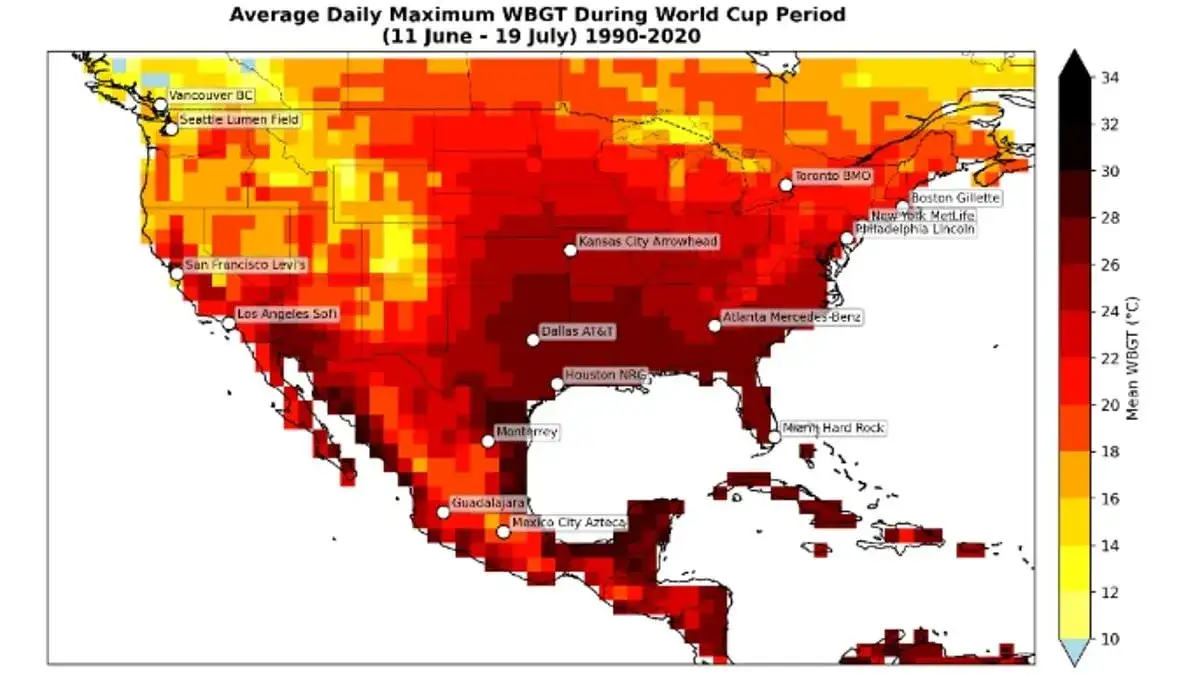
Venues like AT&T Stadium in Dallas are cited for experiencing numerous days above 35°C, with July wet bulb temperatures already exceeding FIFA safety thresholds.
Kansas City Stadium and venues in Miami and Monterrey are highlighted as particularly exposed locations.
Broader Concerns and FIFA's Stance
Beyond player safety, the extreme heat poses risks to fans, with potential for heatstroke, dehydration, and other heat-related illnesses. Reports suggest that extreme heat has already deterred some fans from attending matches in open stadiums.
Despite these warnings, FIFA has not publicly disclosed a specific WBGT threshold that would trigger match postponements. Critics argue that FIFA needs to develop a clear, football-specific heat stress policy with actionable categories, moving beyond voluntary commitments to establish binding environmental standards.

This situation also coincides with concerns that the 2026 World Cup could be the "most polluting ever", with calls for FIFA to end commercial partnerships with high-pollution companies and reduce tournament emissions.
Background:The analysis draws on research from entities such as World Weather Attribution (WWA), Imperial College London, and findings published in journals like Scientific Reports and The International Journal of Biometeorology. The Wet Bulb Globe Temperature (WBGT) is a measure of heat stress in direct sunlight, taking into account temperature, humidity, wind speed, and solar radiation. It is widely used to assess the risk of heat disorder during strenuous exercise. FIFA's current recommendations for heat safety in football often rely on the WBGT index, but specific actionable thresholds for postponement or cancellation have been a point of contention. The 2026 FIFA World Cup is scheduled to take place from June 11 to July 19, 2026, across 16 cities in North America.
Read More: England World Cup Match: Pubs Open Until 5 AM Monday