Beijing Firmly Denies Involvement, Cites 'Factual Basis'
Beijing has unequivocally rejected claims made by Donald Trump that a recently intercepted Iranian cargo ship, the Touska, contained a "gift from China." Chinese Ministry of Foreign Affairs spokesperson Guo Jiakun stated in a press conference that "China opposes any accusations and associations that lack a factual basis." He further emphasized that "normal international trade relations between countries should not be subject to interference and disruption."
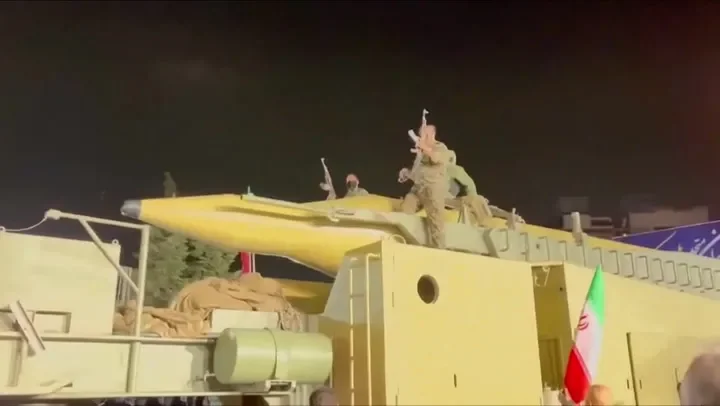
The core of the dispute centers on Trump's assertion that the seized vessel, suspected of carrying dual-use items for military applications, was a shipment from China to Iran. Beijing's stance is that such allegations are unsubstantiated and interfere with legitimate international commerce. The spokesperson reiterated that China has "repeatedly clarified its position on the matter" and highlighted its record as a "responsible global power."
Read More: Iran gets first cash tolls from Strait of Hormuz ships
Diplomatic Maneuvering Amid Regional Tensions
The exchange follows the US interception and seizure of the Touska, which was reportedly en route to the Iranian port of Bandar Abbas. US Central Command (CENTCOM) confirmed the vessel's destination.
The incident unfolds against a backdrop of heightened tensions in the Strait of Hormuz. Iran had briefly reopened the strait in response to an Israel-Hezbollah ceasefire, only to close it again due to a continued US blockade on vessels entering and leaving Iranian ports.
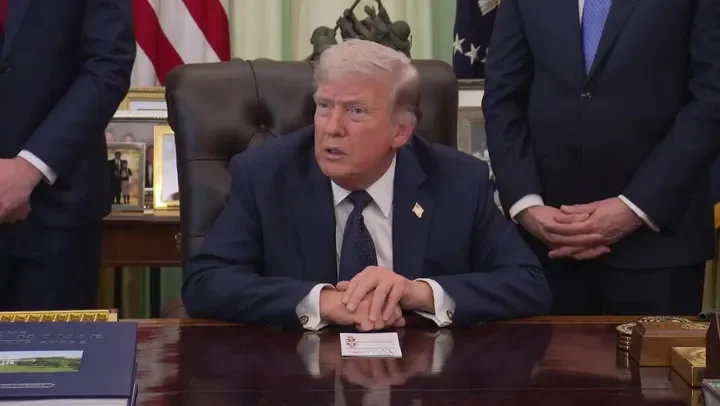
"Trump on Tuesday told CNBC the ship 'had some things on it, which wasn't very nice. A gift from China perhaps, I don't know.'"
Beijing's rejection of Trump's remarks is not isolated. Earlier, a spokesperson for China's Ministry of Foreign Affairs had already rebuffed media reports suggesting military aid to Iran. China has previously denied assisting Iran in countering US and Israeli forces and has called for restraint amidst recent ceasefire developments in West Asia.
Trade and Accusations
The Chinese Foreign Ministry also indicated that any potential US tariff hikes predicated on such accusations would be met with countermeasures. This suggests a broader economic dimension to the diplomatic friction.
Read More: US Military Ordered to Shoot Iranian Boats in Hormuz Strait
Nikki Haley, former US Ambassador to the UN, had also weighed in, asserting on X that the ship was travelling from China to Iran and was linked to chemical shipments for missiles. Beijing maintains a close partnership with Tehran and has criticized US-Israeli strikes in Iran as illegal, while simultaneously calling for the reopening of the Strait of Hormuz and condemning attacks on Gulf nations.