Unexpected Movement of Ice Masses Poses Risks
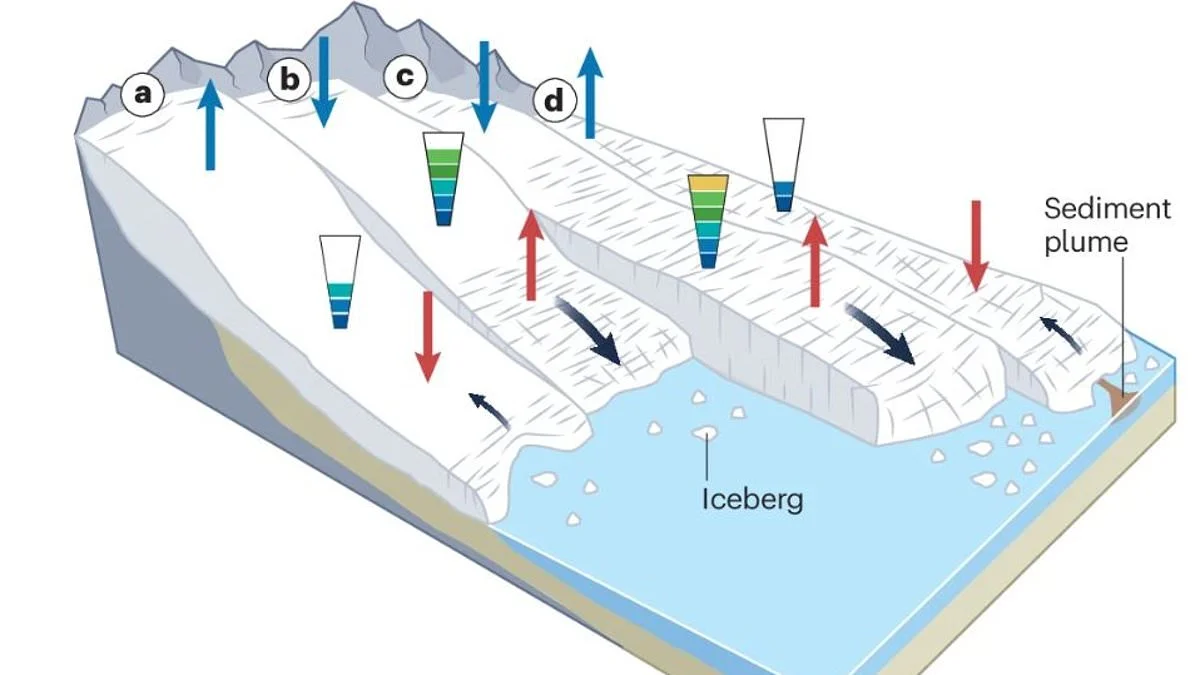
A significant number of glaciers worldwide are not simply melting; some are exhibiting sudden, rapid movements known as surges. This phenomenon, where glaciers accelerate from slow creeping to moving tens of meters per day, can occur within weeks. While many glaciers are shrinking due to a warming climate, these surging glaciers present a different kind of challenge. They can rapidly shed accumulated ice, become more vulnerable to climate change, and create serious dangers for communities located downstream. This unpredictable behavior underscores that ice may not always react to warming in simple or expected ways.
Study Identifies Thousands of Surging Glaciers
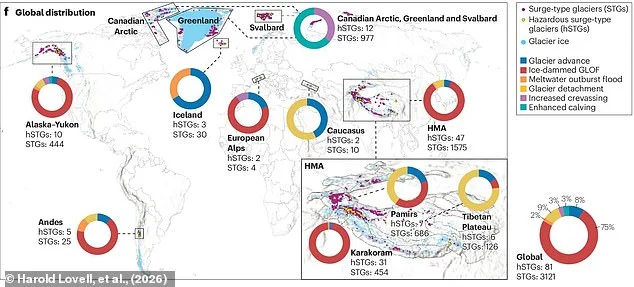
Recent research has identified at least 3,100 glaciers globally that have exhibited surging behavior at some point. These glaciers are often found in concentrated areas, particularly in the Arctic, High Mountain Asia, and the Andes. Of particular concern are 81 specific glaciers identified as posing the greatest danger due to their surges. A majority of these are located in the Karakoram Mountains, where inhabited valleys lie directly beneath these fast-moving ice masses.
Read More: Newsom Says Trump's Climate Policies Hurt US Economy
Shifting Dynamics Under Climate Influence
The behavior of these surging glaciers appears to be changing as the global climate warms. While many glaciers worldwide are in a state of retreat, this subset exhibits a starkly different response.
Accelerated Ice Loss: During a surge, these glaciers quickly release ice that has built up over many years. This ice then melts rapidly in warmer, lower-altitude conditions.
Frequency and Intensity: Some glaciers are surging more often than they did in past decades, while in other areas, surge activity is decreasing.
Unpredictability: Climate change is making surge behavior more erratic. For instance, extreme weather events may trigger surges earlier than anticipated.
Emerging Areas: There is a possibility that glaciers in regions like the Antarctic Peninsula, where surge-type glaciers are not currently known, might begin to surge.
Understanding the Mechanics of Surges
The exact causes behind glacial surges are not fully understood, and there is no complete agreement among scientists. However, it is understood that during a surge, a glacier dramatically increases its speed.
Read More: Your Body's Defense: How Immunity Works
Rapid Ice Discharge: Surges involve the rapid movement of large quantities of ice downhill.
Potential for "Self-Destruction": Some experts warn that certain glaciers are "surging themselves to death," meaning they may become too thin to surge in the future.
Comparison to Normal Flow: While some glaciers, like Canada's Steele Glacier, flow at a steady, albeit slow, rate (about 0.6 meters per hour), surging glaciers experience a dramatic and temporary acceleration. Tidewater glaciers that terminate in the ocean can also advance and retreat periodically, and some move continuously at high speeds (up to 35 meters per day), but surging is characterized by its episodic, rapid acceleration.
Hazards Posed by Surging Glaciers
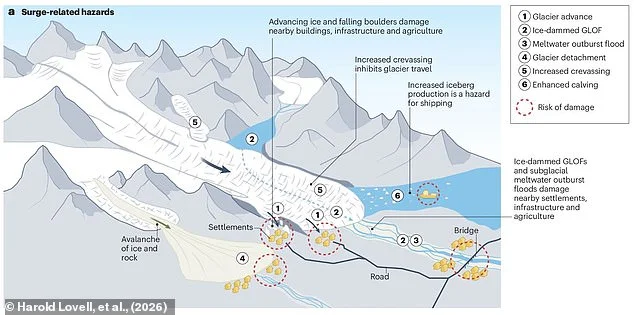
The rapid movement and subsequent melting of surging glaciers can lead to dangerous situations, especially for communities located in their path.
Ice Dams and Floods: Surging glaciers can form ice dams that obstruct rivers. When these dams collapse suddenly, or when water spills over them, it can cause fast-moving and destructive floods.
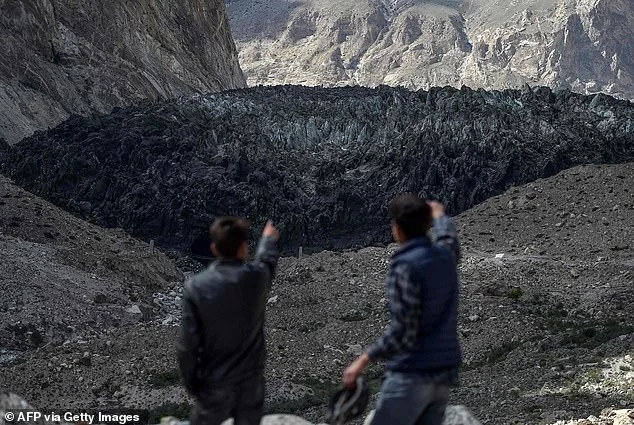
Threat to Populated Areas: The presence of surging glaciers like the Shisper glacier in the Karakoram Mountains, with inhabited valleys directly below, highlights the immediate threat to human settlements.
New Lake Formation: The activity of surging glaciers can also lead to the creation of new lakes. While some ice-dammed lakes are unstable and drain within a season, others can pose risks if they fail unexpectedly.
Ongoing Monitoring and Research
The dynamic nature of surging glaciers necessitates continuous observation and scientific study.
Read More: Elon Musk's xAI Faces Lawsuit Over Air Pollution from Memphis Data Center
Remote Sensing: Researchers utilize satellite imagery to monitor these glaciers daily.
Ground Surveys: Frequent ground surveys are conducted in areas like the Karakoram Range to assess the risks posed by glaciers such as Shishpar.
Data Analysis: Studies are actively analyzing global patterns of surging glaciers to better understand their distribution and behavior.
Sources:
The Conversation: https://theconversation.com/some-glaciers-can-suddenly-surge-forward-with-dangerous-consequences-273976
Daily Mail: https://www.dailymail.co.uk/sciencetech/article-15556567/Scientists-discover-3100-glaciers-SURGING.html
University of Portsmouth: https://www.port.ac.uk/news-events-and-blogs/news/new-research-reveals-how-warming-climate-is-changing-troublesome-glacier-behaviour
NASA Science: https://science.nasa.gov/earth/earth-observatory/surging-glacier-creates-a-new-lake-145038/
Britannica: https://www.britannica.com/science/glacier/Glacier-surges
NASA Earthdata: https://www.earthdata.nasa.gov/topics/cryosphere/glaciers/glacier-power/what-is-glacial-calving
National Snow and Ice Data Center: https://nsidc.org/learn/parts-cryosphere/glaciers/why-glaciers-matter